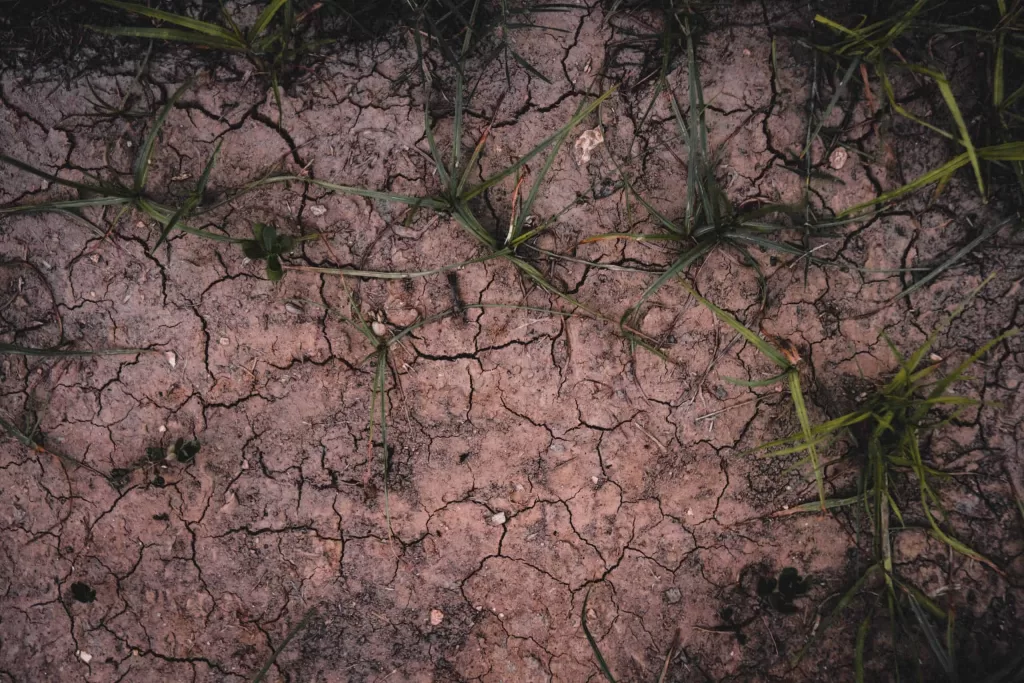
Our researchers are keeping an eye on the drought that is affecting Italy and other areas of Europe in this period: let’s try to understand with them some of the most important elements of this process, including causes and possible consequences
For several months, rainfall in Italy and other areas of Europe has been very low, leading to a condition of drought in several countries. Our researchers are monitoring the situation, also in order to collect information that can support, in the future, the development of adaptation strategies.
We asked them to explain some of the most important elements and aspects to consider when talking about droughts, also trying to understand the causes of the current drought.
Among the drivers of the January 2022 drought…
One of the first aspects to evaluate is: when can we properly define a given period as a drought? What, in other words, is the distinction between a period in which it has simply rained less than usual and a period requiring more attention? “Typically, drought refers to a period of unusually low precipitation for that time of year and in a given geographic area. If in the Sahara Desert, for example, the lack of rain even for one year does not cause concern, the same condition in Italy would be dramatic. There are also some specific parameters that we take into consideration when monitoring and studying drought: first of all, rainfall and soil moisture. To these parameters we can add others, such as the state of health of the vegetation – which, however, remains somewhere between an effect and an indicator – and river flows,” explains Gustavo Naumann, researcher of Hydrology and Hydraulics Department who has been dealing with drought for years. “However, after two months in which precipitation has been almost zero, we can certainly speak of a drought affecting several European areas, including Italy, in particular Piedmont and western Liguria.”
If some of the elements that determine a period of drought are easy to understand (as in the case of lack of rain), characterizing the mechanisms that determine them is an important step to understand the whole phenomenon. In the case of the drought of this period, explains Massimo Milelli, head of Meteorology and Climate Department, “the main problem was represented by an anticyclone, i.e. a block of high pressure which persists over the western Mediterranean that causes higher than normal temperatures and at the same time shields the area from storms coming from the Atlantic. The anomaly is not the presence of the anticyclone, but its persistence. Understanding on a global scale the reasons for this phenomenon, however, is complex and requires the evaluation of several factors over time.”
In addition to rain, we must also not forget the fundamental role of snow and ice in influencing water availability. Unfortunately, while early winter had seen somewhat average snowfalls, January was an extraordinarily dry month. “From the data we have collected so far at national level, we can estimate that in the mountains there is currently roughly half of the snow present in 2021,” explains Francesco Avanzi, researcher of Hydrology and Hydraulics Department. “This poses an important problem especially in perspective: less snow and less ice means, in fact, also less water in spring, especially if we consume now this form of water reserve. Added to this is the problem of glaciers, which are getting smaller and smaller, so we are now using ice that was formed years ago.”
There is another question that is important to ask: can we already talk about an effect of climate change? Can we relate the current drought to global warming? A single event does not allow to establish a scientifically valid correlation and, more generally, the study of climate must be based on data collected over time. “Causality associated with climate change should, at the moment, be taken with due caution,” Anna Napoli, PhD student of the Meteorology and Climate Department, explains . “What we can say at the moment is, however, that several studies conducted in the Mediterranean area show how drought phenomena have been increasing over the years; even future climate scenarios suggest that in this area drought phenomena will be probably more frequent and intense. So, what we can do is to look at this event as a kind of ‘training ground’ for what we may face in the future,” Dr. Napoli explains.
… And consequences
CIMA Research Foundation’s monitoring activities on the current drought are aimed at collecting as much information as possible in order to understand and then be able to better cope with these events; they are also part of the activities foreseen by European projects in which we participate. “These projects include, among other tasks, the development of a database of drought impacts and risk maps for the different socio-economic sectors that may be affected,” Dr. Naumann explains. “And the sectors affected are many, from agriculture to tourism to ecosystem services.”
“An important element to take into account when talking about droughts is that, unlike other phenomena (e.g. floods), the effects are not immediately visible, but are observed after months: for example, in January the effects on agriculture may be hard to notice, but they may be felt in a few months, when many plants normally sprout and mature,” continues the researcher.
It’s good to remember, however, that weather conditions change continuously over time; that’s why we can’t predict with certainty, as of today, how the situation will evolve. “For example, in 2021 we saw a ‘second winter’ that brought spring snowfall in some regions,” comments Dr. Avanzi. “If this happened again, we could at least partially restore the water supply represented by snow.”
At the same time, the continuous evolution of weather and climate phenomena means that it is particularly important to have the most complete and up-to-date scientific knowledge possible to support the development of adaptation and resilience plans at European, national and regional levels. “That’s why, we try to understand how drought can affect the various economic sectors and how to cope with the impacts,” explains Dr. Naumann who, in a recent interview with the Italian newspaper Il Secolo XIX, cited some examples of strategies that help mitigate the risk and effects of droughts. These include, for example, reforestation, because forests help in regulating water flow and water resources through their hydrological-related ecosystem services, or choosing agriculture based on species that require less water to grow. “In this context, it is important to remember that some actions used to cope with droughts may fall under the so-called maladaptation, that is, they are solutions that can have negative effects: this is the case of desalination, which requires a large expenditure of energy.” As a recent study signed among others by Lorenzo Alfieri, researcher of CIMA Research Foundation, reminds us, the well-being of our species and that of ecosystems is closely linked.