


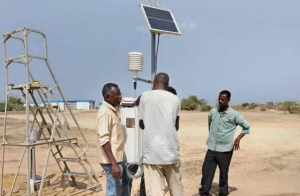
New ACRONET Stations
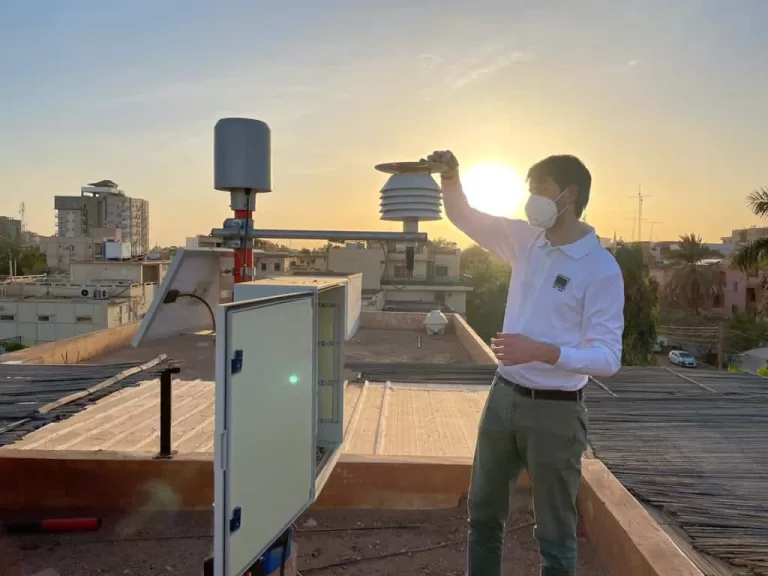
Five ACRONET automatic monitoring stations - three weather stations and two river gauging - were shipped to Port Sudan in recent weeks to enhance the national warning system
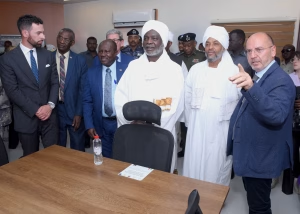
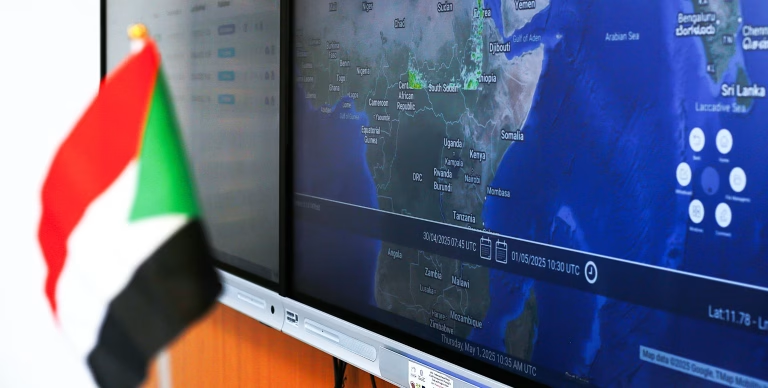
New Multi Hazard EWS Situation Room
Opening Ceremony of the new Situation Room at the National Council for Civil Defence (NCCD) in Port Sudan
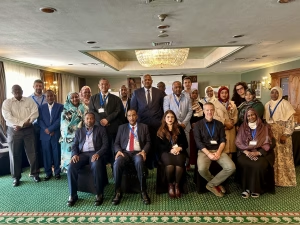
Last Technical Workshop - National Drought Risk Monitoring framework
Between 26 and 28 November 2024, the last technical workshop of the project took place in Cairo: a crucial moment to consolidate progress and look to the future.
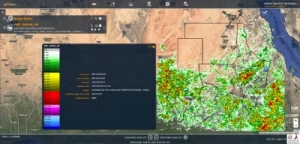
High Resolution Weather Research and Forecasting Model (WRF)
The WRF model was made operational on a daily basis, providing highly accurate weather forecasts (72-hour horizon and 3 km spatial resolution), following a collaborative design between SMA and CIMA that started in 2022. The model is currently hosted at the Italian supercomputing centre CINECA (High Performance Computing).

Technical Workshop – Tool and Procedures for early warning co-production
As part of APIS project, a three-day technical workshop took place in Nairobi, organized together with ICPAC Nairobi. First team of experts relocated to ICPAC and start of the secondment assignment
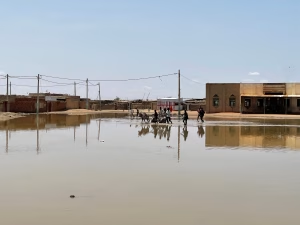
Hydro-Meteorological Bulletin – automated Impact-Based Forecasting Daily Bulletin
Launch of the Hydro-Meteorological Impact Based Forecast Bulletin in Sudan, as part of the emergency support to national authorities relocating after the outbreak of the crisis
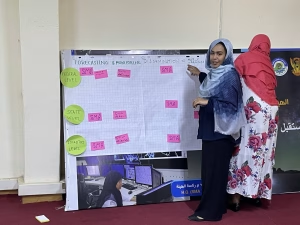
National Workshop – Stakeholder Mapping and Re-Analysis of 2020 Khartoum Flood
From 19 to 21 March 2023, a national workshop on flood and drought early warning tools and procedures was held in Khartoum
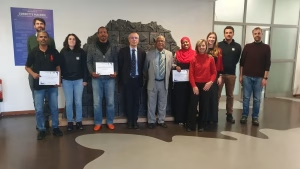
Sudanese delegation visited CIMA Research Foundation in Savona
The training visit focused on weather forecasting WRF for early warning prevention of floods and droughts.
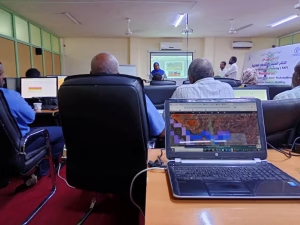
myDewetra.world - first project workshop in Khartoum
An opportunity to get to know the myDEWETRA.world platform, developed and maintained by CIMA with the Italian Civil Protection Department, and carry out hands-on exercises together on Early Warning Systems at Sudan Meteorological Authority HQ
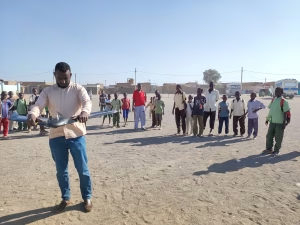
Use of UAVs for civil protection operations
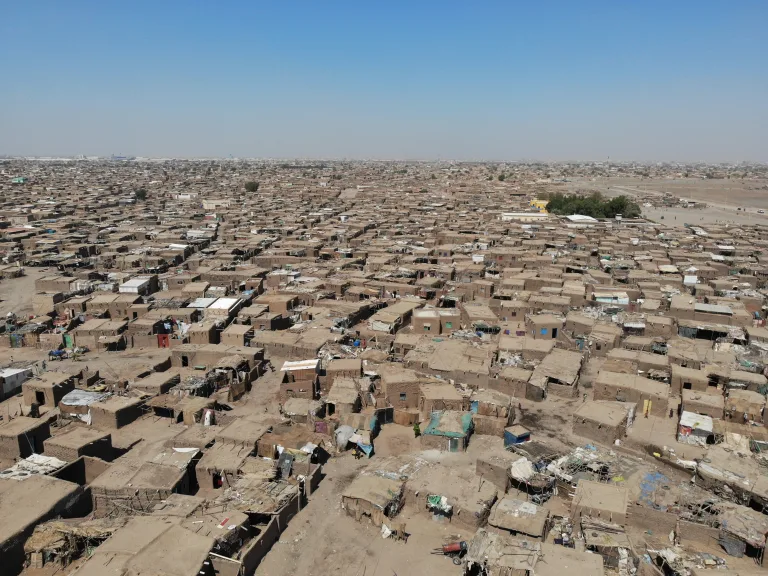
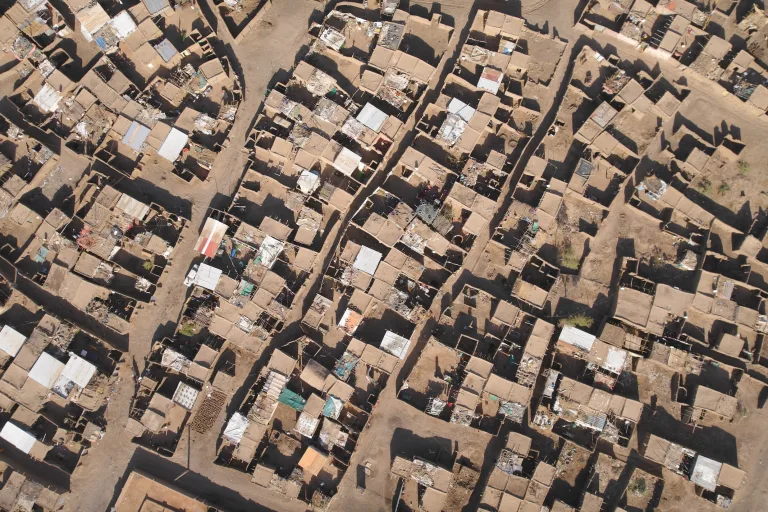
Technical assistance activities on the use of drones to support DRR activities, completion of the mapping of the Mayo settlement, home to approximately 600,000 refugees and displaced persons

Start of APIS project
The project “Early Warning and Civil Protection for Floods and Drought in Sudan - APIS” which aims to implement an Early Warning System
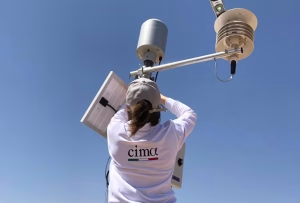
Second Mission to Mayo, Khartoum State
The mission to improve hydro-meteorological risk management capabilities, both at local and national level with the assessment of the needs of the natural hazard warning system
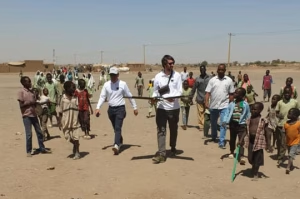
First Mission to Mayo, Khartoum State
In cooperation with AICS as part of the Mayo Up project, assessment of measures needed to protect part of the Mayo IDP camp in Khartoum, Sudan, from flooding