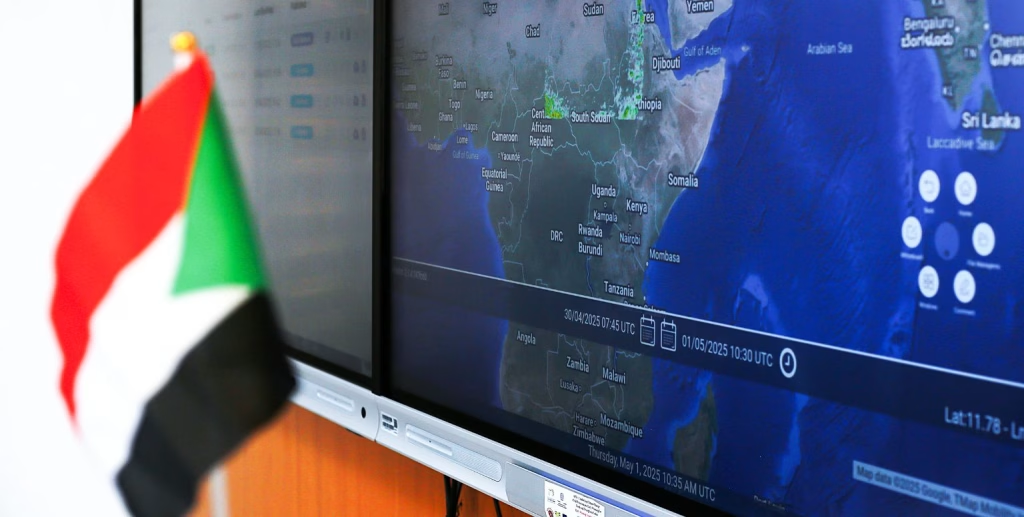
At the UNDRR Global Platform 2025, the discussion centres around data, technologies, and knowledge to reduce risk and save lives. But what does it actually mean to build an early warning system in a country facing both war and climate crisis? Sudan currently represents one of the most extreme examples of this dual vulnerability. In this context, CIMA Research Foundation, together with the Italian Agency for Development Cooperation (AICS), contributed to the creation of a monitoring, forecasting, and alert system capable of withstanding conflict, protecting people, and enhancing national expertise—despite widespread displacement. A story of climate cooperation that, day by day, becomes a project to strengthen resilience.
All recent conflicts have reinforced the link between war and climate crisis, but none as clearly as Sudan. On 15 April 2023, the country descended into armed conflict between the Sudanese Armed Forces (SAF) and the Rapid Support Forces (RSF). Two years of violent clashes have triggered one of the world’s worst humanitarian disasters, displacing thirteen million people internally as they sought refuge from the violence between the two factions.
Climate change and wars do not happen on different planets, nor do they take turns affecting communities. The same Sudan where they have been fighting for more than two years is also the ninth most climatically vulnerable country in the world, according to theClimate Vulnerability Index compiled by the University of Notre Dame. Heat waves, an increasingly unpredictable and intense rainy season, prolonged droughts and flooding are among the most recurrent manifestations of the effects of global warming in the country. In Sudan, war has brought 42 percent of the population into acute food insecurity.
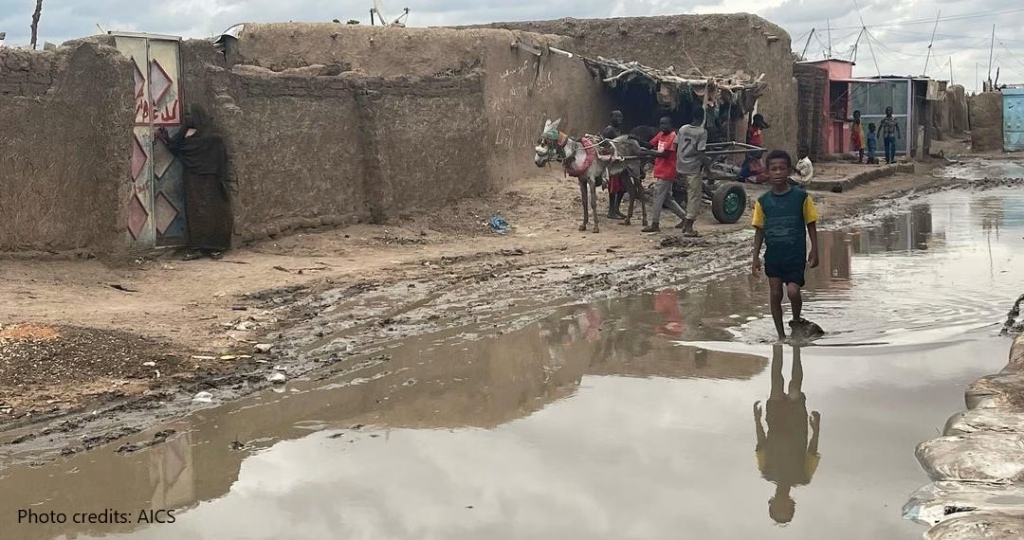
One of the first infrastructures to collapse after the war broke out was the Sudan Meteorological Authority, which could no longer access its offices at the Khartoum airport due to ongoing clashes. This halted all forecasting and monitoring services—vital for both civilians and humanitarian organizations operating on the ground. For anyone familiar with the Sudanese context, this was an emergency within the emergency.
When the war began in 2023, CIMA Research Foundation had already been active in Sudan for three years. The first project with AICS dates back to 2020 and focused on mitigating flood risk in the Mayo area, on the outskirts of Khartoum. In 2021, the foundation of the country’s first national early warning system was laid through the APIS project. This included technical equipment, training, and operational procedures for civil protection, aiming to establish a coordinated alert system grounded in forecasting capacity.
The outbreak of war radically changed the nature and objectives of CIMA and AICS’s work in Sudan, making hydro-meteorological early warning simultaneously more difficult and more urgent.
With the collapse of the Sudan Meteorological Authority came the diaspora of Sudanese meteorologists and climatologists to other African countries—Ethiopia, Kenya, Egypt. The work carried out by CIMA and AICS allowed these experts to continue collaborating remotely, sharing data from across the region. This enabled the daily issuance of civil protection bulletins in both English and Arabic, which were distributed to civilians and humanitarian organizations.
CIMA Research Foundation coordinated the work of these displaced experts, allowing them to operate as a sort of “climate Radio London”—protecting the country through the tools and procedures of the African Multi-Hazard Early Warning and Action System (AMHEWAS).
The rainy season, which hits Sudan between June and September, continued to be monitored throughout the war. The scientific knowledge of Sudanese experts—preserved and strengthened by CIMA and AICS through both field and remote collaboration—allowed the bulletins to evolve. As Dalal Babikier Mohammed Homoudi of the Sudan Meteorological Authority explains, “We moved from weather forecasts to impact-based forecasts, which are crucial for people because they inform them not about what the weather will be, but what it will do. Now, we speak with one voice—something we had lacked in the past.”
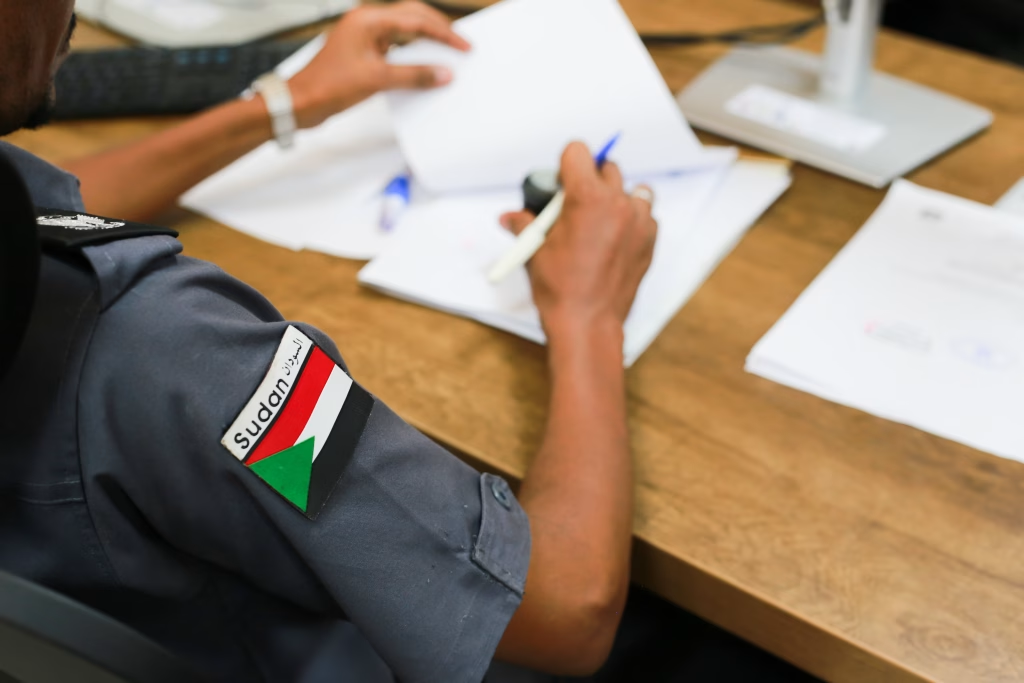
A symbolically crucial moment in this five-year journey—almost half of which unfolded during wartime—came in February 2025, when the new Situation Room of the National Council for Civil Defense (NCCD) was inaugurated in Port Sudan. That day, the country regained an operational infrastructure for early warning and emergency management, marking significant progress toward the UN’s Early Warnings for All (EW4All) initiative by 2027. While several functional centres have been opened across Africa in recent years, operating at continental, regional, or national levels, none have been inaugurated under conditions as complex as those in Sudan.
This opening marked the achievement of something extremely difficult in one of the most urgent contexts—a turning point during one of the most severe humanitarian crises in the continent’s history. The legacy of CIMA and AICS’s work in Sudan is multifaceted: it enables the country to look toward the future, even in such dire conditions, without having lost its national heritage of knowledge and expertise. A significant portion of Sudan’s climate vulnerability is now illuminated daily by tools that monitor atmospheric and field-level dynamics—offering a real opportunity to mitigate risks and save lives.
The work of recent years, and the Situation Room in Port Sudan, are proof that a climate cooperation project can also serve as a peacebuilding initiative. This outcome was only possible thanks to close collaboration with local experts. As Nicola Testa and Alessandro Masoero, who led the projects for CIMA, put it, “In this context of political instability, hardship, and risk, the resilience demonstrated by our Sudanese colleagues has been a true source of motivation—driving us to cooperate and combine efforts in protecting the population and ensuring the continuity of operations.”
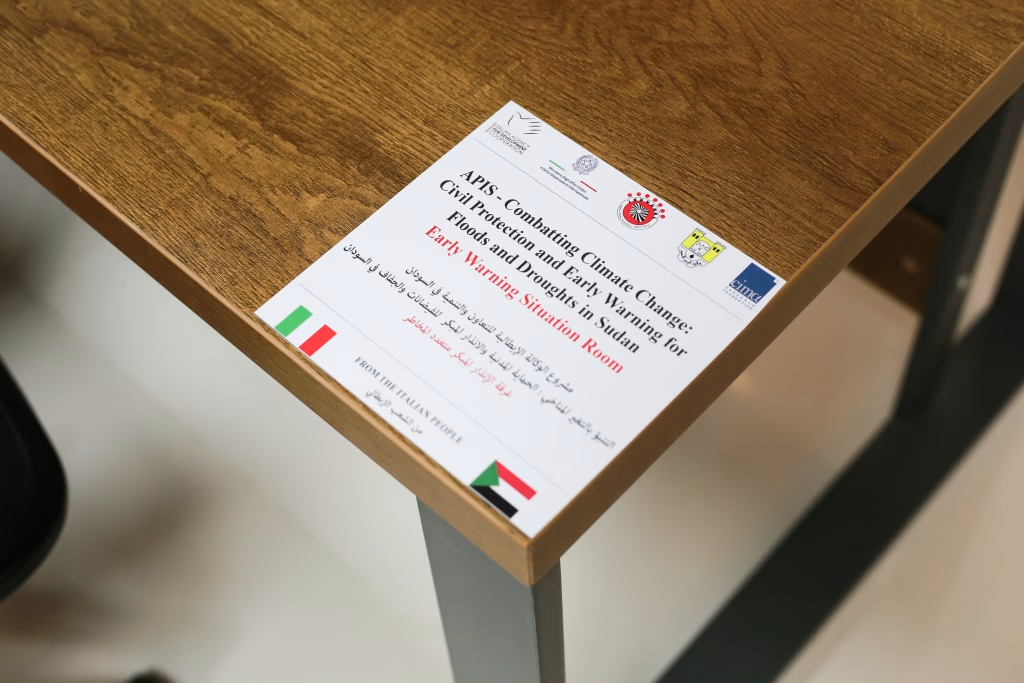
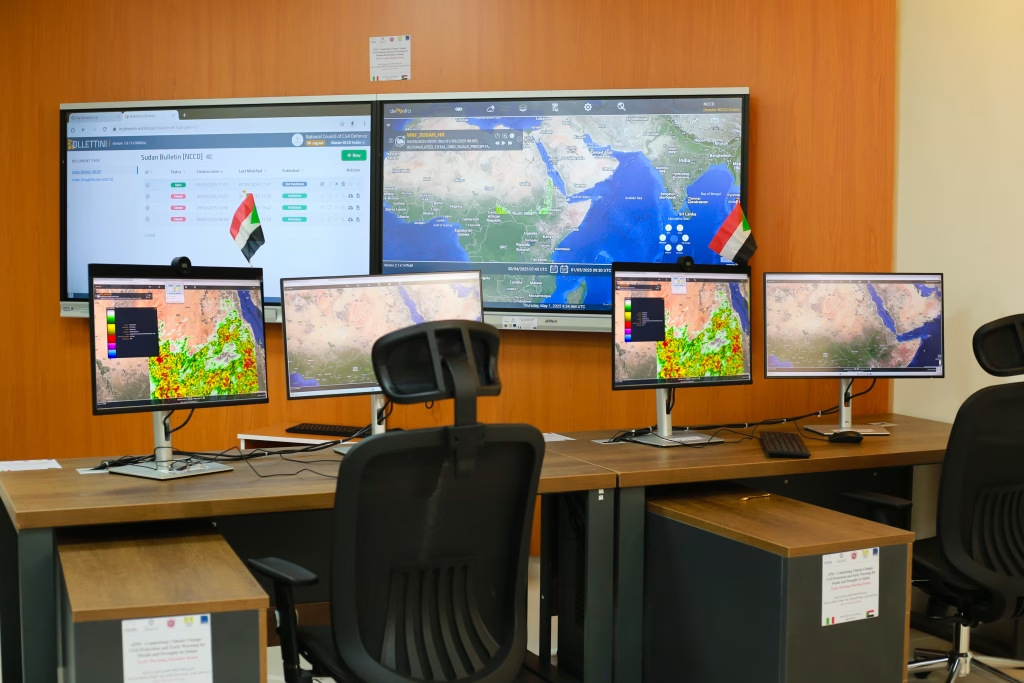
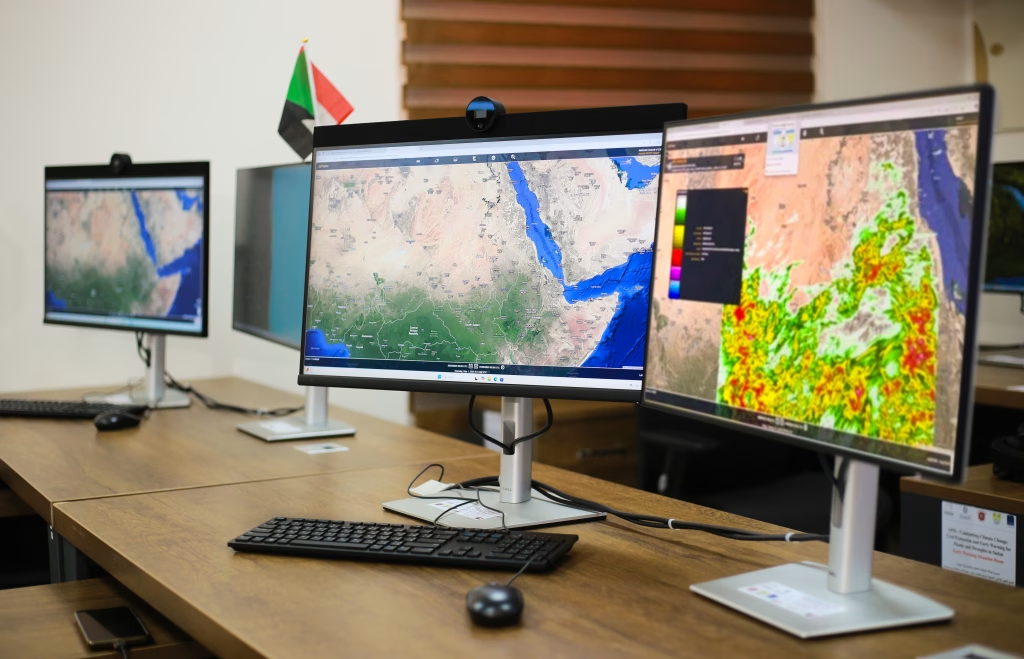
The project “Fighting climate change. Early warning and civil protection for #floods and #droughts in Sudan – APIS” was funded by the Italian Agency for Development Cooperation (AICS) and implemented by CIMA Research Foundation, in collaboration with the Italian Ministry of Foreign Affairs and International Cooperation, the Italian Embassy in Sudan, the AICS office in Addis Ababa, Sudan’s National Council for Civil Defence (NCCD) and its members, Sudan Meteorological Authority, the IGAD Climate Prediction and Applications Centre (ICPAC), and the African Union Commission (AUC).