
In a world where the reality of the climate crisis leads to increasingly frequent and intense natural risks in various areas of the planet, knowledge of these phenomena becomes ever more important and urgent. Hence, the importance of investing not only in research but also in the education of younger generations, allowing the scientists of tomorrow to have the best tools to face this challenge.
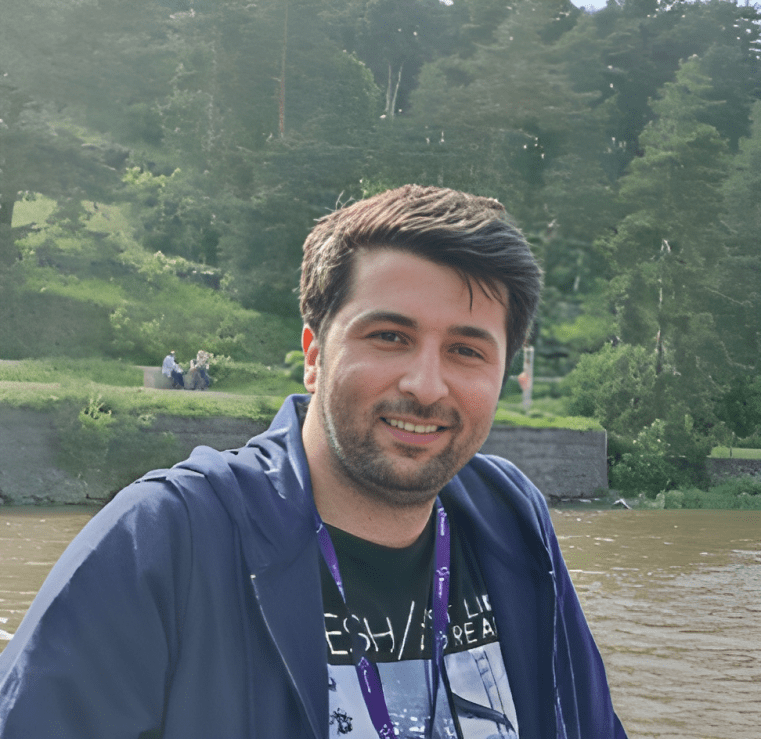
In this context, we find the Engineering for Natural Risk Management (NatRisk), master’s degree program, which was launched in 2017 as part of the collaboration between the University of Genoa and the CIMA Research Foundation. Despite its relatively short existence, the program has already proven its tangible impact on students’ education. One such example is the Best Poster Awardpresented to Hamed Izadgoshhasb, a former NatRisk student who is now pursuing a Ph.D. at Sapienza University of Rome,within the European Student Research Conference. We reached out to him to gain insight into the program, its strengths, weaknesses, and what it offers to individuals embarking on further academic and research journeys.
How did you discover (and decided to enroll in) the Engineering for Natural Risk Management program?
I discovered the Engineering for Natural Risk Management course through my best friend, who had enrolled in the program a year before me. His enthusiastic endorsement of the course and the transformative impact it had on his understanding of natural risk management immediately piqued my interest. Having discussions with him about his experiences, I was impressed by the practical knowledge he gained and the innovative approaches the course offered in addressing complex challenges in the field. His firsthand account of the engaging curriculum, expert instructors, and the valuable networking opportunities convinced me that this course aligned perfectly with my career aspirations.
The recommendation from my friend not only provided insights into the course content but also highlighted the supportive learning environment and collaborative community fostered within the program. It became evident that enrolling in this course would not only enhance my technical skills but also allow me to be part of a community passionate about making a positive impact in natural risk management. In essence, my decision to enroll in the Engineering for Natural Risk Management course was significantly influenced by the firsthand experiences and positive feedback from my dear friend.
Could you comment your experience? In general, has it been positive or negative? And to who would you recommend it?
Reflecting on my overall experience, I can confidently say it was exceptionally positive. The Engineering for Natural Risk Management course exceeded my expectations in various aspects. The curriculum was well-structured and highly relevant, providing a comprehensive understanding of natural risk management coupled with practical applications.
I would wholeheartedly recommend this course to individuals passionate about environmental engineering, risk management, and those seeking a program that seamlessly integrates theory with practical applications. The positive impact on my own career trajectory makes me confident in recommending it to anyone seeking a robust and rewarding educational experience in this field.
What are, in your opinion, the strengths of the course?
Some of the most significant aspects include the presence of experienced and passionate instructors, which fosters a supportive environment for students; the focus on practical applications, where theoretical scenarios are incorporated into the real world, providing directly applicable skills for future careers; and the interactive and collaborative nature of the course, which promotes an engaging learning environment.
There are many other strengths that I could list, such as the networking opportunities offered, the suitability of the course for individuals with diverse experiences and backgrounds, the multidisciplinary approach, and the significant value added by the support of the CIMA Research Foundation, providing resources and opportunities. All of this contributes to a rewarding educational experience.
And what about the weaknesses of the course? What do you think could be improved?
While, as I mentioned, my overall experience has been extremely positive, it is indeed important to acknowledge areas where the program could be enhanced. ne aspect that could be strengthened, in my opinion, is the inclusion of additional programming courses, particularly in Python. This would not only complement the theoretical knowledge gained in the program but also equip students with practical skills for data analysis, modeling, and so on. These skills are particularly crucial in addressing complex issues in natural risk management and can significantly enhance graduates’ competitiveness in the job market.
What are the most important tools and lessons that the course has provided you with?
The course has equipped me with a diverse set of tools and valuable lessons that have significantly shaped my professional journey. Some aspects are quite personal, such as the increased self-confidence I gained through challenging projects, engaging discussions, and real-world activities. Additionally, the course placed a strong emphasis on the development of soft skills like communication, collaboration, and adaptability, which have proven invaluable in addressing the complexity of natural risk management and in establishing effective working relationships. Furthermore, the course provided me with the opportunity to connect with a community of colleagues, researchers, and instructors – exceptional individuals who have not only expanded my professional network but also enriched my perspective through diverse experiences and insights. The network that is created represents a lasting benefit, offering ongoing support and collaboration opportunities.
There are also technical tools and knowledge that have been particularly valuable. Among the most precious ones provided by the course, I highlight the introduction to remote sensing (starting with the Remote Sensing of Natural Disasters course taught by Gabrielle Moser, Sebastiano Serpico, and Stefania Traverso), the programming skills I acquired, particularly in the context of environmental applications, and expertise in the field of machine learning for wildfire risk assessment. Understanding how to apply these algorithms to predict and manage wildfire risks has been particularly enlightening and has offered practical applications to address these pressing environmental challenges.
In this regard: the study for which you were awarded is the result of your thesis work, supervised by Andrea Trucchia, a researcher in the field of Wildfires and Conservation of Forest Biodiversity at Fondazione CIMA, and Paolo Fiorucci, the coordinator of the field. The work, already published in 2022, is part of a research line that Fondazione CIMA has been dedicated to for a long time and has also yielded other significant results (we have discussed it here), such as the creation of a fire hazard map for the Eastern Mediterranean area. Could you briefly describe it?
The title of my thesis is Machine Learning Techniques for Wildfire Management. The research primarily focused on generating hazard maps for the Liguria region and assessing the performance of three machine learning algorithms used to create them: the Multi-layer Perceptron, Support Vector Machine, and Random Forest. An innovative aspect of the work was the event-based evaluation of the results, where the outcomes were tested on a dataset different from the one used during algorithm training and testing. The results of the study demonstrated that the Random Forest algorithm exhibited the best performance in mapping forest fire susceptibility. Additionally, the event-based validation highlighted the robustness of the machine learning algorithms in accurately calculating areas susceptible to forest fires.
What are you currently working on? Has your journey with the University of Genoa and Fondazione CIMA helped you to navigate towards a field that you enjoy?
I am currently a Ph.D student at Sapienza University of Rome, under the supervision of Professor Nazzareno Pierdicca. My research focuses on microwave remote sensing in hydrology and ecology, with a specific emphasis on bistatic radar. My primary project involves developing a processor for soil moisture estimation using GNSS Reflectometry technology as part of the second ESA Scout mission known as HydroGNSS.
My journey with the University of Genoa and CIMA Research Foundation has played a pivotal role in shaping my current research direction. It sparked my interest in the intersection of environmental engineering and advanced technologies, significantly influencing my academic and professional choices.
In addition to Doctors Andrea Trucchia and Paolo Fiorucci, who supervised my the master’s thesis, Professor Giorgio Boni from the University of Genoa and Dr. Luca Pulvirenti from CIMA have also played integral roles in shaping my academic and professional career. I would like to take this opportunity to express my gratitude to them for their support and guidance, as well as to thank the entire Wildfire Risk Management and Forest Conservation Department at CIMA, the Department of Electrical, Electronic, and Telecommunications Engineering, and the Department of Naval Architecture (DITEN) at the University of Genoa for organizing this master’s degree program.