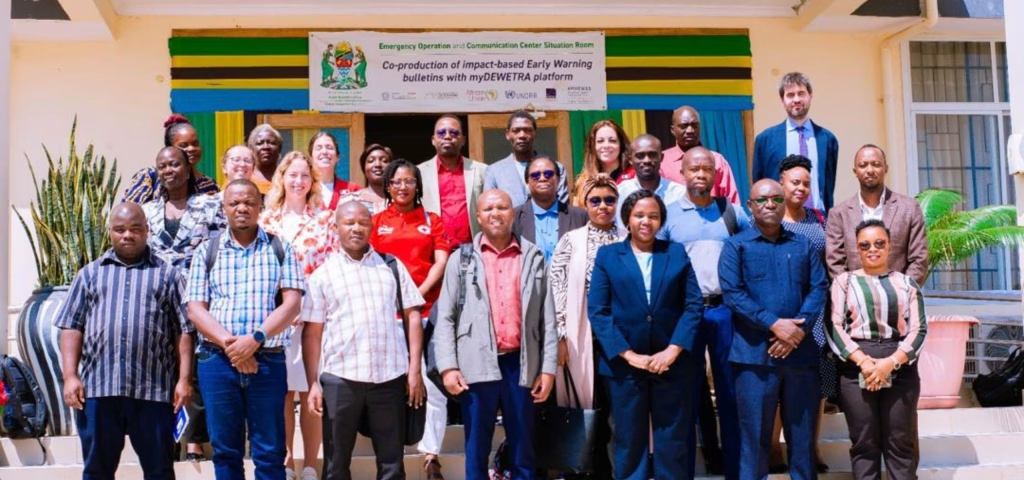
In the context of Southern Africa, transnational cooperation represents a strategic element for enhancing prevention and response capacities to climate risks and disasters. Mozambique and Tanzania share systemic vulnerabilities, including tropical cyclones, floods, and prolonged droughts. The integration of their respective expertise and risk management infrastructures is essential for optimizing early warning systems and ensuring more effective coordination during emergency phases.
The South-South cooperation approach between the civil protection institutions of both countries is playing an increasingly crucial role. The interconnection of early warning systems and the strengthening of institutional synergies not only improve timeliness in national responses but also enhance the management of transboundary risks, positively impacting the resilience of exposed communities.
A shared commitment to strengthening Early Warning Systems
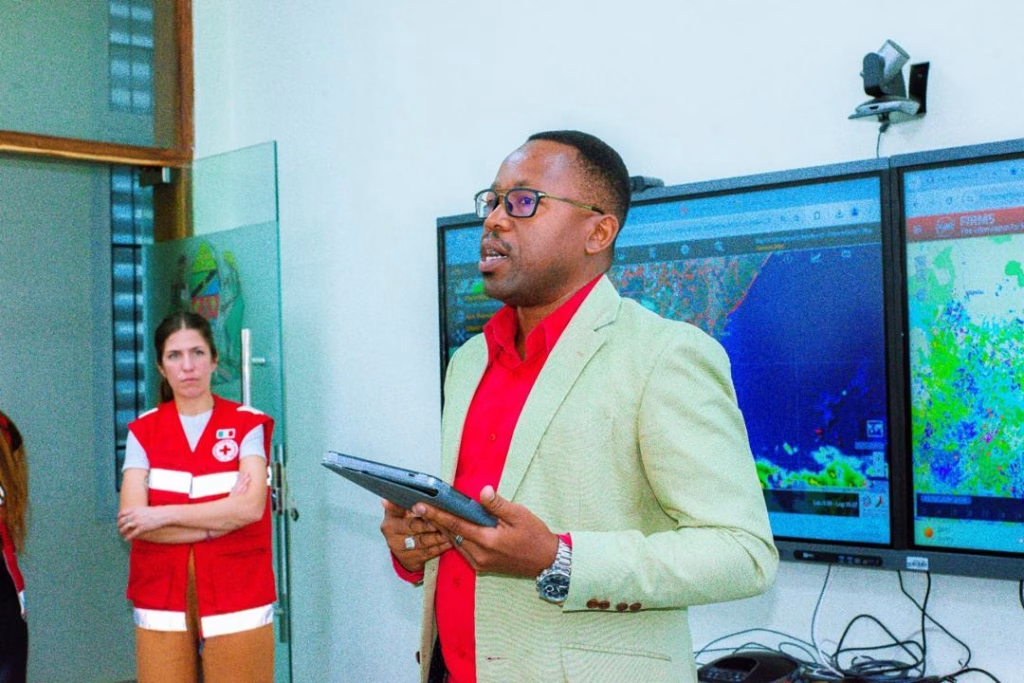
The recent meeting between risk management authorities from Mozambique and Tanzania, held on March 3–4 in Dodoma, represents a significant case study of technical cooperation in early warning systems. The visit of the Mozambican delegation to Tanzania’s National Situation Room, inaugurated in 2024 with the support of the Government of Italy, allowed for an in-depth exchange of best practices in risk information management and decision-making processes for emergency response.
Thanks to collaboration within the African Multi-Hazard Early Warning and Action System (AMHEWAS)— supported by the United Nations Office for Disaster Risk Reduction (UNDRR), CIMA Research Foundation, and the African Union Commission—both countries are working towards integrating their early warning systems to ensure increasingly timely and effective emergency management.
This event in Dodoma is a concrete example of what AMHEWAS can and should be: a network for exchanging risk information, but above all, knowledge and experience between experts and institutions. — Mr. Luca Ferraris, President of CIMA Research Foundation
Mozambique, on its part, hosts the SADC Humanitarian and Emergency Operations Centre (SHOC) in Nacala, a strategic facility connected to the AMHEWAS network, which is tasked with coordinating humanitarian operations across Southern Africa.
Natural phenomena become disasters without adequate prevention. AICS collaborates with stakeholders to strengthen early warning and timely action systems at all levels. Italy, known for its expertise in risk management and civil protection, has contributed to the establishment of Situation Rooms in Addis Ababa (continental level), regional centers in Niamey, Nairobi, and Abuja, and a national office in Dodoma. This know-how enhances the resilience and response capacity of partner countries. — Mr. Marco Riccardo Rusconi, Director of the Italian Agency for Development Cooperation (AICS)
With the support of AICS, the Ready2Act project is currently contributing to the modernization of Mozambique’s National Situation Room in Maputo, aiming to strengthen its connection with the AMHEWAS network and enhance operational effectiveness in national and regional emergency management. Additionally, the expertise gained from cooperation with Tanzania will be applied to the establishment of a pilot provincial operational center in Beira, designed to enhance local monitoring and response capabilities for extreme events.
Mozambique and Tanzania face similar and often transboundary risks. Strengthening institutional cooperation means improving response capacity and community resilience. — Mr. Alberto Armando, Head of the Mozambican Delegation
UNDRR has also highlighted the value of the technical mission between Mozambique and Tanzania, emphasizing its contribution to enhancing institutional capacity in early warning and disaster risk reduction.
This technical mission represents a learning opportunity and a chance to strengthen collaboration among different AMHEWAS stakeholders. Events like this allow us to assess progress and identify priorities for new investments in early warning systems. – Mrs. Tsitsi Magadza, Programme Management Officer for Early Warning Systems, UNDRR.
Tanzania at the forefront of the EW4ALL initiative
This cooperation is part of a broader effort to strengthen global early warning systems, particularly through the Early Warnings for All (EW4ALL) initiative, which is being launched in Tanzania as part of a two-day workshop bringing together government representatives, international organizations, and development partners to discuss the future of early warning systems in the country.
The initiative is built upon four fundamental pillars:
- Risk knowledge through data collection and advanced analysis;
- Monitoring and forecasting to improve extreme event detection accuracy;
- Information dissemination to ensure warnings effectively reach vulnerable communities;
- Response capability to translate early warnings into effective actions on the ground.
EW4ALL is designed to enhance early warning infrastructures in countries most exposed to disasters by improving access to meteorological data and predictive technologies, with the ultimate goal of strengthening climate resilience on a global scale.
International focus on cooperation for Risk Reduction
Il rafforzamento dei sistemi di allerta precoce e l’importanza della cooperazione transnazionale nel settore della gestione del rischio sono stati recentemente analizzati in un approfondimento pubblicato su IEEE Spectrum, che ha esaminato le tecnologie emergenti a supporto della resilienza climatica in Mozambico. Lo studio evidenzia come l’innovazione e la condivisione di conoscenze tra istituzioni rappresentino fattori determinanti per migliorare la capacità di risposta ai cambiamenti climatici.
The Mozambique-Tanzania cooperation experience demonstrates that sharing resources, expertise, and infrastructures can lead to tangible benefits in disaster prevention and management. Investing in early warning systems with an integrated, regional approach not only enhances public safety but also creates a replicable model for other vulnerable regions across the continent.