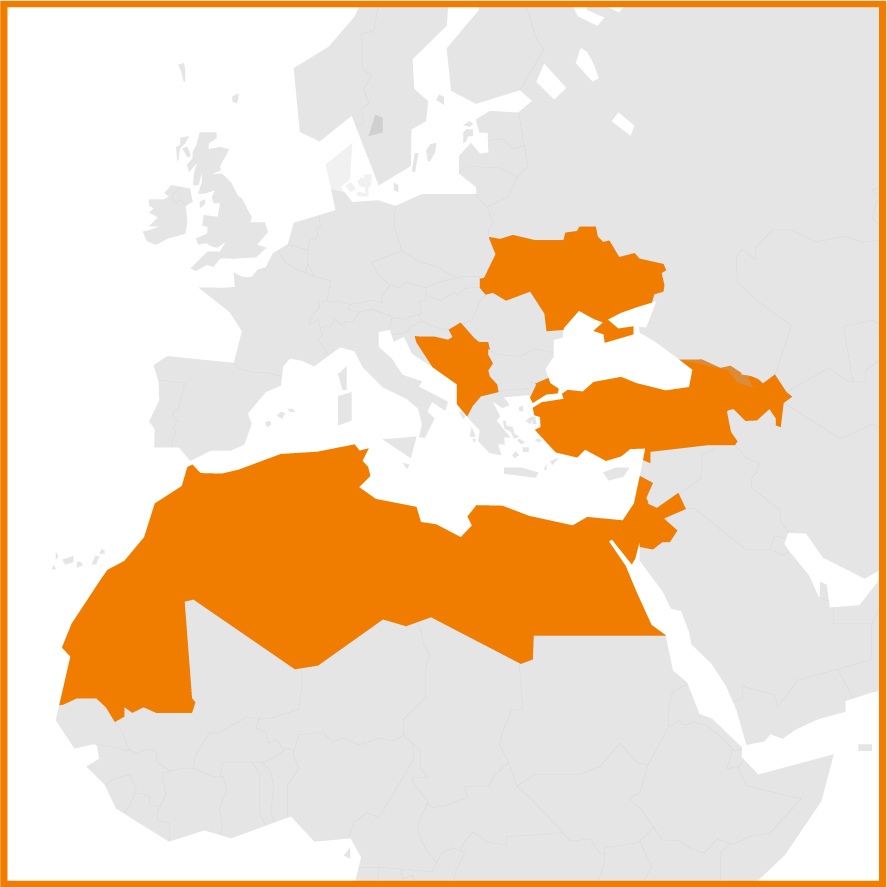
Multi-Country Study is a consortium led by the Italian Department of Civil Protection with the aim of carrying out a mapping study covering 17 countries across 3 regions, to support the definition of cooperation strategies of the European Civil Protection Mechanism (UCPM) towards IPA beneficiary countries and EU Neighbourhood countries.
The study is mainly structured around two closely interconnected components:
- assessment of national and regional disaster risk management systems, through which strengths, critical issues and gaps are identified and, based on these, recommendations are formulated and good practices collected
- capacity building activities, developed based on the needs emerging from the assessment, with the aim of strengthening the capacities of the countries involved and promoting the sustainable transfer of knowledge and skills.
In this way, the Multi-Country Study supports coherent planning, based on concrete data and on the needs of each country, for the development of risk management strategies. It also contributes to strengthening the civil protection and disaster management capacities of beneficiary countries and to fostering the creation of regional cooperation structures that are complementary or similar to the UCPM.
Goals and expected results
One of the main outputs of the project are the Country Risk Profiles: documents providing an overview of the entire disaster risk management cycle (from risk assessment and prevention to preparedness, emergency response and post-disaster recovery), highlighting the strengths, critical issues and intervention priorities of each country involved. The profiles are developed through a process that includes research activities, mapping of the stakeholders involved, analysis of legal and institutional frameworks, and self-assessment with national experts and relevant organisations.
Once the Country Risk Profiles have been defined, the project moves on to the country visits, which provide opportunities for discussion and meetings directly in the countries involved, to present and discuss the draft document together with local stakeholders and institutions. The country visits represent a key step in validating the results of the assessment, aligning them with national needs and jointly defining concrete actions, in a context of ongoing exchange, cooperation and dialogue.
CIMA Research Foundation’s contribution
CIMA Research Foundation is involved in the project inception phase and leads the activity aimed at identifying the main hazards and risks in the beneficiary countries and regions, including transboundary and climate change-related risks. Following the collection and systematisation of existing risk data and maps, these are analysed at national and regional level to identify the main gaps and provide recommendations based on existing guidelines and previous projects, ensuring a common regional approach compatible with EU standards and good practices.
The Foundation is also involved in capacity building activities, through training courses and workshops organised at national level for staff from the relevant authorities, based on the gaps identified and the specific needs of each country.
*This designation is without prejudice to positions on the status, and in line with UNSCR 1244/1999 and the ICJ Opinion on the Kosovo declaration of independence.
**This designation shall not be construed as recognition of a State of Palestine and is without prejudice to the individual positions of the Member States on this issue.