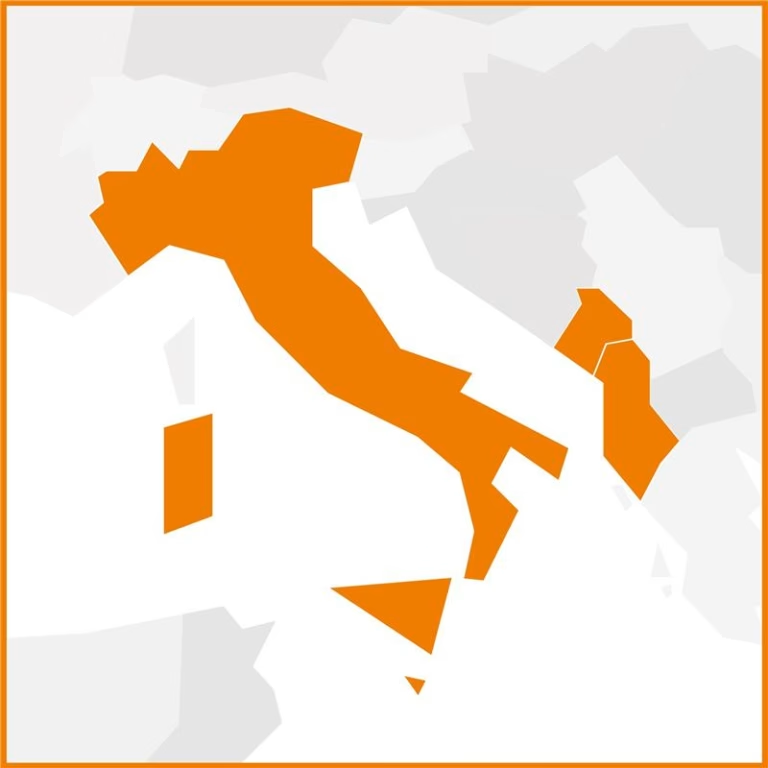
In recent decades, the Southern Adriatic region has experienced severe impacts from climate change, affecting both people’s lives and the environment. In particular, wildfires—especially in densely populated coastal areas during summer—create emergencies that are difficult to manage.
Building on the needs identified in previous projects, EWRECA aims to strengthen regional resilience to wildfire risk through a comprehensive strategy that includes risk analysis, emergency planning, knowledge sharing, and cross-border cooperation. This approach helps reduce the risks associated with climate change, promotes long-term environmental conservation, and fosters a culture of prevention and preparedness.
GOALS AND EXPECTED RESULTS
The main objective of the project is to develop a coordinated system for wildfire management across the Southern Adriatic region, benefiting participating countries, local and regional authorities, environmental and civil protection organizations, as well as local communities. To achieve this, EWRECA produces concrete tools such as a risk management training kit, a shared wildfire management strategy, and optimized early warning systems. At the same time, the project seeks to facilitate cross-border collaboration, harmonizing prevention, preparedness, and response efforts through the sharing of best practices and joint training initiatives, thereby strengthening regional solidarity and shared responsibility among neighboring countries.
EWRECA’s innovative aspect lies in its integrated approach to wildfire management, which leverages advanced tools such as UAV technology (drones) and simulation models, creating a reference framework for future cross-border initiatives in climate change adaptation.
CIMA RESEARCH FOUNDATION’S CONTRIBUTION
Within WP1, CIMA Research Foundation plays a central role in identifying pilot areas for project implementation and in creating four regional wildfire risk maps, developed using advanced geospatial technologies and updated climate and environmental data. CIMA is also responsible for preparing a regional comprehensive evaluation report on mitigation and adaptation strategies, aimed at strengthening the resilience of wildfire-prone areas, providing policy-relevant insights to support risk management planning. Finally, the Foundation contributes to defining the project methodology and drafting the final report.
As part of WP2, CIMA supports the implementation and updating of tools and models for Early Warning Systems (EWS), strengthening the capabilities of civil protection operators and rescue services in applying standard operating procedures (SOPs) based on wildfire propagation models. Key activities include training on the use of drones for wildfire management, participation in cross-border training courses and exercises, updating the RISICO system for the production of daily regional fire risk maps, and developing daily bulletins for stakeholders, citizens, and tourists.