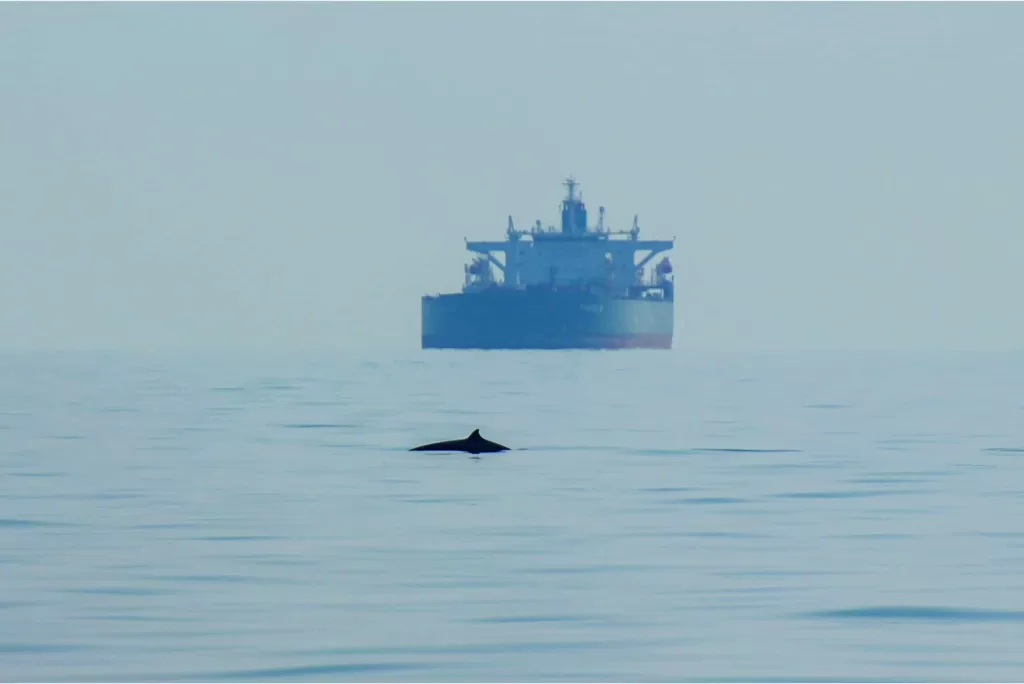
Organized by CIMA Research Foundation, the courses have been developed within the SICOMAR plus project, dedicated to increase the safety of navigation in the Pelagos Sanctuary
The e-learning courses dedicated to the reduction of the risk of collision of boats with large cetaceans, addressed to captains and deck officers, started in the first week of May 2021. Developed by CIMA Research Foundation in collaboration with the General Command of the Port Authorities and under the patronage of the international agreements Accobams and Pelagos, the courses have been developed within the SICOMAR plus project, dedicated to strengthen the safety of navigation in the Pelagos Sanctuary area.
Together with the marine and acoustic pollution, the collisions with the boats represent one of the threats of anthropic nature that the cetaceans have to face. Collisions, in fact, cause direct and often lethal harm to the animals and can therefore pose a risk to the conservation of species, especially those whose populations are already small, such as sperm whales and fin whales. Moreover, it also represents a problem for the safety of navigation, as well as determining an economic damage if the ship is damaged, as it can happen in case the collision occurs with a large species.
Thus, the new courses are intended to train captains and officers on the concrete operations that can be put in place to mitigate this risk. “The course is divided into five phases, which introduce the ecological characteristics of the area included in the Pelagos Sanctuary, show how to recognize the main cetacean species, and present the tools to minimize the risk of collision,” explains Paola Tepsich, researcher in the Marine Ecosystems Department of CIMA Research Foundation. “It concludes with a final test that allows commanders and officers to obtain an individual diploma”.
“This is one of the many important activities planned under the SICOMAR plus project, which aims to promote safe navigation not only, for example, through increasing the sea area monitored by monitoring instruments, but also precisely by reducing the risk of collision with cetaceans,” the researcher continues. “To this end, the CIMA Research Foundation has worked on mapping the hot spots where animals are most concentrated, so as to integrate this information with the data of navigation routes provided by the Port Authority”.
At the moment, Corsica-Sardinia Ferries companies, the first to subscribe to the aims of the SICOMAR Plus project and already involved for a long time in the monitoring activities carried out by CIMA Research Foundation, and Grimaldi Lines are participating in the courses.