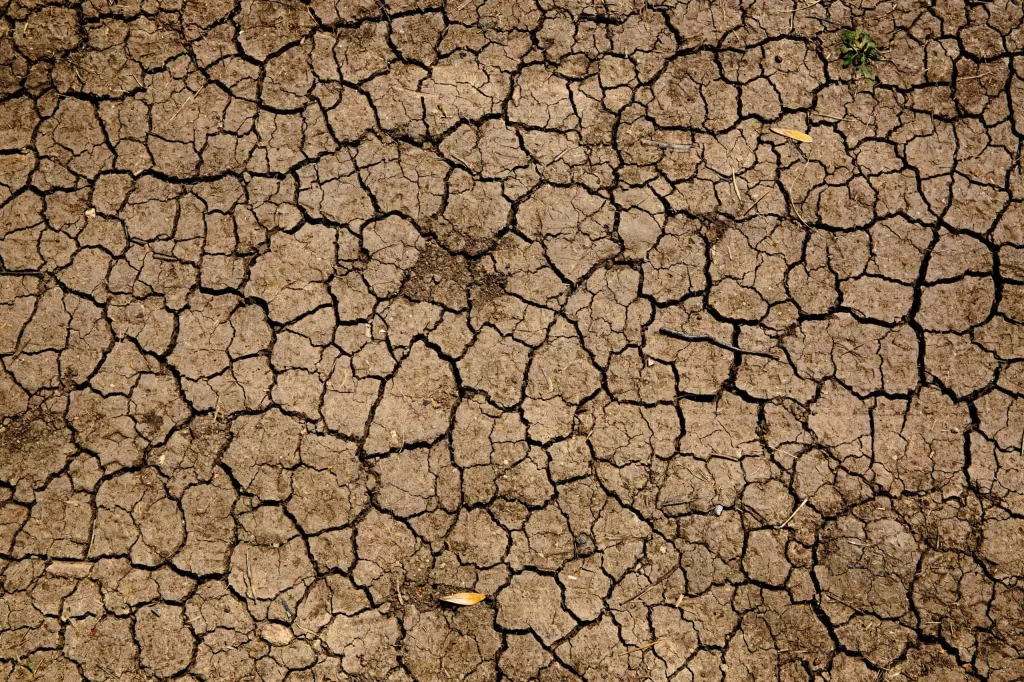
Francesco Avanzi, researcher of the Hydrology and Hydraulics Department of CIMA Research Foundation, gave a lecture to the students of the masterclass Glocal Eyes of the Institute for Environment and Education Scholè Futuro, focused on the effects of the climate crisis on water resources, starting from the example of the recent droughts in California to talk about the Italian realities (especially Liguria, Piedmont and Valle d’Aosta)
On Thursday, September 9th, 2021, Francesco Avanzi, researcher in our Hydrology and Hydraulics Department, gave a presentation as part of the masterclass Glocal Eyes, organized by the Institute for Environment and Education Scholè Futuro thanks to a crowdfunding campaign supported by the Compagnia di San Paolo.
The course was dedicated to students between 18 and 28 years who live in Piedmont, Liguria and Valle d’Aosta and was held between September 6th and 10th. The aim of this first edition of the masterclass was to traincommunication specialists engaged in the fight against climate change from a “glocal” point of view – i.e. capable of comparing the vision of what is happening globally to what is happening locally.
For this purpose, the program has brought together researchers and communication experts to deal with issues related to the climate crisis from different perspectives, from the more strictly scientific point of view to the communicative one. Francesco Avanzi’s talk focused on a topic that our researchers have been working on for some time: the impact of climate change on the availability of water resources. “The idea was to start from the reality of the United States, and in particular of the recent drought thatoccurred in California and its overlap with global warming, to show how this scenario can be declined in geographical areas much closer to us, following a glocal perspective,” explains Avanzi. “Specifically, the local examples concern the possible impacts of climate change on glaciers and snow in Valle d’Aosta Region and on the climate of Liguria Region”.
Avanzi, who worked for several years as a post-doctoral scholar at the University of California, Berkeley, before joining the CIMA Research Foundation, illustrated the reality of a country where the Mediterranean climate, with the concentration of precipitation almost exclusively in the winter months, means that most of water supply comes from snowmelt. The decline of the seasonal snowpack due to rising temperatures, combined with lower precipitation, led to a severe drought between 2012 and 2016 – a condition that returned this year, after a period of “respite”. “The key thing to keep in mind is that the implications of these events affect not only drinking water but also, for example, agriculture and hydropower production,” the researcher explains. “Today’s snow is tomorrow’s water, and its scarcity has important implications at multiple levels”.
If California has already experienced the impact of climate change on its water resources, even closer to us it is possible to outline possible future scenarios. “We have already worked to try to understand what will happen in some Italian regions. In particular, studies conducted with ARPA Valle d’Aosta (the regional environment protection agency) and the Valle d’Aosta Functional Center for Civil Protection suggest that also our glaciers and snowpacks will shrink, with important impacts on the availability of water resources, due to climate change”, continues Avanzi. Again, in Liguria Region, where there are no glaciers, CIMA Research Foundation’s models suggest a decrease in precipitations that will lead to a lower availability of water. In addition, rising temperatures also lead to greater evaporation of available water and greater use by plants, in a feedback mechanism.
“The main message of these studies, combined with the many others conducted globally, is that the problem of scarcity will be one of the key issues of this and the next century – so much so that some are already talking about the “century of water.” These effects do not affect landscape only, but they will have a profound influence at the social and economic levels, because water is a fundamental resource for many of our most important activities,” Avanzi concludes. “However, we have solutions to deal with the problem. In addition to those to mitigate the effects of climate change, which call into question actions such as the reduction of greenhouse gas emissions, there are in fact examples of adaptation strategies, such as agriculture called “smart”: it is up to us to be able to implement them effectively”.