We welcome Professor Antonello Provenzale, who joined the scientific committee of CIMA Research Foundation. His main fields of research are climate dynamics and climate change impacts, with a special focus on the importance of dissemination. We had a chat with him to learn more about his work and the topics we will work on together
Climate change is an issue – and a problem – more relevant than ever, that our society is urgently called to face. In order to do so, it is first of all important to know it, understanding its dynamics and possible impacts in different contexts.
Our researchers also deal with these issues in different ways, studying for example the factors that influence drought, a phenomenon that is increasingly evident and dramatic, and therefore the availability of water resources. Also, they study adaptation strategies, starting from the specificities of individual territories, which allow to reduce the risk for different communities. Fundamental to this work, and to research in general, is the possibility of exchange and comparison with different stakeholders. One of the collaborations going in this direction is the one with Antonello Provenzale, director of the Institute of Geosciences and Georesources of CNR in Pisa, where he deals with climate dynamics, geosphere-biosphere interactions and impact of climate change on ecosystems and water cycle. Professor Provenzale has recently joined our scientific committee and we asked him a few questions to understand how his research activity allows us to deepen the information available on climate change.
What are your studies focused on?
I started my research dealing with the dynamics of complex systems, in particular natural systems. Then I got interested in climate and ecosystems, and in the interaction between geosphere and biosphere, a field of investigation that includes also the effects of climate change.
Basically, my approach is devoted to modeling: with my research group, we develop models that allow us to simulate different dynamics, such as carbon dioxide exchange between soil, vegetation and atmosphere, to see how they vary over time and how they might change as drivers change – such as increasing temperature, or changing soil humidity. In recent years, we have also begun to conduct field measurements, which allow us to gather information that helps both validate the models and stimulate their development.
What are the main limitations of the models we have available today for studying the effects of climate change?
Climate models generally provide reliable results, but there still are several aspects that need to be better understood. For example, the role of the biosphere, the dynamics at the Earth surface (e.g. the soil, vegetation, Arctic permafrost), and the complexities of the water cycle. An interesting result that has emerged from our studies of carbon dioxide exchanges between soil and atmosphere is that, in addition to temperature and solar radiation, soil moisture and the state and type of vegetation also play a very significant role. This means that in climate models it is important to accurately replicate vegetation cover, because different species behave (and affect the environment) differently. This is an aspect that climate models today take into account only partially, also because their resolution is not high enough. One of the goals of our work, in fact, is to understand which elements are not yet well represented in climate models and find a way to parameterize them, i.e. include them at least in approximate form.
Scientific knowledge is the basis on which to build climate change adaptation strategies, meaning that we need to understand what is happening and, as much as possible, try to make predictions about changes and impacts in the future to decide how to act to mitigate risks. Representing what is happening or has happened and providing predictions for the future is precisely what climate models do: but can modeling help in other ways as well?
The challenge is to have not only predictive models but also the so-called digital twins, that is, models that somehow manage to represent reality well enough and can be used as a laboratory, to test what would happen depending on how the environment changes. For example, another area of research in which I work is wildfires, that are also influenced by climate change. In our analysis we have shown, among other things, that in the last thirty years the burned area in Italy has generally decreased, albeit not everywhere, owing to both changes in ecosystems and better prevention and control measures. However, in the near future we expect an increase of wildfires, due to more intense and extended summer droughts, which will require additional management efforts.
Here, a digital twin can support precisely the management aspects, showing how the risk would change in a particular area if, for example, some different vegetation types were introduced or others were eliminated.
On our planet there are many ecosystems, very complex and different from each other. In your research activity, which ones do you focus on?
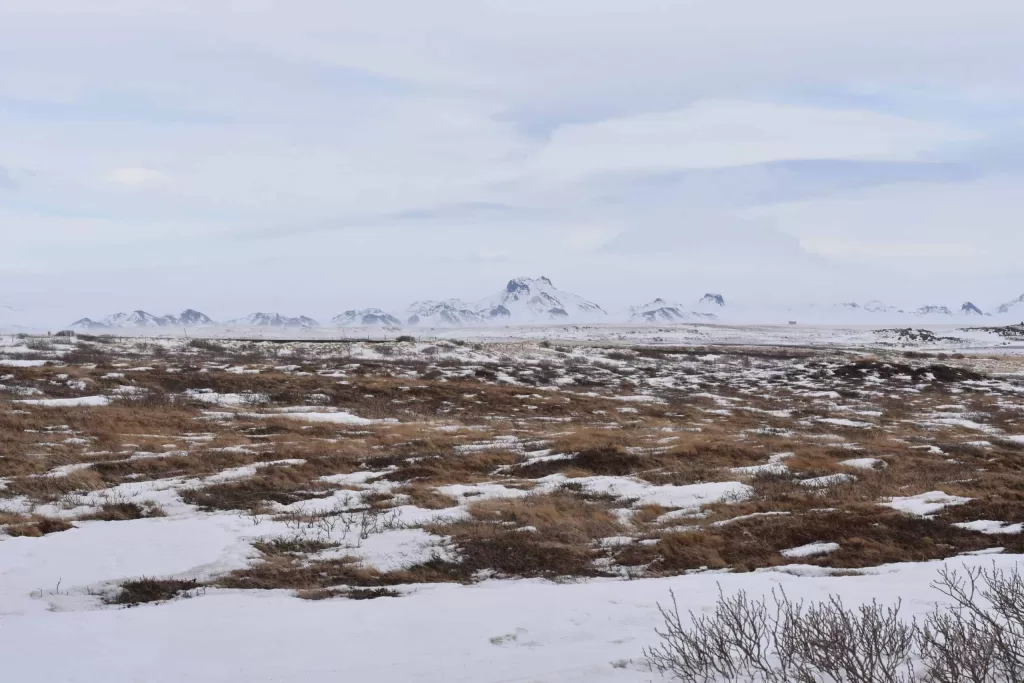
We mainly work on ecosystems of extreme environments, that is, high altitude alpine grasslands, Arctic tundra and deserts. These are regions where environmental controls on the ecosystem are most clearly manifested. In a certain sense, in fact, they are “simplified” systems. To give an example, in a tropical forest the relationships between organisms have more influence than direct environmental control, while in extreme environments the abiotic control is strong, in the sense that the ecosystem responds very quickly to any changes in the environment. Of course, this does not mean that even extreme areas, such as a desert, are not subject to the action of organisms: for example, some desert shrubs act as environmental engineers, creating around themselves oases of humidity from which different species benefit. In extreme environments this type of interaction is more evident and easier to study.
This kind of study must require the synergy of very different skills.
Absolutely: more than multi-disciplinary, I would call my work trans-disciplinary. Or at least, this is the direction in which we must go, meaning by “trans-disciplinary” an area that not only brings together different scientific skills (from biologist to geologist, from modeler to geomorphologist, to mathematician) but also brings together socio-economic and policy aspects to work with a view to defining actions and strategies from the legislation point of view.
Besides being a scientist, you have also worked in the field of science communication and you dedicated your last book, Crocodiles at the North Pole and Ice at the Equator. History of Earth climate from origins to nowdays (Rizzoli, 2021, in Italian). Any considerations on the way of communicating issues related to climate change?
Communicating science is not easy: it requires to study a lot, also by part of the scientists themselves. In my opinion, with regard to communication on climate change, in addition to the error of giving space to denialism, which has no scientific basis, a problem can be posed at the other extreme, that of catastrophism. Throughout history, our planet has already seen enormous climate changes and it is still here; to suffer the consequences are, if anything, the species that inhabit it. Today, we are witnessing very rapid climate change induced by human actions, and if the temperature continues to rise, the costs of repairing the damage will become much higher than those of the energy transition. And we’re certainly not just talking about economic costs! The price is also social, from deaths to mass migrations and water wars. In short, we must keep in mind that we don’t have to save the planet but the world we know.
Also, catastrophism is not very constructive. I think that too often, in communicating about climate change, we risk neglecting the most important aspects, which are not just how the climate is changing but how we want to act to mitigate its impacts: where to make wind farms? Do we want to go back to nuclear or not? Those are some of the questions we should be focusing on.