
“Aprile non ti scoprire,” as the Italian saying goes, don’t shed your layers just yet. An expression that also aptly describes the evolution of snow water resources in Italy. After an intense melt phase between February and early March, the second half of March brought colder conditions and fresh snowfall, introducing a temporary pause in the seasonal decline.
By mid-April, however, at the national scale, the snowpack has returned to its natural melt cycle, with a Snow Water Equivalent (SWE) deficit of about –11%. The season has entered its final phase, though not without a few unexpected turns along the way.
A pause in the melt: the role of temperature and precipitation
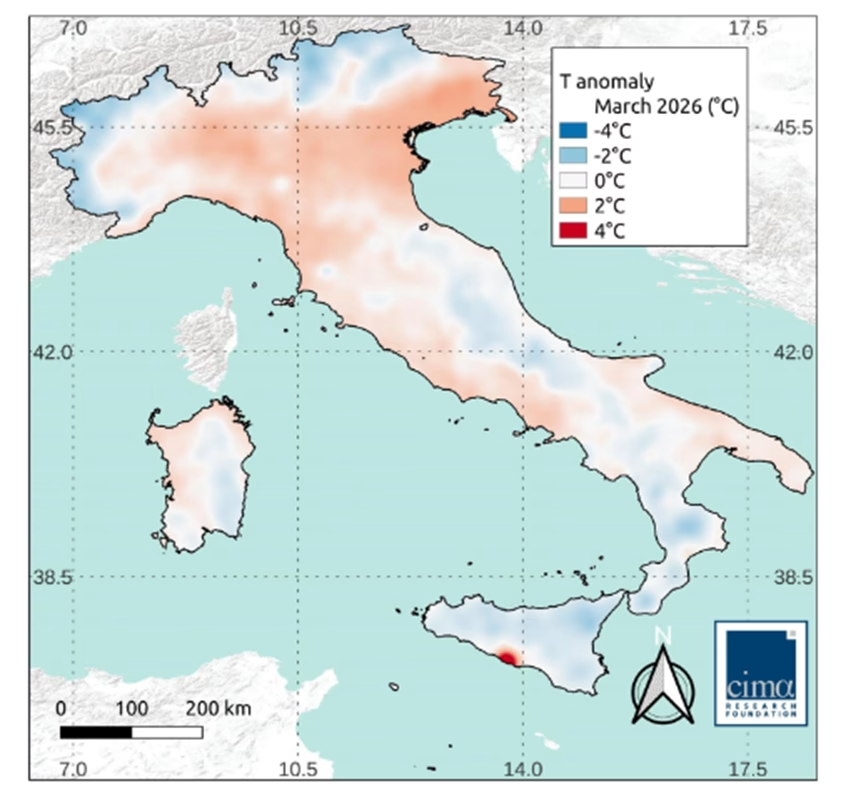
March showed a less linear behavior compared to previous months. Temperatures across much of Italy’s mountainous regions were below average, particularly in the Alps and the central Apennines.
This cooling temporarily slowed the melting of the snowpack, especially around mid-month. At the same time, new precipitation, falling as snow at higher elevations, affected several Alpine sectors, particularly in Piemonte, as well as large areas of the Apennines.
The result was a short but significant recovery in SWE, observable until early April. A clear example of how snow resources are governed by a continuous balance between temperature conditions and snowfall.

Apennines: a late but significant recovery
It is in the Apennines that this balance produced the most evident effects. Late-season snowfall brought the snowpack to its highest seasonal peak of the entire winter (+59%) in early April.
This represents a positive signal for local water resources, but one that must be interpreted with caution. As this season has shown, a late recovery cannot fully compensate for deficits accumulated during previous months.
In the Sangro basin, for instance, recent snowfall brought SWE close to peak values (around 100 million cubic meters), yet the below-average conditions observed until just a few weeks earlier have already had impacts on ecosystems, groundwater recharge, and water resource management.
As noted by Francesco Avanzi, snow hydrology researcher at CIMA Research Foundation: “Snow water resources are not a snapshot of a single event, but the sum of the entire season. When snowfall arrives late and all at once, it can reshape the landscape in just a few days, but it cannot fully rewrite what happened in previous months. This inevitably affects how much water will actually be available downstream. From a hydrological perspective, it is not only the amount of snowfall that matters, but also when it accumulates and how it evolves over time: a season with late accumulation alters the timing and volume of melt, influencing runoff and water availability in the following months.”
Alps: a season already in the melt phase
Moving north, the situation appears more stable but already well into the final phase of the season. The Italian Alps are currently slightly below average, with a deficit of about –16%, and have been in continuous melt since late February.
Here too, late-March snowfall caused a temporary increase, but without changing the overall picture: the seasonal transition from snow to water is now underway, in line with the time of year and the approaching irrigation season.
Po and Adige: contrasting dynamics
Among Italy’s major river basins, clear differences emerge.


The Po basin continues to stand out for its near-equilibrium conditions: SWE remains close to the seasonal average (–1%). This is particularly notable when compared to the widespread perception of an exceptionally snowy winter.
“The general perception has been that this was an exceptionally snowy winter, but the data tell a different story: rather than extraordinary, this season has largely been in line with climatology. It is a form of ‘normality’ we are no longer used to, especially after years of declining snow, particularly at mid to low elevations,” Avanzi explains.
This “normality,” however, is not uniform across elevations. Conditions are close to average mainly above 2500 meters, while snow deficits persist at mid to low elevations, a recurring feature in recent years.
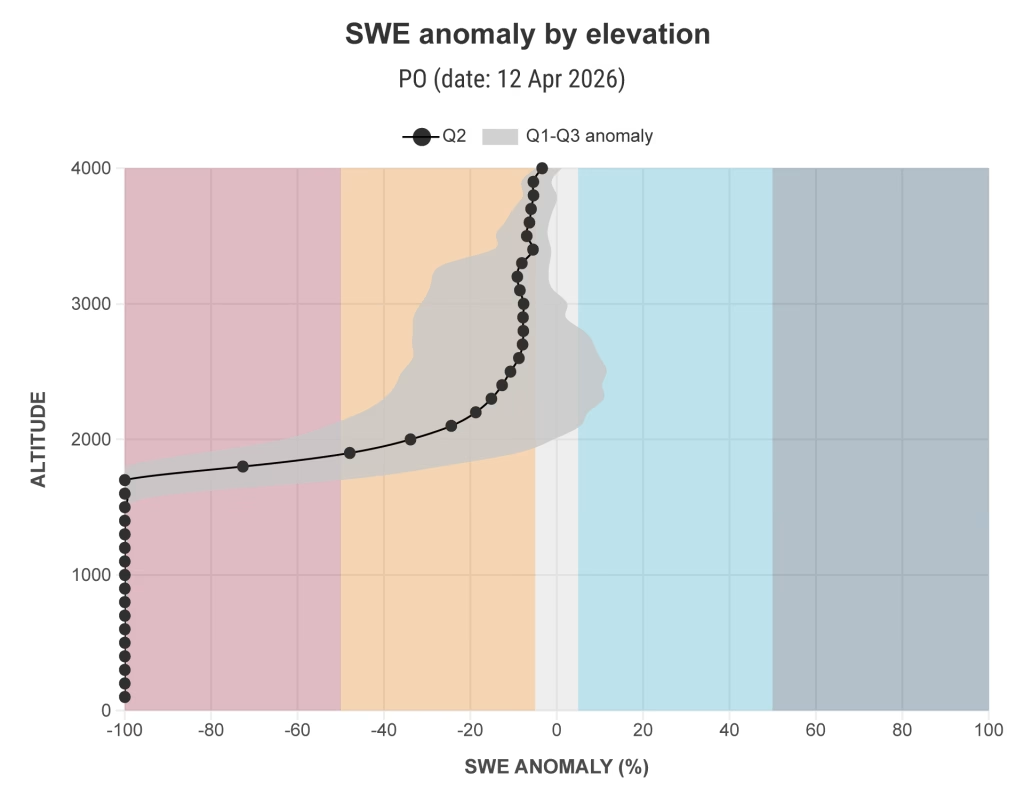
In contrast, the Adige basin still shows a significant deficit (–41%), with conditions comparable to those observed in 2022. Melt is already underway here as well, but starting from a lower-than-normal snow accumulation.
What to expect next: temperature as the dominant driver
Looking ahead, temperature will play the dominant role. During the melt phase, it is the key factor controlling how quickly snow is transformed into water.
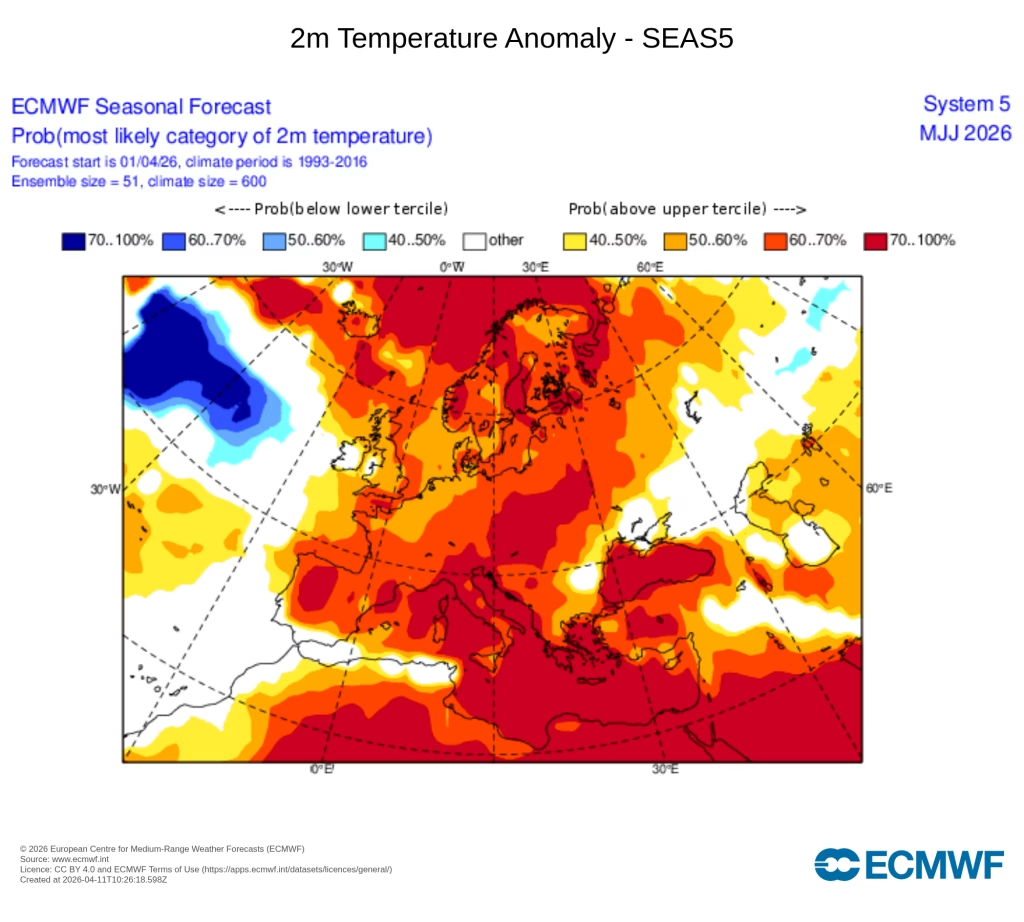
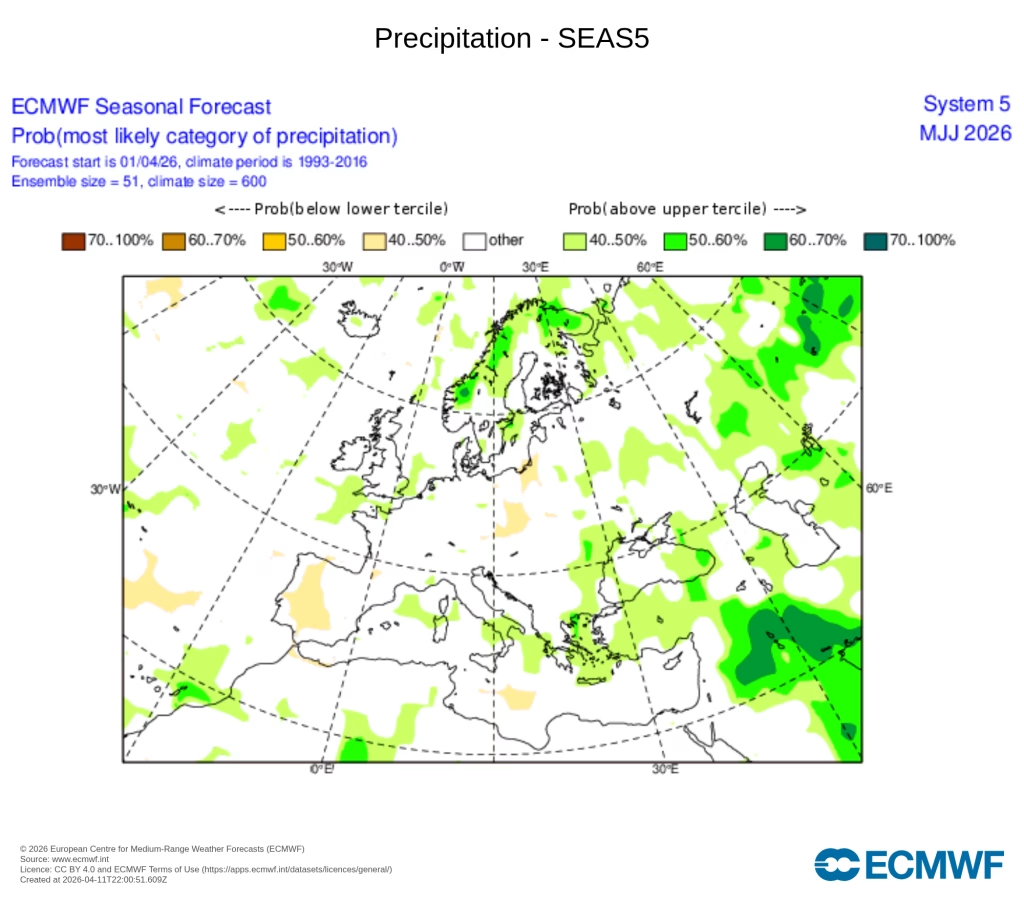
Seasonal forecasts from ECMWF indicate a warmer-than-average spring, suggesting an acceleration of melt processes compared to climatological norms. On the precipitation side, however, signals remain uncertain, making it difficult to identify clear opportunities for further recovery.
Toward the end of the season
The snow season has now entered its final stage. The focus is no longer on accumulation, but on transformation: how quickly the snow will melt and how much water will ultimately reach rivers, lakes, and reservoirs.
The next update, scheduled for May, will also be the last of this season. It will provide an opportunity to assess not only how the snowpack evolved, but above all its real contribution to summer water availability.