A study just published in “Scientific Reports” shows how the analysis of the ratio between nucleic acids can be a valid indicator of the health status of cetaceans, providing an approach for the study of these populations in the natural environment
To determine a whale or dolphin’s state of health, let’s consider looking at its genetic material. Or rather, looking at the ratio between the two nucleic acids involved in protein synthesis, RNA and DNA. This is the finding suggested in a study recently published in Scientific Reports, signed by a group of Portuguese and one of our researchers.
Nucleic acids as indicators of health status
Using genetic material to understand the eco-physiological conditions of an animal has the advantage of requiring only a small sample of skin (especially notable given the particularly complex nature of research in marine environments) from which to extract nucleic acids. Genetic material can provide important information. In fact, if the DNA content of cells is mostly constant during the life of an individual, the RNA, the material on which protein synthesis is based varies instead according to growth needs. In other words: the more an organism grows, the more it needs proteins to build and repair tissues, and consequently, the more it produces RNA.
As a result, the relationship between RNA and cellular DNA provides clues about protein reserves, which in turn vary depending on the environmental conditions in which an organism lives, such as the availability of food.
“This approach has so far only been applied to certain groups of animals”, says Massimiliano Rosso, a researcher of the Marine Ecosystems Department at CIMA Research Foundation and co-author of the study. “In the work just published, we tried to understand if it was also applicable to two species of cetaceans that, as apical predators, play a key role for the ecosystems in which they live. On the other hand, cetaceans are deeply influenced by anthropic pressure, for example due to habitat loss and pollution”.
Two species, two questions
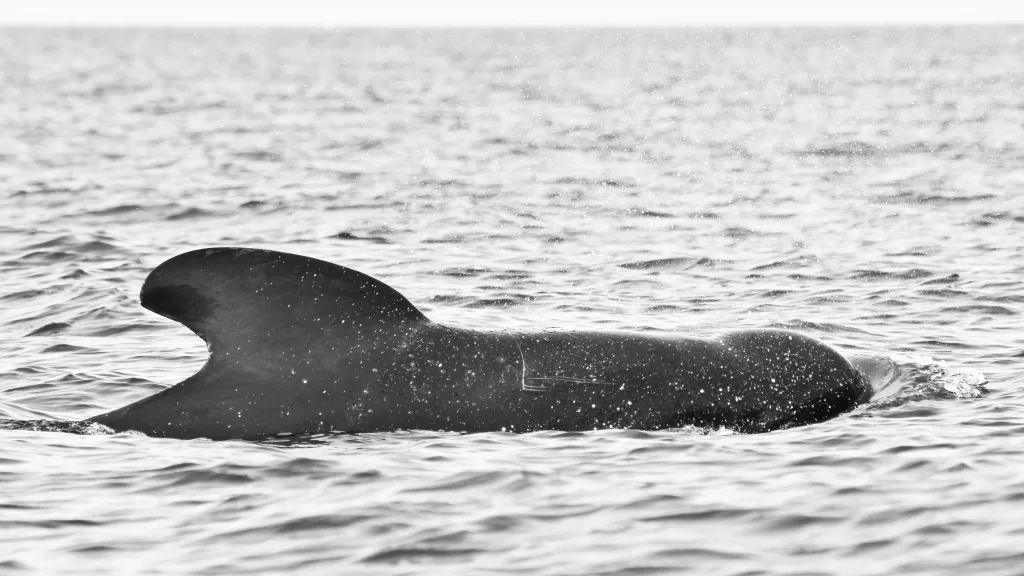
The two species analyzed are the bottlenose dolphin (Tursiops truncatus) and the Gray’s blackfish (Globichephala macrorhyncus). Although both are classified as least concern by the IUCN, information on population trends is lacking. They are considered common in the Macaronesia area (the archipelagos of the North Atlantic and off the African coast), where they have been studied with genetic tests and photo-identification techniques. Yet we still know little about their health state, so they are good candidates for testing how the analysis of the relationship between nucleic acids can help obtain information about their physical condition.
In particular, researchers have tried to answer two questions. First, are there differences between the two species in terms of health and nutritional status? Secondly, are there differences within the same species, for example, due to sex or season?
Healthy populations
In response, researchers conducting the study analyzed the ratio between RNA and DNA from samples of 39 bottlenose dolphins and 37 blackfishes collected during sea campaigns conducted between 2017 and 2018. The results of the analysis showed that the populations could be considered healthy, i.e. with a high ratio between the two nucleic acids. However, animals that are sedentary, i.e. do not move much from the island, would appear to have a more compromised health status than nomadic animals. In fact, the best results belong to some specimens of blackfish that have visited the waters around Madeira for some time, coming from unknown areas of the Atlantic Ocean. These individuals have been nicknamed “visitors”:
“The visitors seem to be in better nutritional condition. The hypothesis is that these animals, given their more nomadic habits, are better able to adapt to the different oceanic environments and therefore to nourish themselves more efficiently. More studies will be necessary, however, to confirm this,” explains Rosso.
In terms of intraspecific differences, researchers found no significant differences between the sexes. This is interesting because the difference between the sexes was observed in studies previously conducted on other groups of animals. “Not finding gender differences is counterfactual. While our results did not show this difference, again, further research is needed to confirm the result”, the researcher adds.
Finally, in general, bottlenose dolphins showed a higher RNA/DNA ratio than blackfish. However, this may not be due to a better health status, but to an intrinsic species-specific difference.
Towards future studies
Although the work highlights the applicability of the study of nucleic acids to assess the health status of cetacean populations, the authors point out some limitations of this approach. For example, they note that it is difficult to combine results with morphometric tests because cetaceans move rapidly, which does not allow for precise measurements. In addition, different tissues may have different RNA to DNA ratios, so it is very important to be sure to always have samples from the same part of the animal’s body. Despite this, the results are encouraging.
“This work is the first to apply the analysis of the relationship between nucleic acids to these large marine predators in order to study their ecophysiological state. It is for this reason that many of the results we have obtained will need to be confirmed and further analyzed in the future,” concludes Rosso. “At the same time, we have shown how this approach can be a valuable study tool for animals on which research is traditionally difficult.”