The primary goal of disaster risk reduction is prevention. But when that is not possible, then it is important to minimize the harm to people, assets, and livelihoods through early warning systems.*
13 October is the International Day for Disaster Risk Reduction, set up by the United Nations General Assembly to promote a global culture of disaster risk reduction. On this day, the Italian Civil Protection Department organizes the Civil Protection Week, an annual event – now in its fourth edition – that takes place from 10 to 16 October. It’s an opportunity to travel around Italy and abroad to tell the story of science and collaboration.
Disaster Risk Reduction (DRR) – what is it about?
According to the definition suggested by UNDRR, “Disaster risk reduction is aimed at preventing new and reducing existing disaster risk and managing residual risk, all of which contribute to strengthening resilience and therefore to the achievement of sustainable development.”
Thus, it’s about prevention, research, and resilience, but DRR is made up of many diverse parts: it’s a group of multidisciplinary multi-level components that allow the establishment of a well-structured mechanism.
Let’s see some of them.
Cooperation and Collaboration
“Working together is essential: it’s not a motto, but a necessity. The society we live in is too complex to think about individual solutions.”. Tough challenges and complex societies must be dealt with together, as Carlo Cacciamani, director of Agenzia ItaliaMeteo, has claimed during a workshop in our CIMA Glocal Forum. Cooperation and collaboration are the centers of natural and anthropic risk management and reduction, on national and international territories. Communities must work together on multiple levels: science, politics, society, and every stakeholder is involved in these challenges.
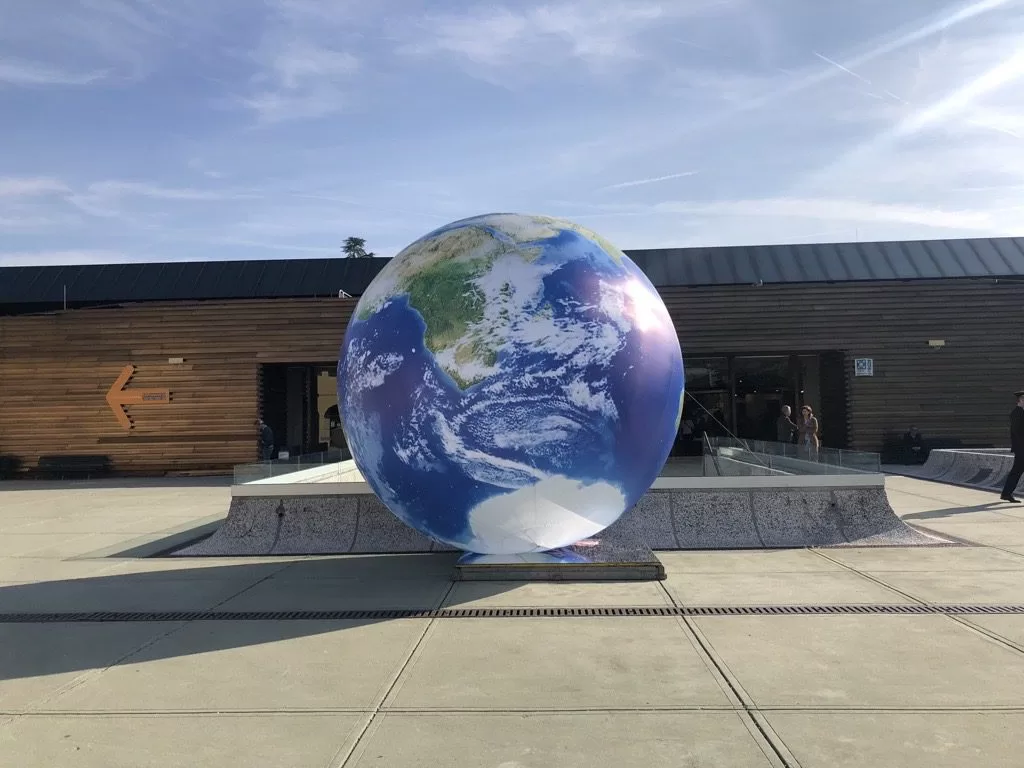
Hence, on October 7, at Earth Technology Expo in Florence, we’re contributing to the creation of a link between science and international cooperation. Our director Marco Massabò takes part in the meeting on Emergencies and natural risk management, with a speech about our international partnership work and the DRR African network of excellence strengthening work.
From 12 to 14 October, our researchers Eva Trasforini and Eleonora Panizza with director Roberto Rudari are in Nairobi at the IGAD Climate Prediction and Applications Centre (ICPAC) headquarters to lead a training dedicated to Capacity Development in the Disaster Displacement Risk area of interest, in collaboration with the Intergovernmental Authority on Development, IGAD, and with the Platform in Disaster Displacement, in the Migration Multi-Partner Trust Fund area of interest.
The workshop, named Modelling Disaster Displacement Risk in the IGAD region: Forecasts and Future Scenarios, occurs as part of the jointed program’s first pillar, which focuses on the improvement of Disaster Displacement Risk quality data access and on other means of human mobility, with the goal to intensify the preparation and minimize the risk of the region. As technical partners of the project, our experts will introduce the methodology employed to process the Displacement Risk Profiles for floods and cyclones and for the implementation of an Agent-Based Model to simulate the impact of different political options on forced relocation.
Scientific research and tools development
“The future presses while the present is already rich in the knowledge and tools useful to predict to prevent, but above all to plan to act,” says our president Luca Ferraris, who on Monday 10 October at the Civil Protection Department in Rome speaks at the workshop The evolution of scenarios and risk maps as civil protection tools. “In January, thanks to our monitoring work on the snowpack, which for the first time was measured at a national level, we had already predicted the severe drought that we then experienced in the summer”, Ferraris continues. “The message that has to get through to all levels of the decision-making chain is that we have to plan, and to take action before emergencies occur, just as we are looking at what happened in Marche or Sicily right now. We can and must do this, because we know the climate scenarios from here to fifty years from now, which although they are probabilistic calculations tell us which direction to go in. But we cannot wait any longer”.
It is crucial and essential to include communities, both in the planning and in the intervention. Marina Morando, head of our Planning and Procedures Department, takes part in the workshop on the Civil Protection Best Practices Observatory, a moment to share the work carried out following the meetings with the various representatives of the National Civil Protection Service. A moment of sharing and comparison on the “last mile” of the system, which sees local and national institutions side by side.
(More information on Civil Protection Week events here)
If we combine science, training and international cooperation, we think of Mozambique, where we are carrying out, together with the European Commission’s Directorate-General for Civil Protection and European Humanitarian Aid Operations (DG-ECHO) and the Italian Agency for Development Cooperation (AICS), projects that strengthen resilience and risk management capacity in the most vulnerable communities, working in particular on flood warning systems (Early Warning System) and coordination mechanisms. Mami Mizutori, director of UNDRR, chose Maputo to celebrate #DRRday on October 13. Marco Massabò, Director, and Alessandro Masoero, researcher in the field of Hydrology and Hydraulics, together with our partners from CENOE – National Emergency Management Centre and DNGRH – Direcção Nacional de Gestão de Recursos Hídricos, are taking part in the visit of the UN Special Representative, explaining the work we are carrying out in the country, which has been severely affected by hurricanes, together with the NGO WeWorld. An important example of cooperation between national and international bodies that also reaches out to the communities living in the area.
Scientific and dissemination study of risks
On the occasion of the last CIMA Glocal Forum, Marco Russo, mayor of Savona, said: “Adaptation and mitigation must be experienced not just defensively but as an opportunity for an area […]. This needs to be addressed both from a strictly structural point of view and from a community point of view”. DRR cannot exclude from adaptation and mitigation strategies both structural and scientific action as well as dissemination and serving local communities.
This is the context for the events organised for #DRRday by the Liguria Region, Savona Municipality and Genoa City Council.
On October 12, the Ligurian Region’s Civil Protection Department will set up an exhibition itinerary in Piazza De Ferrari in Genoa, with dissemination stands entitled 2020-2022: three years of commitment and growth of the Regional Civil Protection System. As a competence center of the Civil Protection Department, we will be present at one of the information points, where we will offer our expertise on the theme of forest fire risk. This will be followed by an institutional event attended by the Head of the Civil Protection Sector of the Liguria Region, Eng. Stefano Vergante, the Regional Councillor for Protection, Giacomo Raul Giampedrone, the President of the Liguria Region, Giovanni Toti, and the Head of the National Civil Protection Department, Fabrizio Curcio.
Then, on October 13, our president take part to a press conference organised by the Savona municipality to talk about the risks in the area – and, above all, about what can be done and what is being done to mitigate them or to promote the adaptation of citizenship, such as the work carried out with the municipality to improve the safety of the Legino district, where the university campus, where the CIMA Research Foundation is based, is located. Once again, prevention involves “planning a new mode of development that makes our built-up areas more sustainable and creates opportunities to ‘re-occupy’ and thus manage our fragile territory,” as Ferraris explains. “The risk of flooding and forest fires on the Mediterranean coast that we fight against every day is the result of economic, social and industrial development in the post-war years, which on the one hand has led to the tombing and shrinking of streams at their end, and on the other to the abandonment of those lands that today represent a threat and not instead an opportunity, as it was for our great-grandparents.
On the same day, we will also be with the Municipality of Genoa at the project event “Culture of civil protection in pills” at the Lercari library in the Villa Imperiale complex in San Fruttuoso, where the projects carried out in the 2021/2022 school year by the member schools will be presented. Citizenship is also part of the civil protection system and constitutes a fundamental part of it: in a risk situation it is “the behaviour of individuals” that makes the difference. It is important to use the utmost caution and to take care – or rather, to take care beforehand – to check with one’s own municipality in what risk zone the areas one usually frequents are, in order to know beforehand what actions one must take in the event of very heavy rain. A lesson that is important to learn from an early age, the education of the younger generation today is an investment for tomorrow.
Involvement and participation of the population for a risk culture
“The ability of civil protection to reach local communities is also due to volunteers, whose role is never talked about enough: yet it is through them that the culture of awareness becomes a reality”. This aspect, highlighted by Marco Toscano Rivalta, director of UNDRR’s Asia office, during our 15th anniversary event (read more here), goes directly to the core of I Do Not Risk (Io Non Rischio), the national communication campaign, of which we are a partner, dedicated to raising awareness and disseminating good practices in case of natural events such as floods, earthquakes, tsunamis and volcanic eruptions. Once again this year, the campaign returns to the squares of Italy’s cities over the weekend of 15 and 16 October.
Not only in the squares, but also online! In fact, on Saturday, October 15 we will take part in the national live event Io Non Rischio, which will be streamed on the social channels of the campaign and of the Civil Protection Department. We will talk about risks in relation to places, to the territories we inhabit and of which we are part. It will also be an opportunity for us to present our new plastic model, created for educational purposes, on river flood risk. The model represents the basin of the Bisagno river and the Fereggiano stream in Genoa and it will therefore be possible to observe the behaviour of rainfall and the dynamics of flooding in basins similar to those in the area represented, according to the dynamics that occurred during the Genoa flood of 4 November 2011.
(More information on the 2022 edition of Io Non Rischio here)
Follow us on our social channels to experience this storytelling of events and expertise with us!