
Within CETASMUS programme, the students learn the monitoring methodologies and contribute to implement the sighting database, a fundamental tool to evaluate the health of our sea. This year there has been many sightings, and there are good news even for the rarest species
CIMA Research Foundation’s research campaign started at the end of May in the Pelagos Sanctuary for the protection of marine mammals. This year, the Headwind catamaran has been the scientific base for two important projects. The PlasticBuster MPAs, headed by the University of Siena and of which we talked here, was dedicated to the study on microplastics impact on the sea. The other project was dedicated to the study of ziphius and saw the collaboration of Saint Andrew University (Scotland) and Duke University (USA). Besides these two projects, CIMA Research Foundation’s crew, on board of Headwind, has proceeded with the usual research and monitoring activities in the Ligurian sea.
CETASMUS Programme
Ten students coming from five different countries (France, Italy, Germany, Portugal and United States) have cooperated with the researchers. The students have participated in the CETASMUS high formation programme, which so far has seen 92 students coming from 35 different countries. Many of them could benefit from an ERASMUS scholarship, because the programme is recognized as a unique superior education experience, and allows for the acquirement of practical knowledge that is not offered by any other university. The participants carry out monitoring activities during the summer, on board not only of Headwind but also of ferries of Corsica Ferriers-Sardinia Ferries Company and whale-watching boats operating in the Ligurian coast.
CETASMUS programme provides a 360-degree training on cetaceans monitoring. Moreover, it contributes to the implementation of the sighting database, a fundamental tool to evaluate the health status of the sea.

Some numbers
The sea campaigns are not finished yet, but data are already notable. There have been 83 sightings of fin whale, with 101 total individuals. This year, the species has shown a particularly high degree of variability in terms of presence and distribution: some days did not get any sightings, while on others researchers arrived to the record number of 13 sightings. Sperm whales have been seen, too. More than twenty have already been registered, and many of them have been seen in these last weeks from the whale-watching boats.
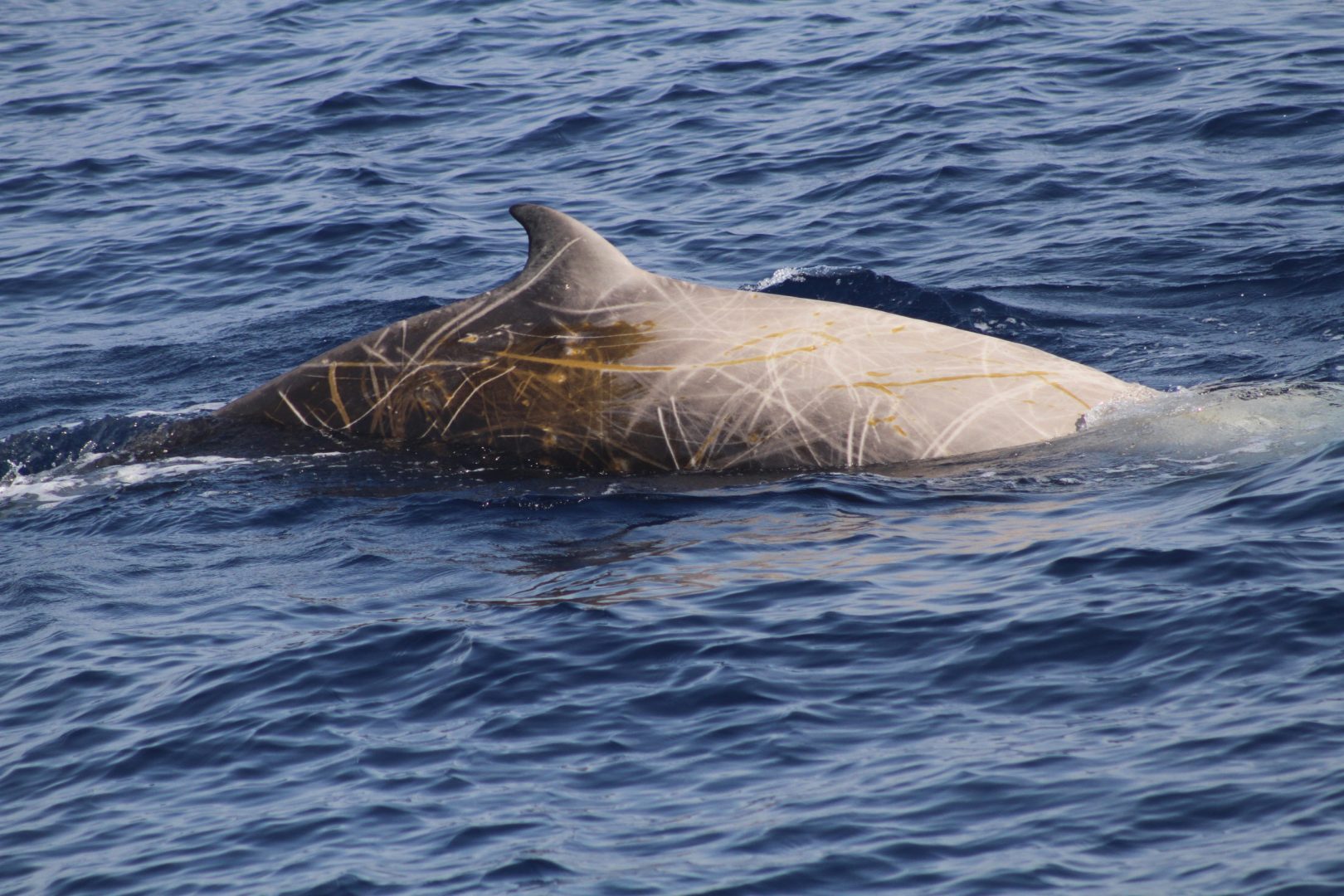
Many of the sightings have been of the Cuvier’s beaked whales, and an increased effort has been dedicated to the species. There have been 164 sightings until now, with many individuals already recorded in the database of CIMA Research Foundation, the most comprehensive on the species at the Mediterranean level. Besides these already registered animals, also many young individuals and three puppies, less than one month old, have been sighted.
These months of work also allowed the sightings of 50 striped dolphin groups and 10 common bottlenose dolphin groups.
There is good news for the species generally considered more rare. There have been four sightings of long-finned pilot whales. Moreover, the operators have encountered many times a group of Risso’s dolphin. For this species, there have been few sightings in the last years: the encounters of this season are therefore a particularly positive signal, and they show how touristic and commercial activities led in a sustainable way and with the collaboration of the scientific world are fundamental for the safe-guard of the species.
These are important numbers, especially when considering that during the first part of the summer the meteorological and marine conditions did not allow the researchers to leave. The research campaigns will soon restart and will go on during the whole of September. Starting from October, then, the winter campaign will start on board of Corsica Ferriers-Sardinia Ferries Company.