During the educational meetings within PON, at the Istituto Comprensivo di Serra Ricco e Sant’Olcese, students could not only know about but also apply on their territory the basic knowledge of meteorology and hydrology
How can we bring children closer to science and science closer to children? One way is to take science—and its instruments, methodologies and fields of application—with us into everyday life. The educational meetings of CIMA Research Foundation with the students of the Istituto Comprensivo di Serra Riccò e Sant’Olcese (Liguria, Italy) are based on this strategy. The meetings have taken place within the National Operative Programme (PON) of the Italian Minister of Education, University and Research.
Not only in the classroom
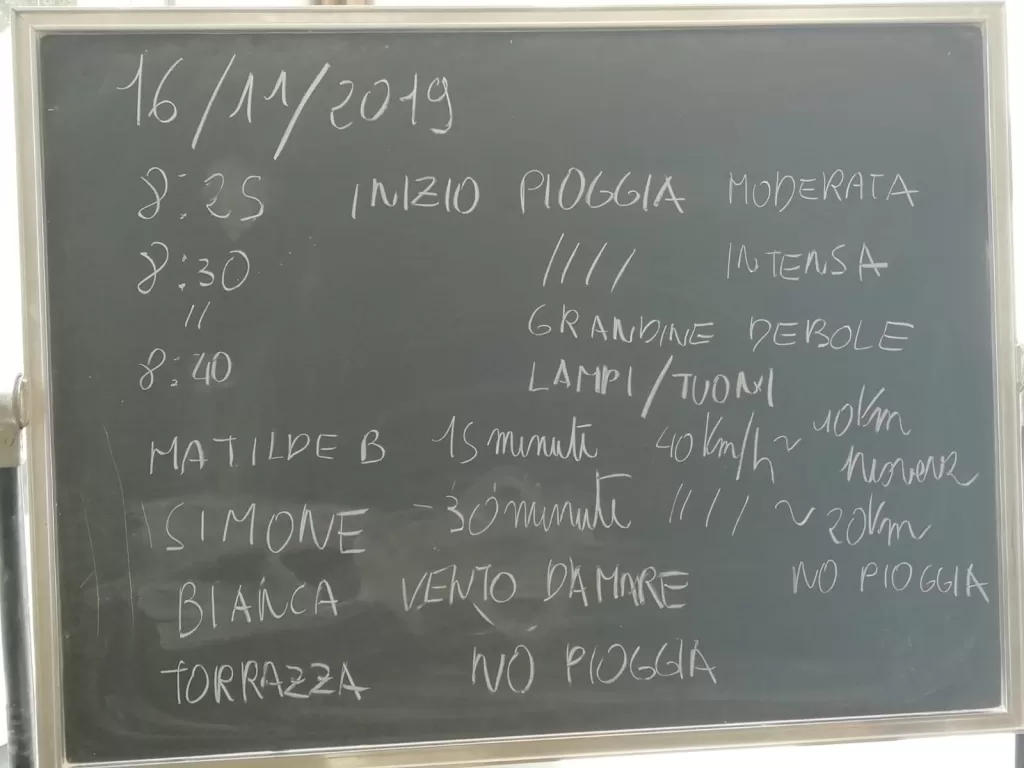
In the classroom and with excursions outside, from October to December 2019 Antonio Parodi, head of the Meteorology and Climate Department met with students to talk about the different types of clouds, how they are formed and their characteristics, the mechanisms underlying the storms, and which tools we have to forecast them. For example, gathering the observations coming from the students it has been possible to describe an occurring storm and to forecast its evolution during time by crossing the information with the data of myDewetra system, a tool developed by CIMA Research Foundation and used by the Italian Civil Protection Department.
Then, to understand how storms can cause floods, hydrological issues were introduced. This was done by teaching the children to recognize the territory where they live and to read it through the lens of research. Where are the rivers? How are the bridges made? What kind of land is present, and how will it react to rain?
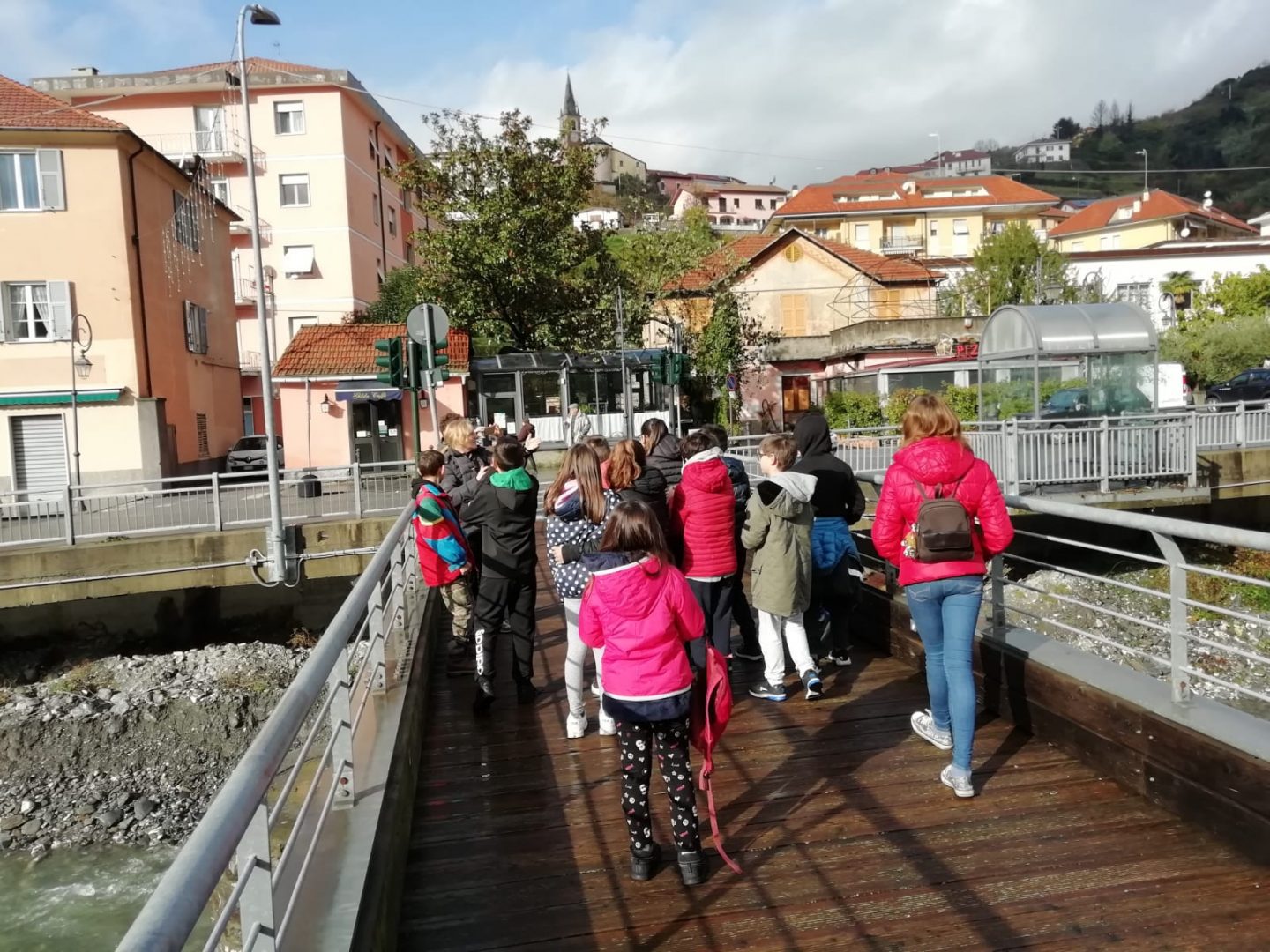
In this way, the meetings have allowed children to go beyond the simple lesson, helping the students understand the applications of meteorology and hydrology, civil protection issues, and disaster risk reduction strategies.
To learn playing with the sand
The Istituto Comprensivo di Serra Riccò e Sant’Olcese, in collaboration with some researchers of CIMA Research Foundation, developed an augmented reality sand box as another tool for the educational meeting. In the sand box, rains can be simulated and the topography of the territory modeled simply by manipulating the sand, giving the data back to a computer in form of graphic rendering and bidimensional maps. Developed by US institutes and research centers, the sand box was physically assembled by our researchers, technicians and school operators. The hands for inducing the rain, the streambeds enlarged or restricted, the plans and mountains constructed in the sand have been a way to play. At the same time, they have allowed children to discover the issues of the hydro-geological risk, from the modeling of the Ligurian Polcevera River and its tributaries to the recent extreme events in the region (2019).
“To do scientific research also means to disseminate the knowledge, allowing other people to get closer to the science. It could also spur interests in children for these kinds of studies. This is way, we look for tools to take the children closer to science and, vice versa, to take the science in the every day life which they know”, says Antonio Parodi. “But going beyond the research itself, each person should be able to know the role of science in civil protection, in order to be able to be aware of risks. This is a very important message that we have to transmit to children, and the reason why I’m so glad to have the chance to work with students. From the feedback given by the mayor and the assessor to civil protection of Serra Riccò municipality, by the parents and the teachers, during the final meeting of the project, we think that the experience was a real success”.