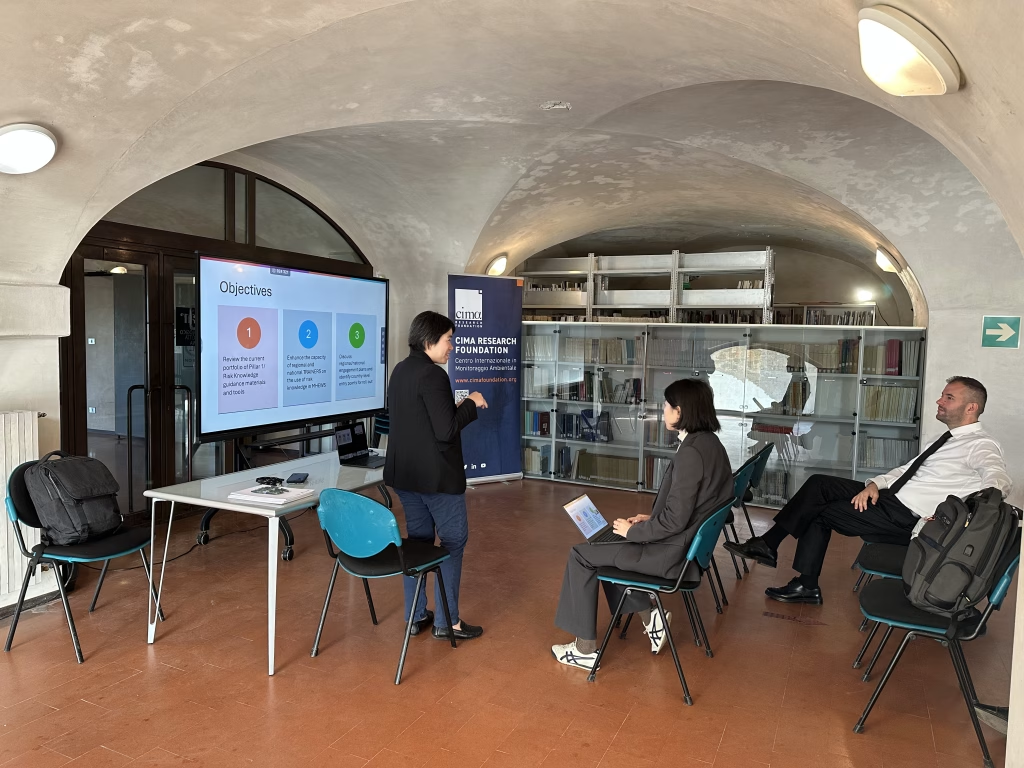
Amid historic walls overlooking the sea, from 26 to 28 November 2025 the Priamar Fortress in Savona became an international laboratory devoted to a simple yet decisive question: how can warnings be turned into effective action before a natural event becomes a disaster? Early warning systems are essential to protect lives, livelihoods, and infrastructure, but their effectiveness depends on a fundamental condition: alerts must be grounded in solid, shared risk knowledge capable of guiding timely, inclusive, and action-oriented decisions.

A technical workshop to bridge the gap between data and decisions
The Technical Workshop on Risk Knowledge for Multi-Hazard Early Warning Systems, organized by the United Nations Office for Disaster Risk Reduction (UNDRR), was created precisely to address the persistent gap between warning systems and risk information. In many settings, the production of and access to reliable data remain uneven; differing methodologies hinder comparability; and coordination between technical experts and public decision-makers is often insufficient, as are institutional mechanisms for integrating risk knowledge into preparedness and response planning.
The sessions explored the tools provided by UNDRR to assess the maturity of data ecosystems, select exposure and vulnerability indicators, and conduct multi-hazard risk assessments. The workshop therefore offered a platform for exchange and collaboration to strengthen the ability to produce, access, and strategically use risk knowledge within multi-hazard early warning systems.
Training of Trainers: from the Handbook to operational practice
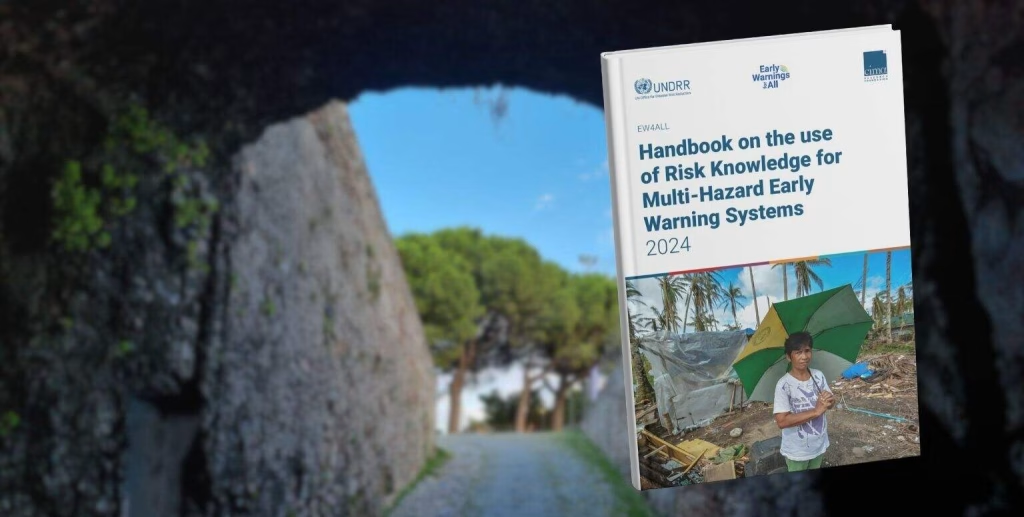
At the core of the three-day programme was the Training of Trainers pathway linked to the Handbook on Risk Knowledge for Early Warning Systems, co-organized by UNDRR and CIMA Research Foundation. Following an opening focused on the role of risk knowledge in Multi-Hazard Early Warning Systems (MHEWS), the sessions clarified why risk knowledge is central to making warnings actionable: it connects information on hazards, exposure, and vulnerability to activation thresholds and operational decision-making. In this way, it helps build a coherent informational context across the different phases of design, development, and activation of early warning systems. In this way, it helps build a coherent informational context across the different phases of design, development, and activation of early warning systems.
On this basis, participants worked through progressive practical exercises: identifying relevant assets and associated actions, defining windows of opportunity for timely activation of measures, and ultimately developing early-action messages and procedures that are genuinely risk-informed and embedded in operational processes.
Technologies, interoperability, and regional collaboration
Alongside the training component, the workshop examined innovation and applied tools to enhance the use of risk knowledge: from mapping and modelling platforms such as RiskChanges, FastFlood, and FastSlide, to After-Event Review methodologies and solutions designed for contexts with mobile or displaced populations. A specific focus was devoted to the new Disaster Tracking System and its interoperability with regional systems and platforms.
Gathering in Savona were regional intergovernmental institutions, UN agencies and international development partners, universities, and research centres working on hazard modelling, vulnerability analysis, and risk assessment. Their exchange aimed to strengthen cooperation and technical capacities where the difference between warning and saving lives is made.
Part of the study and training programme also took place at the Archaeological and City Museum of Savona, which hosted one of the scheduled sessions. This workshop is part of the pathway toward the Citadel of Climate Change: a project to transform the Priamar into a permanent laboratory of science, culture, and resilience — a dynamic hub where technical expertise, training, and dialogue with the local community converge to address global environmental challenges in a shared way