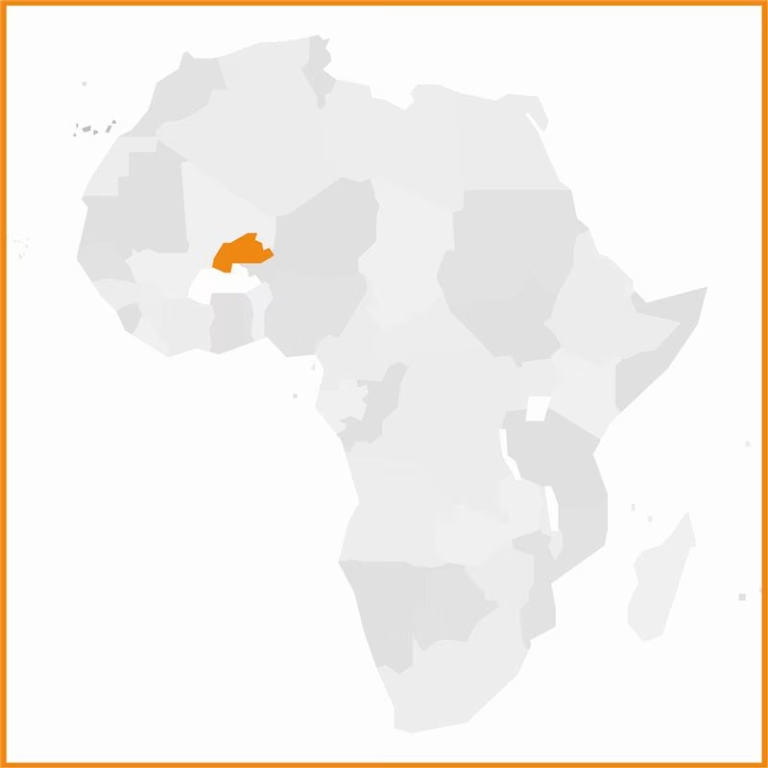
The project, led by CIMA with local support from WeWorld, aims to strengthen the warning system in Burkina Faso through a process of technology transfer, training and promotion of inter-institutional coordination developed with the National Council for Emergency and Rehabilitation (CONASUR).
The dialogue with local institutions also highlighted the need to invest in raising awareness of educational institutions and local communities.
The project is carried out at the national level in terms of technical and scientific work with entities involved in disaster risk management and early warning, but there is a specific focus on the Greater Ouagadougou area in terms of linking warning with decision-making and action at the local level, carried out using a participatory approach and training of trainers to ensure dissemination and scaling up beyond the target areas.
Goals and expected results
The project contributes to enhancing Burkina Faso’s disaster preparedness and management capacities by improving the effectiveness of the national early warning system, strengthening the institutional and coordination capacities of CONASUR, and bolstering the technical and operational capabilities of the meteorological and hydrological agencies.
The initiative aims to bring about a tangible change in the shared, informed, and operational use of new methodological and technological tools by national and local actors within the Burkinabé civil protection system. It focuses on two main, closely connected, and sequential components:
- Improvement of monitoring, forecasting, and alert tools (both methodological and technological), and the operational link with timely field actions
- Strengthening of skills, capacities, and equipment for better, timely, and coordinated alert management
CIMA Research Foundation’s contribution
Within the first component, CIMA Research Foundation leads several activities:
- Comprehensive mapping of stakeholders and assessment of the current early warning system
- Development of risk profiles for floods, droughts, and wildfires
- Implementation of advanced tools for monitoring, forecasting, and alerting extreme hydrometeorological events, integrated into the real-time decision support platform myDEWETRA
- Strengthening the dissemination of alerts and the connection between alerts and timely preparedness and response actions at the local level
In the second component, structured into three activities, CIMA is responsible for:
- Promoting inter-institutional coordination through events for sharing best practices and lessons learned in international contexts
- Implementing a national Situation Room to facilitate data collection, alert processing and dissemination, and inter-institutional coordination
- Conducting technical training for national and local institutions on the various tools developed to enhance monitoring, forecasting, alerting, preparedness, and response capacities