© Sobat / AdobeStock
In developing countries […] gender-based violence is often used as a form of socio-economic control to maintain and promote power dynamics, including in relation to the ownership, access to, and use of natural resources. The potential for violence linked to the possession of natural resources has increased in the face of current environmental threats, particularly climate change. This is an intense stressor because it affects women’s livelihoods, who are often already in precarious situations and therefore experience declining levels of resilience. […]
Silence is only yet another form of violence that weighs on the relationship between women and climate change.1
On the occasion of the International Day for the Elimination of Violence against Women, it is important to highlight how gender inequalities also permeate environmental crises. In the field of Disaster Risk Reduction, and particularly within early warning systems and early action measures for droughts and floods, gender vulnerability is not an ancillary factor: it shapes exposure to hazards, the ability to receive and interpret warnings, and the concrete capacity to act before impacts occur.
A useful case study for understanding this relationship between risk and inequalities is Kenya: analyses of vulnerability profiles related to droughts and floods clearly show that effective warnings must be grounded in risk knowledge that incorporates gender differences and their interactions with other social determinants.
Drought: structural inequalities and compound risks
In Kenya, drought operates on an already fragile livelihood system. Crop losses in rain-fed agriculture and reduced water availability generate food insecurity and impoverishment. Women and girls are disproportionately exposed because they are structurally disadvantaged in access to land, education, income, credit, and decision-making processes. These inequalities reduce their capacity to adapt and recover after shocks, increasing the likelihood of negative coping strategies. Under conditions of severe scarcity, livelihood erosion can lead to malnutrition and coping mechanisms such as transactional sex to obtain food, with a consequent rise in the risk of exploitation, gender-based violence, early marriage, and school dropout.
An impact-based perspective on early warning therefore requires integrating hazard forecasts with dynamic information on vulnerability and exposure disaggregated by gender, so as to anticipate not only when drought will occur, but what effects it will produce on specific groups. This step is crucial to calibrate anticipatory actions aimed at protecting livelihoods and reducing associated social risks.

Floods: differential exposure and barriers to action
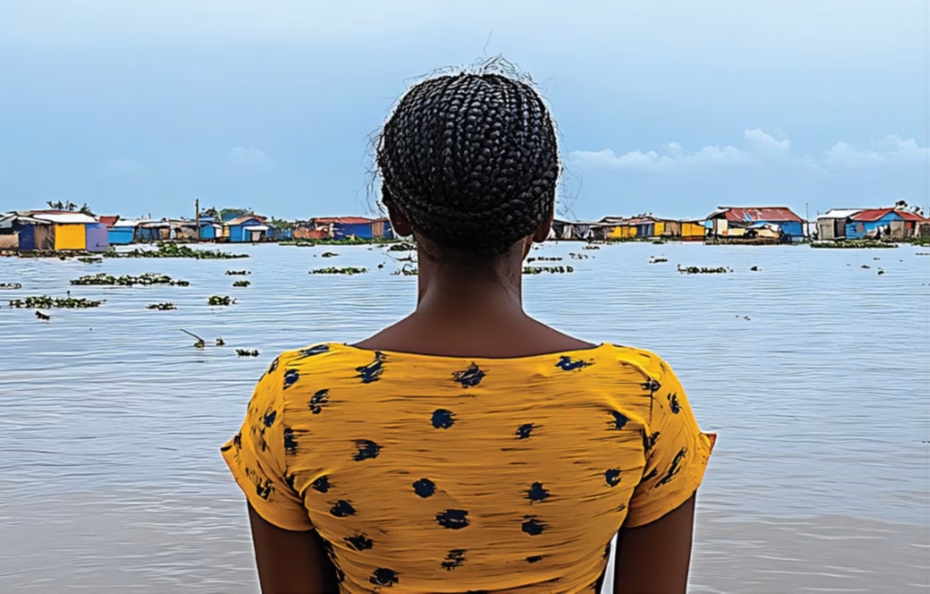
Floods in Kenya strike with particular severity during the long rains season. In 2024, the most intense events caused hundreds of fatalities, over 200,000 people displaced, and extensive damage to housing and infrastructure. In these scenarios, women play central roles in community response and hold local knowledge that is useful for anticipating risk.
However, their exposure and capacity to act are shaped by specific factors: care responsibilities that delay evacuation; gaps in access to the internet and telecommunications that limit timely receipt of warnings; and shelter infrastructures often not designed to ensure safety and adequate services. The shortage of safe spaces and WASH services², together with insufficient protection in emergency and displacement settings, increases the risk of gender-based violence during and after the event.
Within an impact-based early warning system, these elements must be translated into operational messages and early-action protocols: clear guidance on evacuation and safe shelters, planning for accessible transport, and protection of the specific needs of women and girls, in order to reduce the barriers that turn warnings into inaction.
Intersectionality and data: making vulnerabilities visible
Gender vulnerabilities are not uniform: they intensify when they intersect with disability, age, poverty, or living conditions in camps and temporary settlements. An intersectional approach makes it possible to describe “layered” forms of risk that would remain invisible if gender were considered in isolation. For this reason, it is essential to have up-to-date, high-resolution data disaggregated by gender, age, disability, and location, to be integrated with hazard forecasts.
Making early warning and early action systems truly effective means starting here: co-producing risk knowledge with at-risk groups, recognising differential capacities and vulnerabilities, and translating forecasts into timely and inclusive actions. From this perspective, disaster risk reduction also becomes a pathway for preventing violence, because it reduces the conditions that fuel it and breaks the silence that makes it possible.

- Moraca, S. & Palazzi, E. (2022). Siamo tutte Greta. Edizioni Dedalo, p. 54. ↩︎
- WASH is the acronym for Water, Sanitation and Hygiene. In emergency contexts it refers to the set of infrastructures and services needed to ensure access to safe water, adequate latrines/toilets, and measures for personal hygiene, including those related to menstrual health. The availability of adequate WASH services in shelters and affected areas reduces health risks and specific vulnerabilities, contributing to the safety and dignity of exposed people. ↩︎