
March has arrived bringing milder air and clearer skies. For the snow water resource this marks a transition phase: the snow accumulated during winter begins to gradually melt, feeding rivers, lakes and downstream ecosystems.
At the national scale, after the strong improvement observed between January and February, Italy enters this new phase still with a slight deficit in Snow Water Equivalent (SWE), equal to –22%. The season has therefore changed pace, entering the phase following what we call the “peak snow accumulation”: the period when accumulation gives way to melt.
Looking at the seasonal evolution, the dynamics resemble something of a roller coaster. After the progressive growth of the snowpack until mid-February, the curve reached its peak, more or less in line with what climatology would expect, and has since begun to decline. Melt is now proceeding rapidly.
The Italian Alps: peak reached and early melt
The pattern becomes evident when observing the Italian Alpine arc as a whole. During February, accumulation even exceeded the seasonal average, but the peak has now been surpassed and the decline has begun earlier than climatology would suggest.
The melt phase appears to be occurring about one month earlier than the typical pattern observed in the historical record. Overall, the Italian Alps now stand at approximately –12% compared to the seasonal average.
This transition from accumulation to melt is a natural phase of the snow cycle, but this year it appears to be happening more rapidly than usual, as has increasingly occurred in recent years.
Apennines: an even sharper descent
The dynamics are even more pronounced along the Apennine range. Here the seasonal peak was reached in early February, as often happens, and the melt phase has already been underway for several weeks.
After remaining within the range of “normal” seasonal variability for much of the winter, the Apennines now show a very marked deficit of –73%. The downward part of the snow “roller coaster” began earlier and is proving more rapid.
The role of temperature and precipitation
The main cause of this acceleration lies in the meteorological conditions observed in February. The month was significantly warmer than average across the entire Italian territory. Even though temperatures over the December–February winter period were slightly below average at higher elevations, a single very warm month is sufficient to trigger an early onset of snowmelt.
Another factor must also be considered: in some Alpine areas precipitation has been scarce. In particular, the Triveneto region recorded winter precipitation deficits reaching up to –60%, further reducing the available snow accumulation.


The result is a combination well known to snow scientists: less snowfall and higher temperatures, conditions that favor early melt and quickly bring the system back into deficit.
River basins under observation: Adige, Tiber and Po
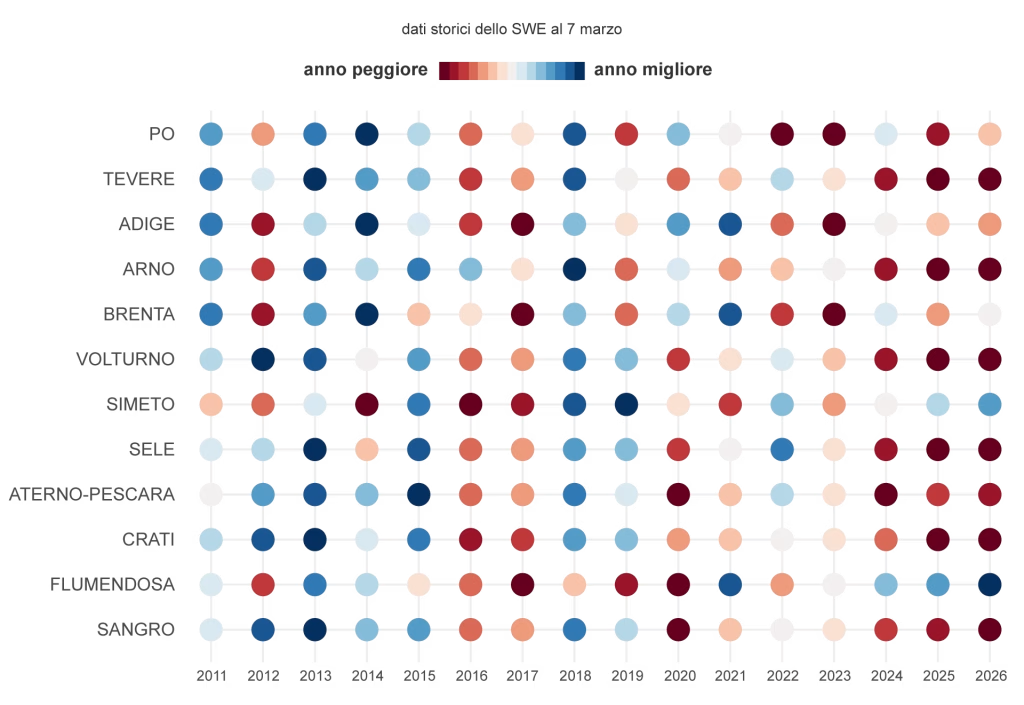
Among the Italian basins most closely monitored for snow resources is the Adige basin, which remains below average with a deficit of approximately –26%. Here too the seasonal peak appears to have been reached and melt has begun, with conditions very similar to those observed at the same time last season.
A comparable dynamic emerges in the Tiber basin, where melt began already at the beginning of February. In this case the pace of the decline is similar to previous years, but the starting point is different: winter reached February with roughly half the snow that was typical in the past.
The most positive picture remains that of the Po basin, where the peak also appears to have been reached but conditions remain close to the seasonal average (–2%). Compared with last year, north-western Italy experienced a winter that was more similar to what historically characterized these regions, at least at higher elevations.
When snow becomes water
Spring also marks a profound transformation of the snowpack.
“The spring months are always a delicate phase for snow water resources. Snow begins to melt starting from the lower elevations and gradually ‘retreats’ toward higher altitudes. It is a natural process, but when melt begins too early it can reduce the amount of water that will remain available during the warmer months,” explains Francesco Avanzi, snow hydrology researcher at CIMA Research Foundation.
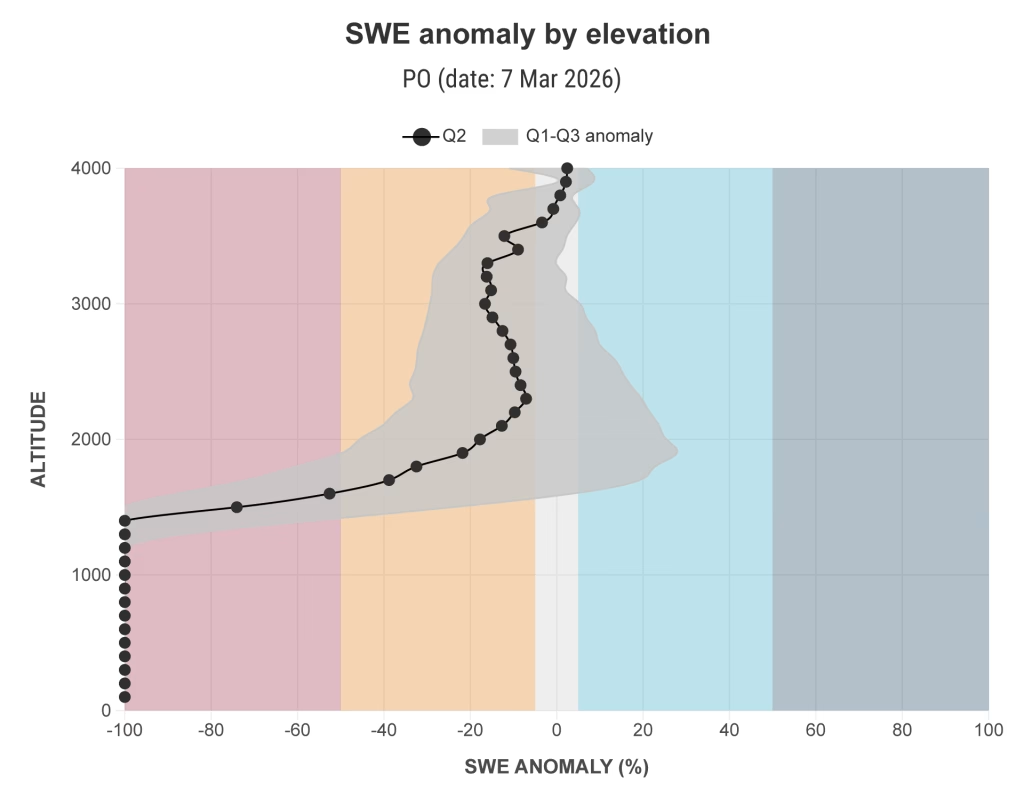

Melt does not occur uniformly. The water forming inside the snowpack infiltrates and flows along slopes and hillsides, creating preferential flow paths.
“With the entry of water into the snowpack,” Avanzi continues, “the structure of the snow itself changes: crystals become rounded, grains grow larger, and the snow progressively becomes wetter.”
This process is known as wet-snow metamorphism, the transformation through which the snow accumulated during winter gradually turns into water feeding rivers and reservoirs.

What to expect in the coming months
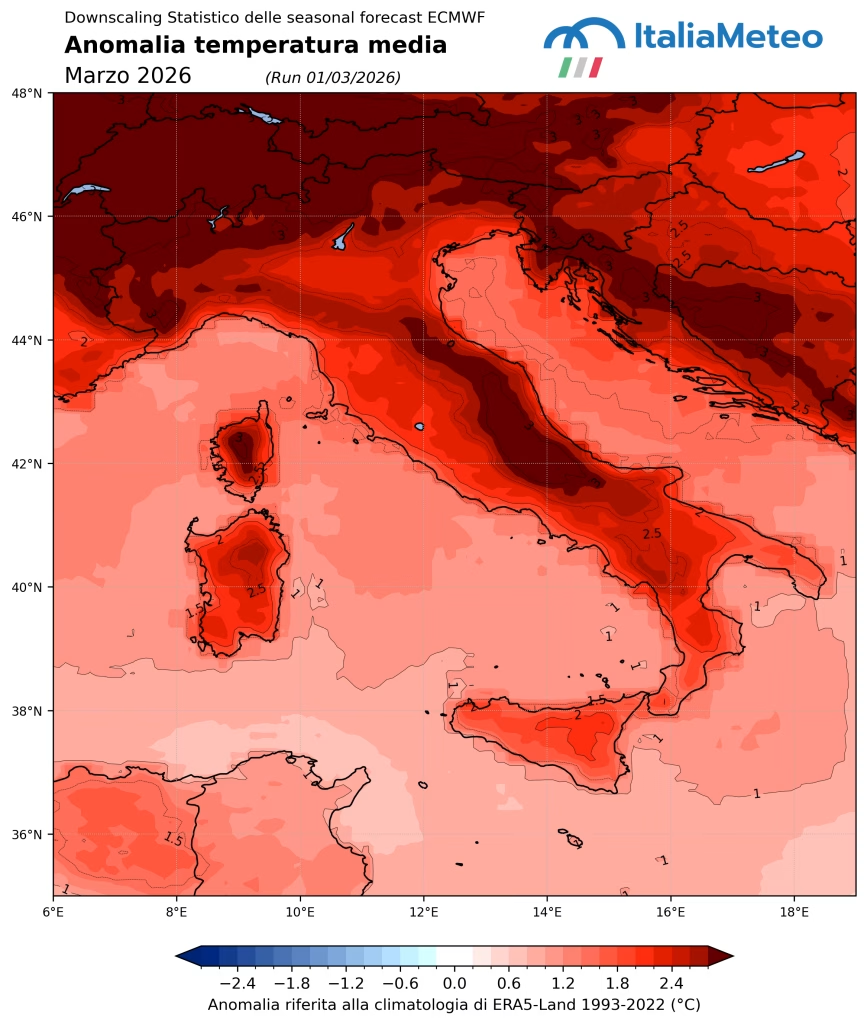
Looking ahead, seasonal forecasts provided by ItaliaMeteo indicate temperatures above the climatological average, especially during March.

On the precipitation side, forecasts suggest that March may be drier than normal in Italian mountain areas, with a possible return to wetter conditions during the April–June period.
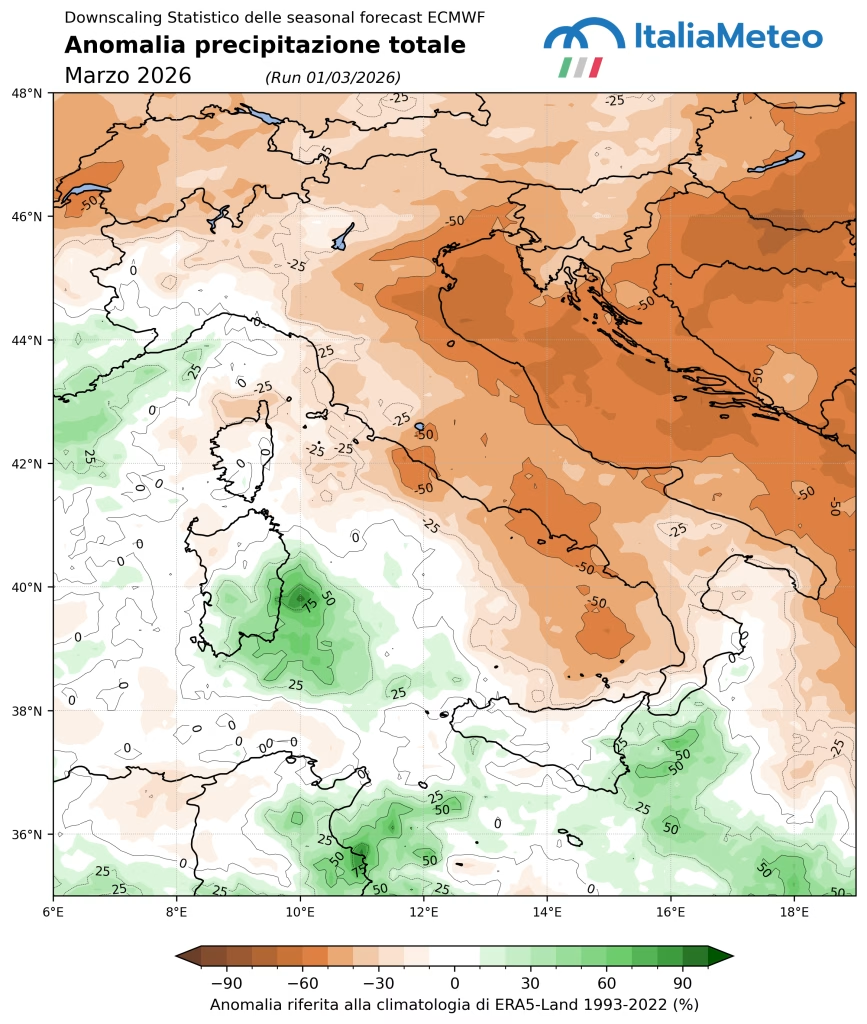
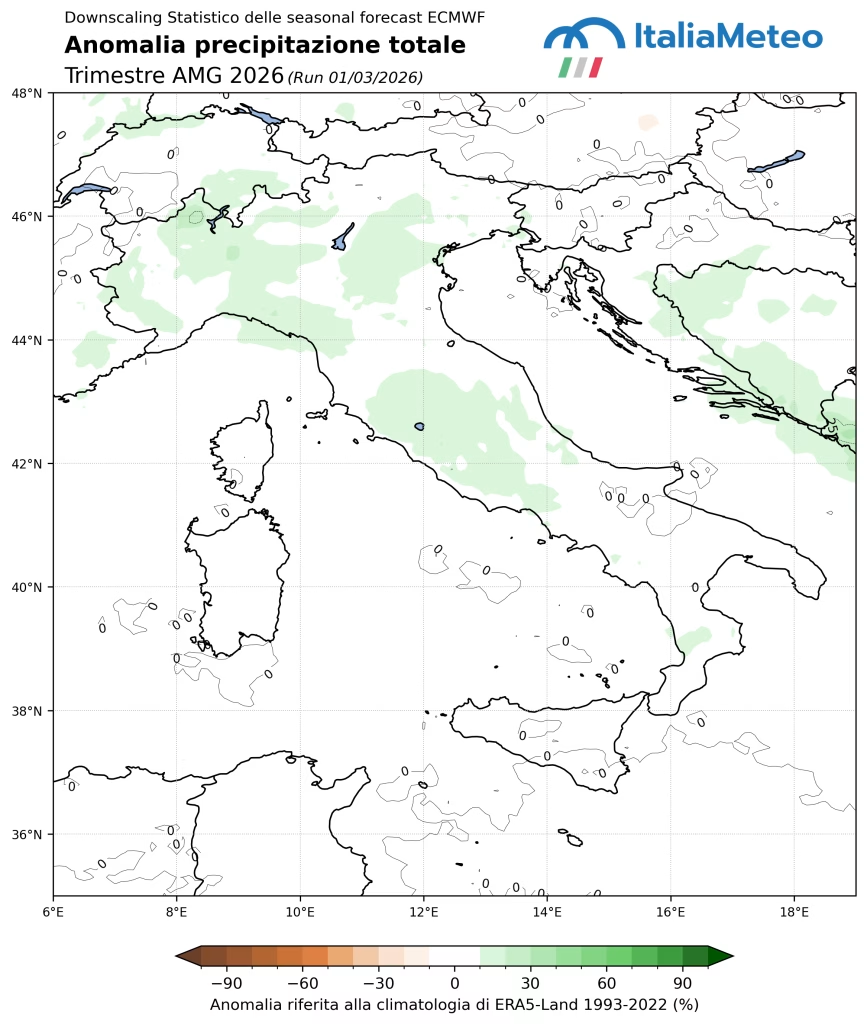
These are not ideal conditions for maintaining the snow resource: the meteorological context appears more likely to favor continued melting rather than late-season snowfall.
Toward the decisive phase of the season
The snow season has now passed its point of maximum accumulation. The peak lies behind us and the downward phase has begun.
The key question is no longer only how much snow will fall, but how quickly the existing snow will turn into water. It is during this phase that the real impact of snow on spring and summer water availability is determined.
The next update, scheduled for mid-April, will help clarify how much of this snow will ultimately reach rivers and reservoirs across the country.