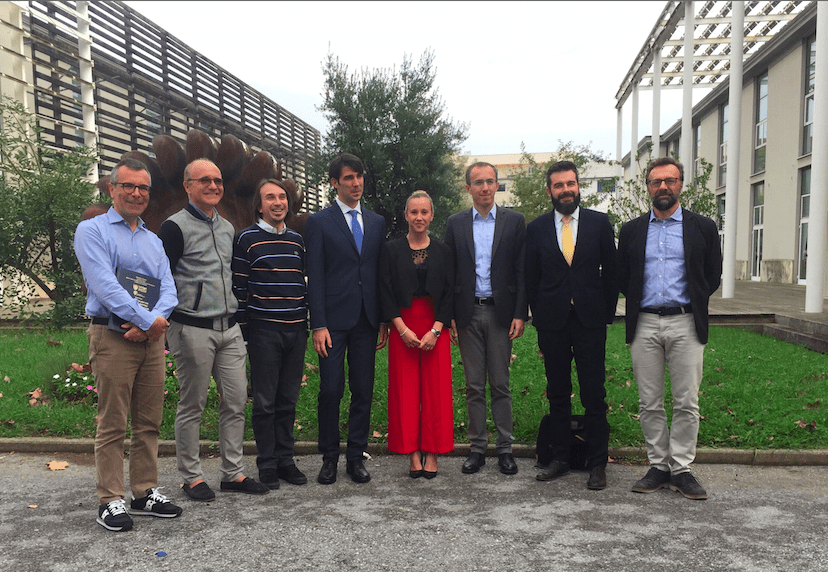
On Wednesday, October 30th, the first degrees of the master course Engineering for Natural Risk Management have been assigned at the University Campus of Savona – Genoa University
Humans have always faced risks to their well-being induced by natural hazards. Today, science can provide fundamental support for managing these risks, offering tools for forecasting and planning that can help civil protection activities. The Engineering for Natural Risk Management program combines technical knowledge, addressed with a multi-risk and multi-disciplinary approach, with management and coordination issues. The program therefore covers all the aspects of the risk management cycle, from the scientific knowledge of the natural processes from which risk is derived, to assessment methodologies, operations management and risk communication methods and technologies.
The courses are taught in English, in order to promote an international exchange with students and experts from abroad. The program also includes an internship and practical activities.
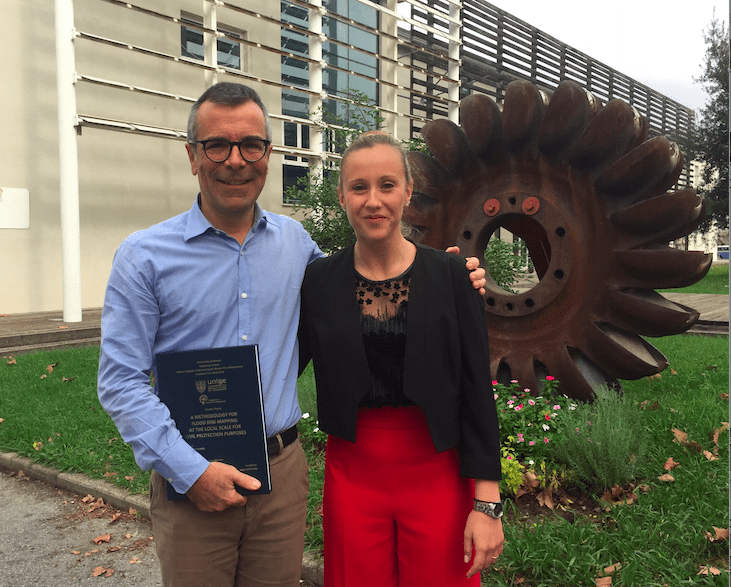
CIMA Research Foundation’s goal is to promote the study, scientific research,technological development and higher education in engineering and environmental sciences for civil protection and the conservation of aquatic and terrestrial ecosystems. It therefore supports the program’s objectives and provides laboratories, researchers and administrative staff. Within this context, Luca Ferraris, president of CIMA Research Foundation, and Marina Morando, head of the Planning and Procedures Department, were respectively supervisor and co-supervisor of one of the theses defended today. The research, entitled “A methodology for flood risk mapping at the local scale for civil protection purposes”, was dedicated to flood risk reduction planning. It addressed the problem considering system capacity—a parameter only recently introduced—and referred to the resources that a community has to cope with natural risks.
“We deeply believe in the importance of this master’s program, which allows students to address civil protection in a complete way, from both a social scientific and scientific perspective”, says Luca Ferraris. “For this reason, it is immensely satisfying for us to have supervised the first degree candidates and to see them graduate.