How can we ensure that an early warning is translated into timely action?
This question lies at the heart of the new publication Guidelines for Simulation Exercises on Early Warning Systems for Weather-Induced Risks, developed by CIMA Research Foundation. In a global context where the Early Warnings for All (EW4All) initiative aims to ensure universal protection through Early Warning Systems (EWS) by 2027, the challenge goes beyond the ability to forecast hazardous events. The real issue is ensuring that the information pcontained in early warnings leads to timely operational decisions and concrete action.
The Guidelines were developed precisely with this objective in mind: to provide practical, experience-based guidance for designing and implementing Simulation Exercises (SIMEX) capable of analysing, testing and strengthening Early Warning Systems. They are not intended solely as an operational tool for international cooperation projects. Rather, the document is conceived as a long-term reference framework, designed to remain with countries concerned and support national and local authorities in progressively developing autonomous exercise pathways and strengthening their systems.
Analysing the entire early warning system chain
Within the broader landscape of manuals and guidance documents on exercises, these Guidelines focus specifically on the use of simulation exercises to analyse and improve the entire early warning and decision-making chain: from forecasting hazardous events and disseminating alerts to transforming information into early action and coordinated response.
The effectiveness of an Early Warning System does not depend solely on monitoring technologies or forecasting capabilities. It depends above all on how institutions, operational procedures and communication mechanisms function together. In this sense, simulation exercises provide a structured environment in which these interdependencies can be observed, critical gaps identified, and decision-making processes strengthened before a real event occurs.
Exercises therefore make it possible to analyse how early warnings are produced, interpreted, shared and ultimately translated into operational early action, clarifying roles and responsibilities while strengthening coordination across sectors and territorial levels.
Targeted and scientifically grounded simulation exercises
Not all exercises serve the same purpose. The Guidelines focus on three types of simulation exercises that have proven particularly effective and sustainable, even within complex international projects: Discussion-Based Exercises (DBX), Table-Top Exercises (TTX) and Command-Post Exercises (CPX).
The scenarios used in these simulations focus in particular on predictable hazards related to weather, water and wildfires, areas that lie at the core of the research and modelling activities carried out by our Foundation. This ensures that each exercise is both scientifically robust and operationally relevant.
A participatory and adaptable co-design approach
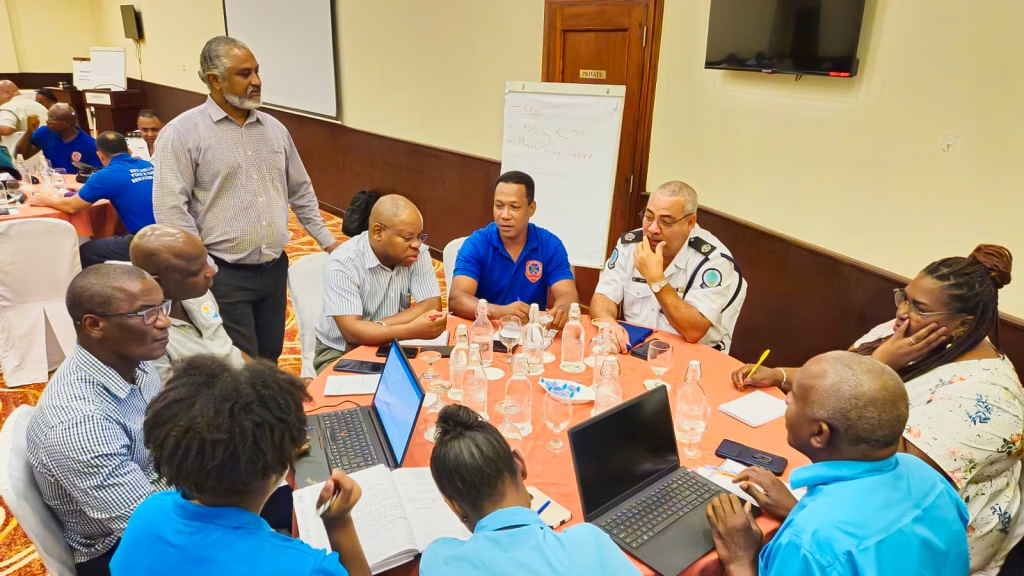
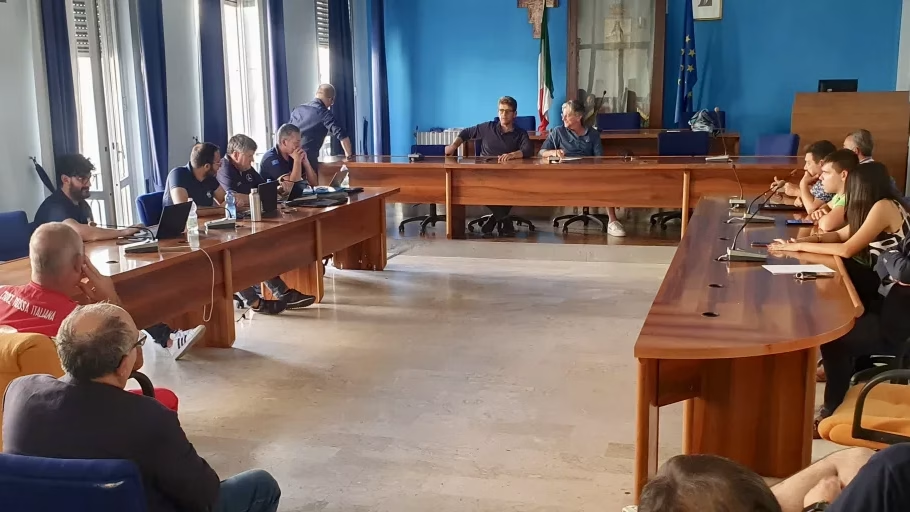
A key element of the proposed methodology is the participatory co-design approach. Simulation exercises are developed together with early warning and civil protection actors at both national and local levels, who are actively involved throughout all phases of the process, from planning and design to implementation and evaluation.
Because every disaster risk management system has specific institutional and operational characteristics, the methodology is designed to be flexible and adaptable to the technical, institutional and organisational maturity of each country. This flexibility ensures that exercises remain both relevant and feasible across different contexts.
From this perspective, simulation exercises are not merely testing tools. They become capacity-development pathways, where structured observation and evaluation processes allow lessons learned to be translated into concrete system improvements, ultimately strengthening the mechanisms that link early warning and early action.
An operational tool: who it is for and how it can be used
The Guidelines are intended both for expert teams working in international cooperation projects and for national and sub-national authorities responsible for early warning and civil protection systems. They can be used to analyse existing systems, identify vulnerabilities that may compromise timely action, test procedures and coordination mechanisms, validate reforms, or consolidate training efforts—for example before risk seasons or during system upgrades.
The document structures the entire SIMEX process into clear phases and operational steps, inspired by the UNDRR SIMEX framework: from exercise planning and design to implementation and the final debriefing and follow-up phase.
The publication is organised into two complementary parts.
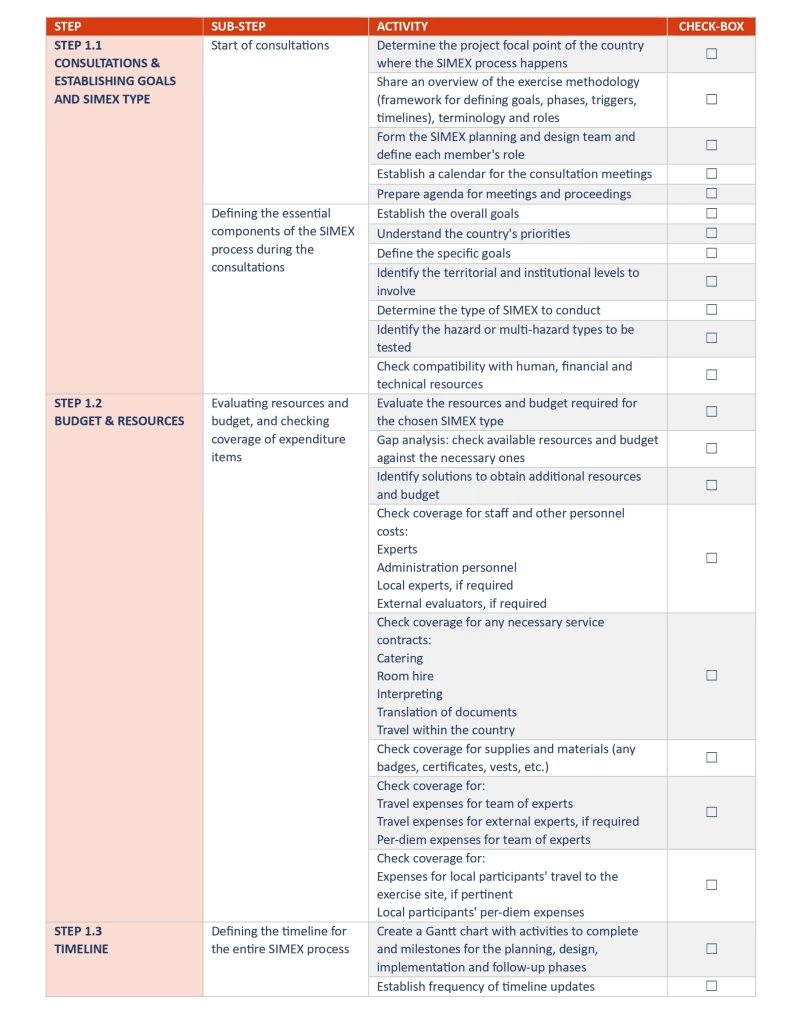
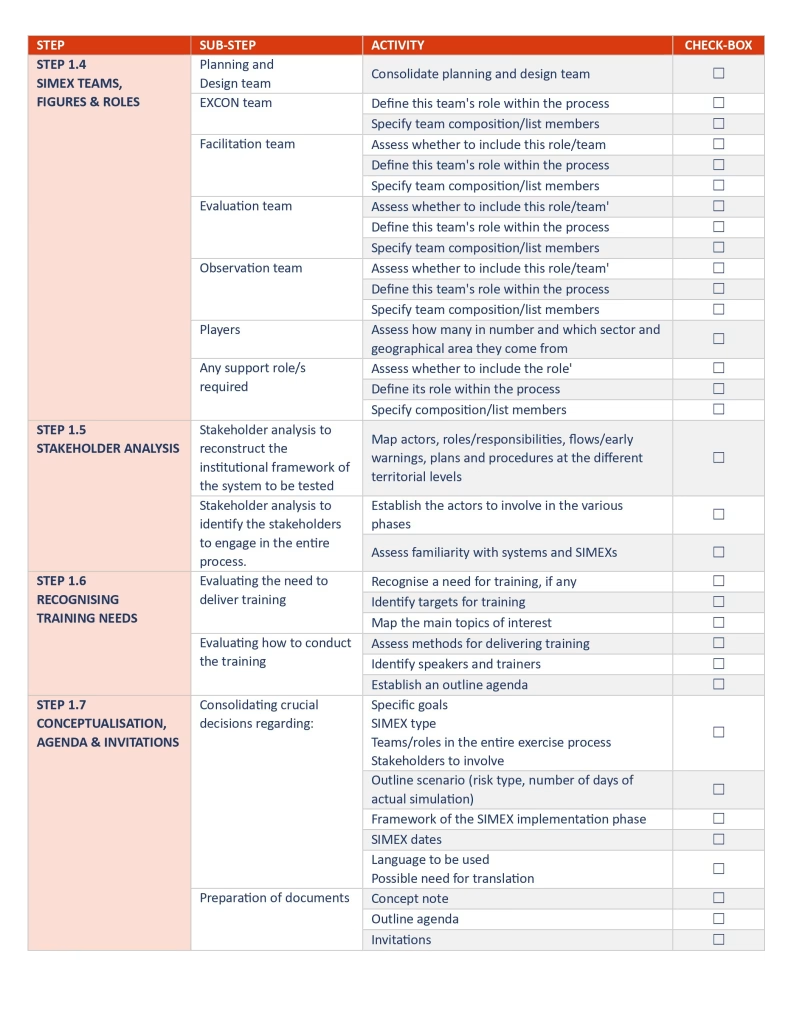
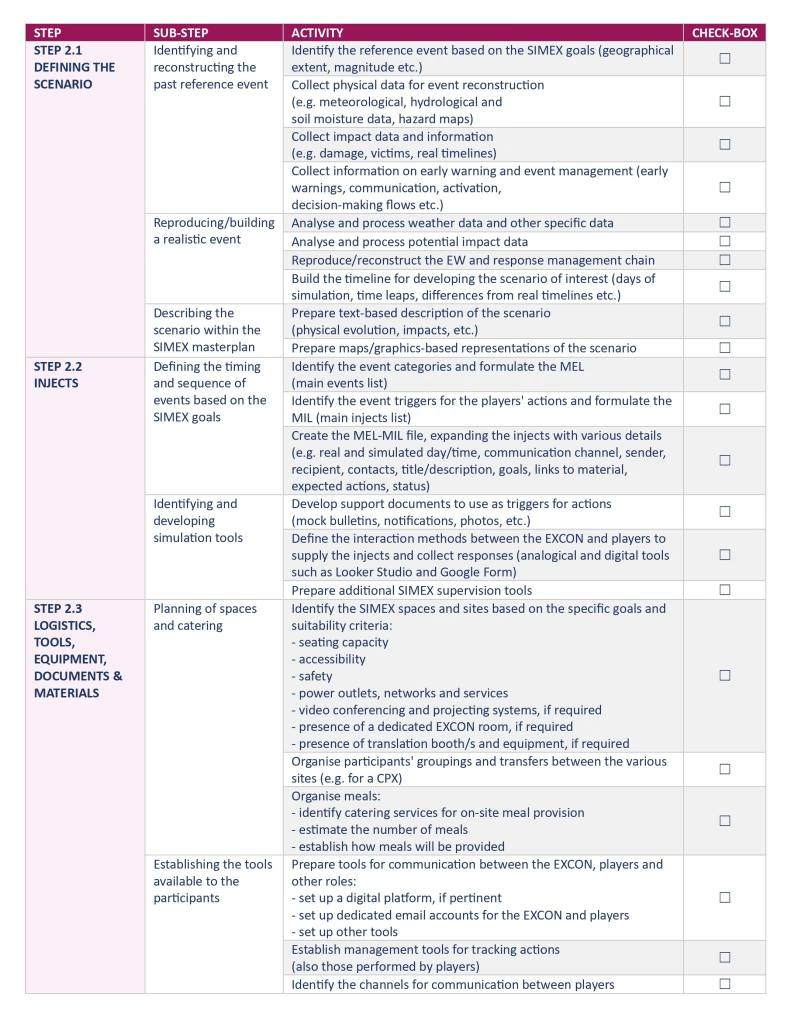
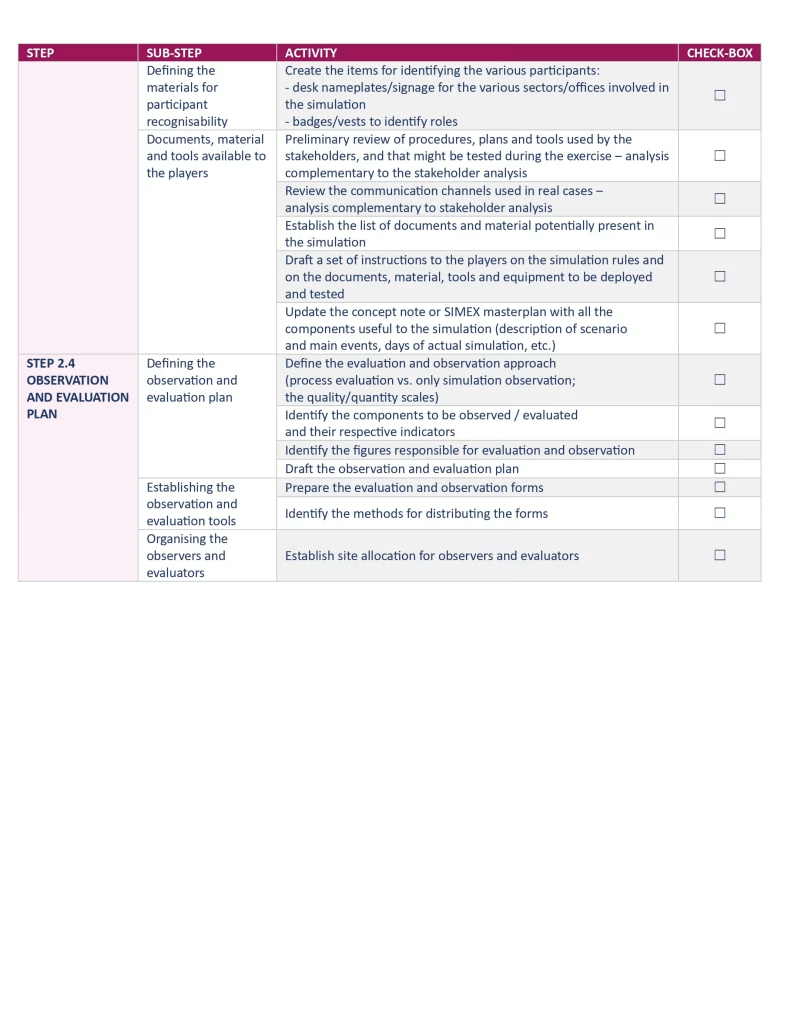
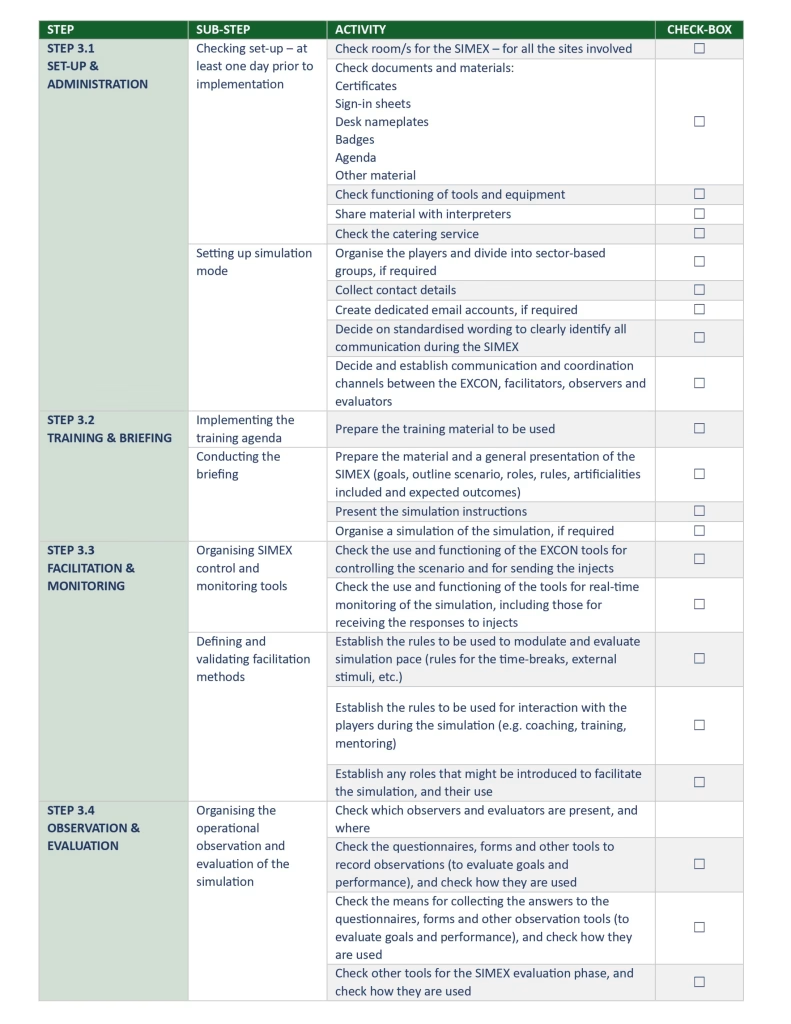
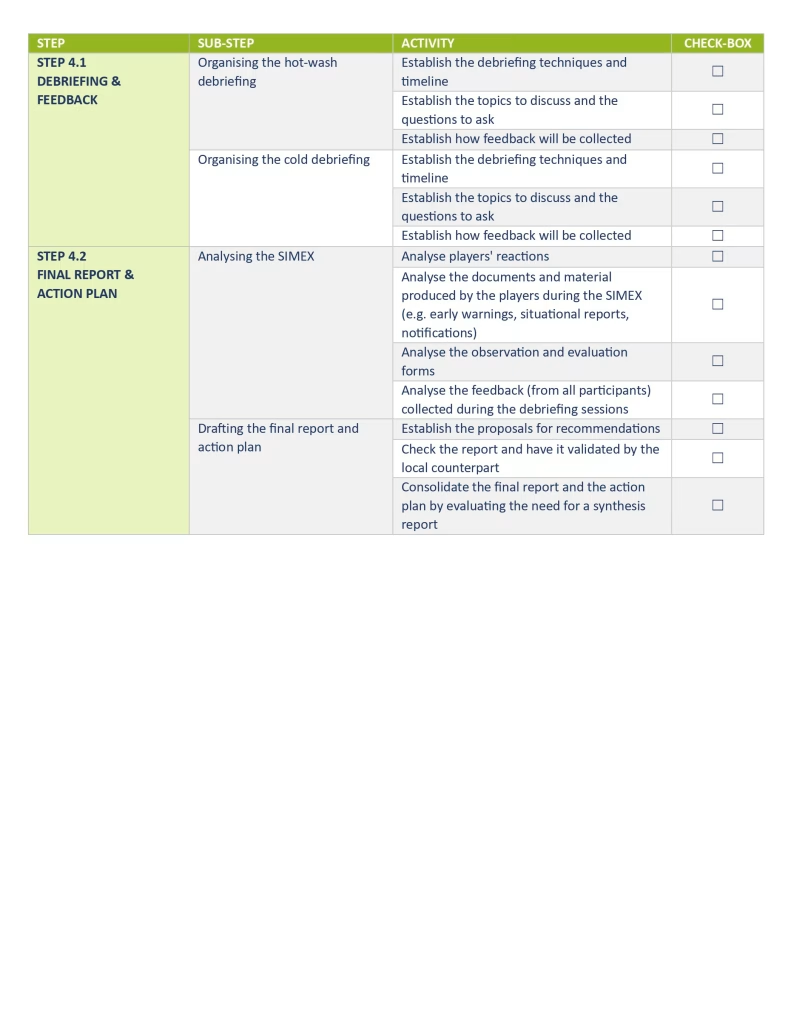
- The theoretical framework covers the phases and steps of the SIMEX process, outlining responsibilities and key points to consider. Each section concludes with a practical checklist and a list of essential documents recommended for SIMEX development.
- Case studies present concise examples of past SIMEX exercises on Early Warning Systems structured according to thetheoretical framework, illustrating each phase and step while highlighting strengths and weaknesses to inform future practice.
The value of the Guidelines: from simulation to resilience
An effective civil protection system is one that can transform early warnings into timely action and coordinated responses. In this process, simulation exercises represent a fundamental tool for strengthening preparedness and improving the response capacity of institutions, organisations and communities.
The new Guidelines therefore provide a structured framework for designing exercises that turn into concrete opportunities for learning and improving Early Warning Systems, ultimately contributing to building long-term resilience.
The publication also inaugurates a new editorial series by CIMA Research Foundation dedicated to advancing operational tools and knowledge for disaster risk reduction, with the aim of sharing methods, experiences and research results with the scientific community and with stakeholders engaged in risk management worldwide.