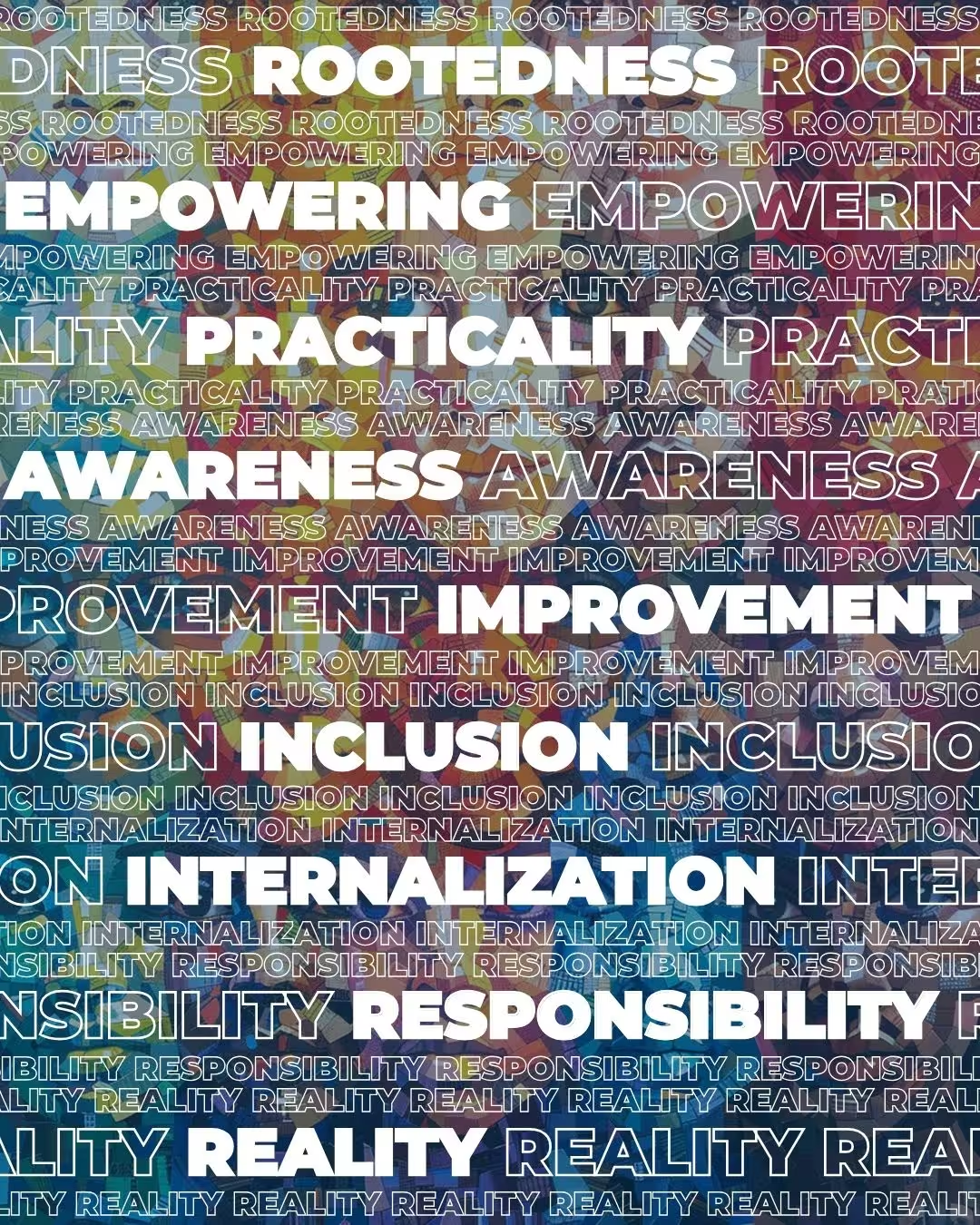
There are words that are not meant to be declared, but to be inhabited. Rootedness, empowering, improvement, inclusion, internalization, awareness, practicality, responsibility, reality.
They are not words that describe an achieved condition, but an ongoing process. A slow, everyday movement that runs through organizations just as much as the people who compose them.
It is within this tension that the GEDI Observatory (Gender Equality, Diversity and Inclusion) takes shape at CIMA Research Foundation. Not as a symbolic or definitive response, but as a space for work and listening. A place where we can pause to observe what often remains unheard, to question consolidated practices, and to make visible the dynamics that influence the quality of scientific work and professional relationships.
On the occasion of the International Day of Women and Girls in Science, we chose to listen to the voices of those who decided to become part of it. People with diverse expertise and backgrounds – experts in hydrology, drought, meteorology, marine ecosystems, planning and communication – who work every day on complex and interconnected systems, and who have chosen to place their skills at the service of a shared reflection on gender, diversity and inclusion. A commitment born from attention to people and contexts, and from the awareness that the quality of research also depends on how relationships and working environments are built.
From declaration to practice: concreteness and engagement
A need for concreteness emerges clearly from many of the reflections collected.
Andrea Libertino speaks of the need for GEDI to become something “alive and operational for the whole of CIMA, a path capable of generating value on both a personal and professional level. It would be meaningful if, by feeling represented, we could truly open our eyes to others, learning to recognize their needs and perspectives.”
From this comes the idea that before looking outward, it is essential to strengthen internal foundations: to consolidate who we are, because only in this way can these values be genuinely lived and credibly embodied. Francesco Avanzi adds that “the promotion of diversity and inclusion concerns everyone, from leadership roles to individual researchers. Doing so means providing concrete opportunities so that everyone feels not only represented, but also involved and empowered. In this way, GEDI can become a shared path, where empowerment is not an abstract principle but a practice that permeates the organization.”
Alongside this focus on concreteness stands the perspective of Margherita Andreaggi, who envisions GEDI as a space capable of translating attention to gender and inclusion into practical tools. The hope is that the group may “provide CIMA Research Foundation with contributions and tools to improve activities from the perspective of equality and inclusion, because genuine attention to these issues can improve any workplace and, even in the field of research, help enhance the value of every individual.”
A collective path of shared responsibility and organizational culture
Alongside the need to make these issues tangible, another awareness emerges: inclusion and equality are not an endpoint, but a continuous collective path to be cultivated day by day.
Ilaria Dal Mas, the youngest member of the GEDI Observatory, explains that her decision to apply stemmed from “the desire to do something concrete, even starting from the awareness of not having specific expertise on the topic. The willingness to learn, to step forward, not to stand by and watch, becomes part of the journey. From this perspective, the support and participation of men are not optional, but fundamental. The reason is simple and inherent in the very concept of ‘gender equality’: equality concerns everyone; it is not, by definition, something that benefits one part at the expense of another. And precisely for this reason, it can only exist as a collective construction.”
Even beyond the strict boundaries of scientific research, diversity remains a value: each person brings different experiences and perspectives, and when welcomed, dialogue becomes an opportunity for learning and mutual growth.
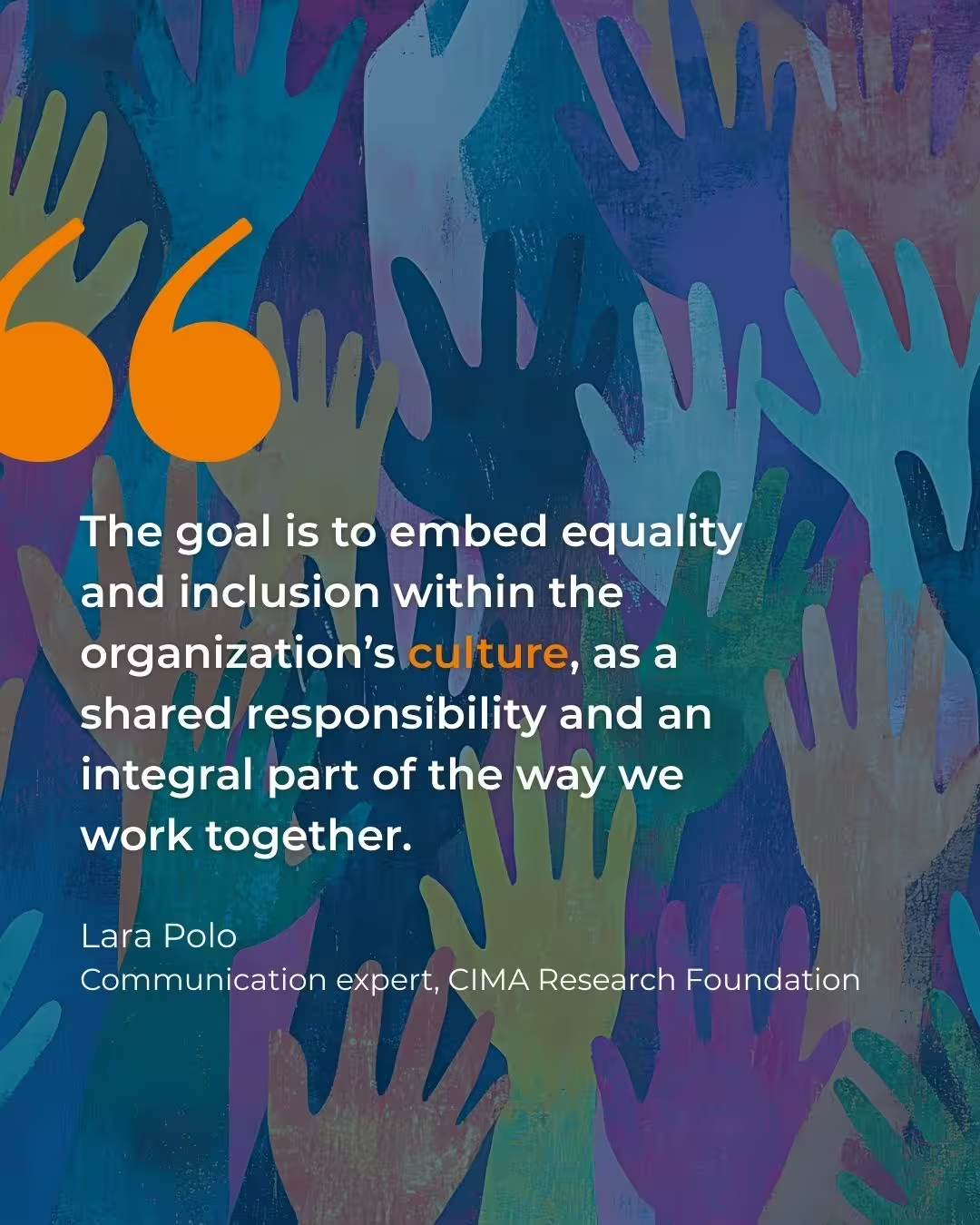
This idea of shared responsibility is echoed in the words of Lara Polo, who stresses that “it is essential that equality and inclusion are not perceived as issues that concern only those directly affected. The goal is to embed them within the organization’s culture, as a shared responsibility and an integral part of the way we work together.”
Taking root in reality
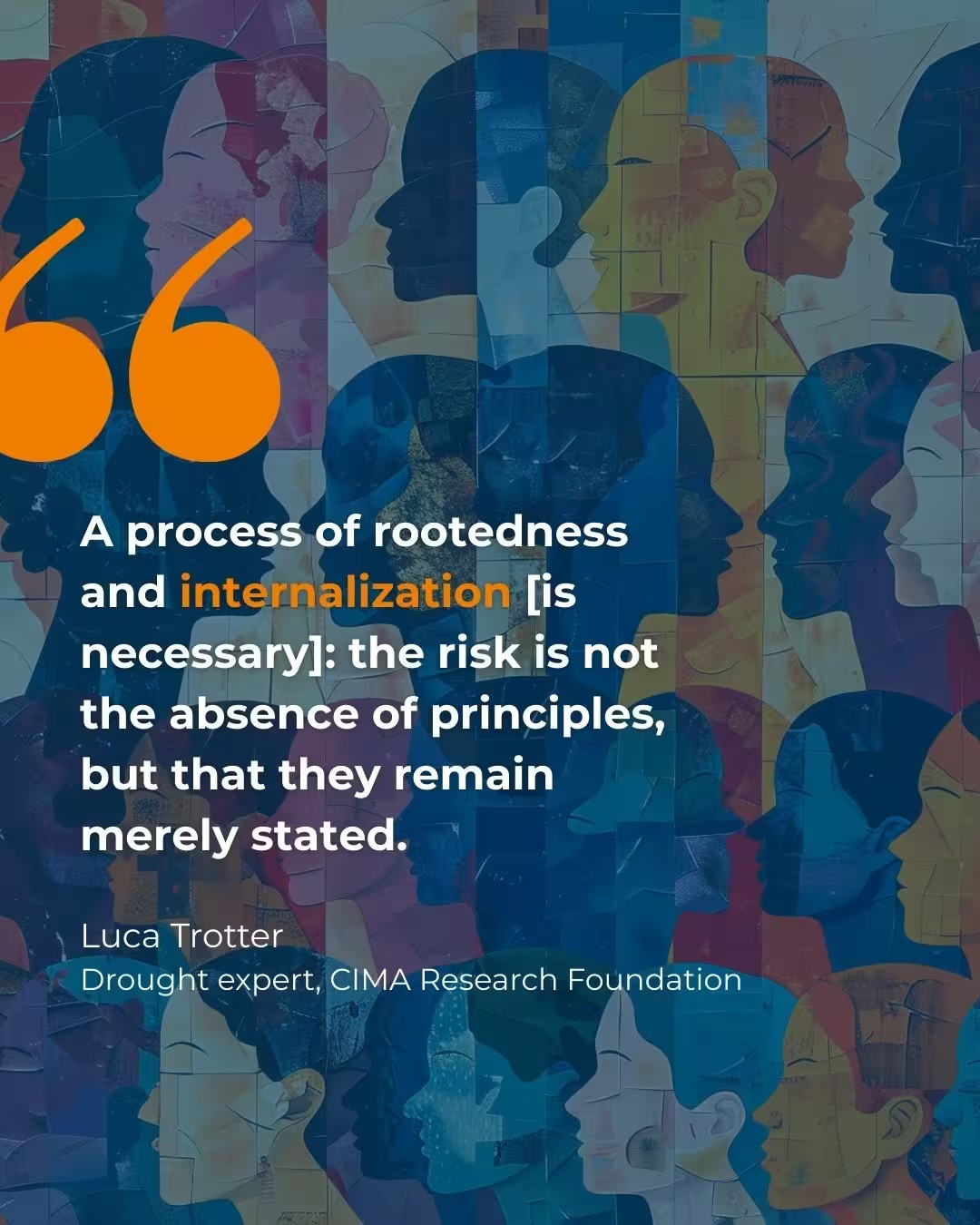
For this to truly happen, however, a further step is required. Luca Trotter describes it as “a process of rootedness and internalization: the risk is not the absence of principles, but that they remain merely stated. The challenge is to ensure that issues of gender, diversity and inclusion become an integral part of daily practices and behaviors, shaping the choices and dynamics that define organizational life.”
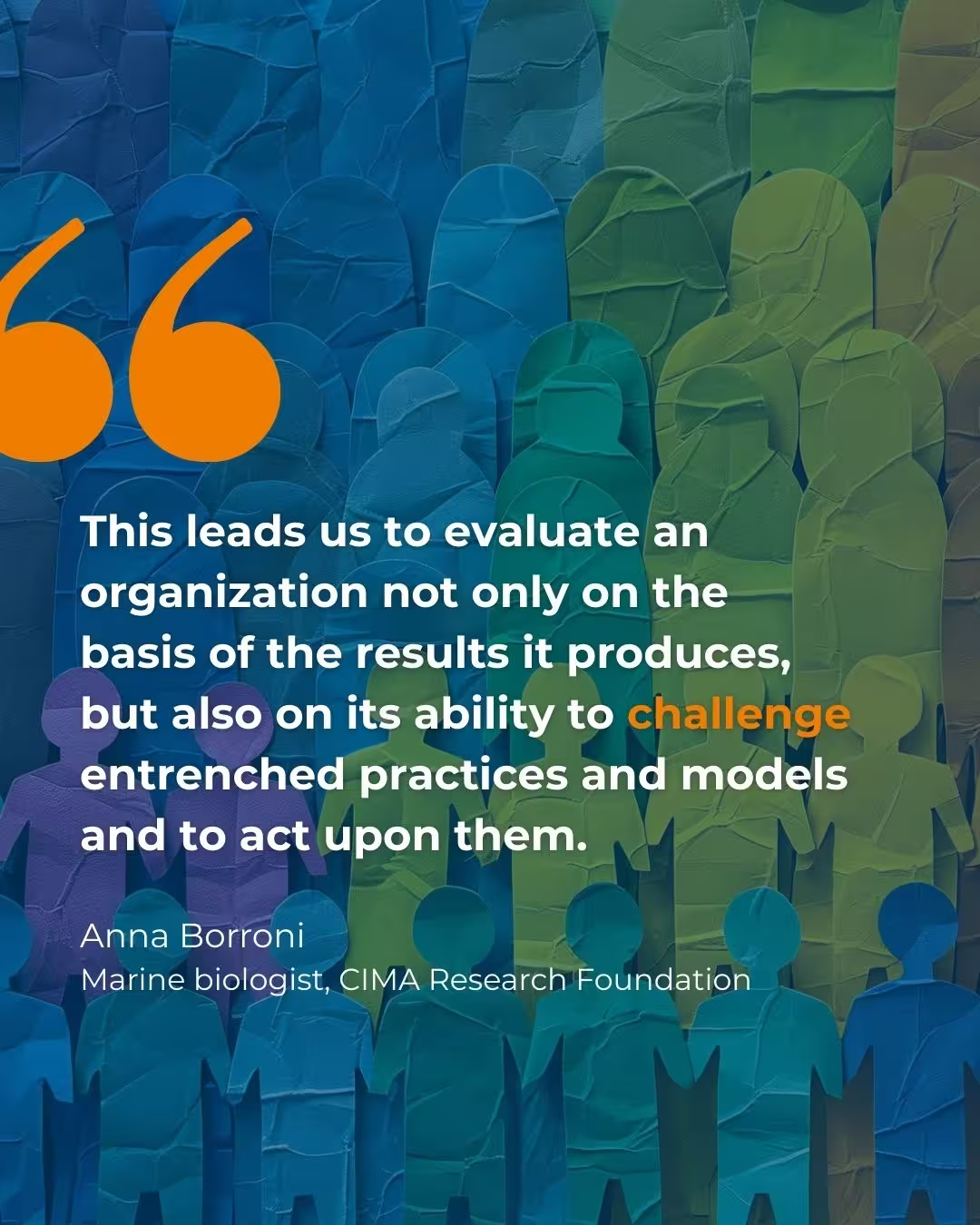
At this stage, the voice of Anna Borroni finds its place, drawing attention to more subtle dynamics that are often difficult to recognize. “Many forms of exclusion do not arise from explicit intentions, but from deeply rooted practices, languages and organizational models that we tend not to question. This leads us to evaluate an organization not only on the basis of the results it produces, but also on its ability to challenge entrenched practices and models and to act upon them, creating working conditions in which people can feel at ease and fully express their potential.”
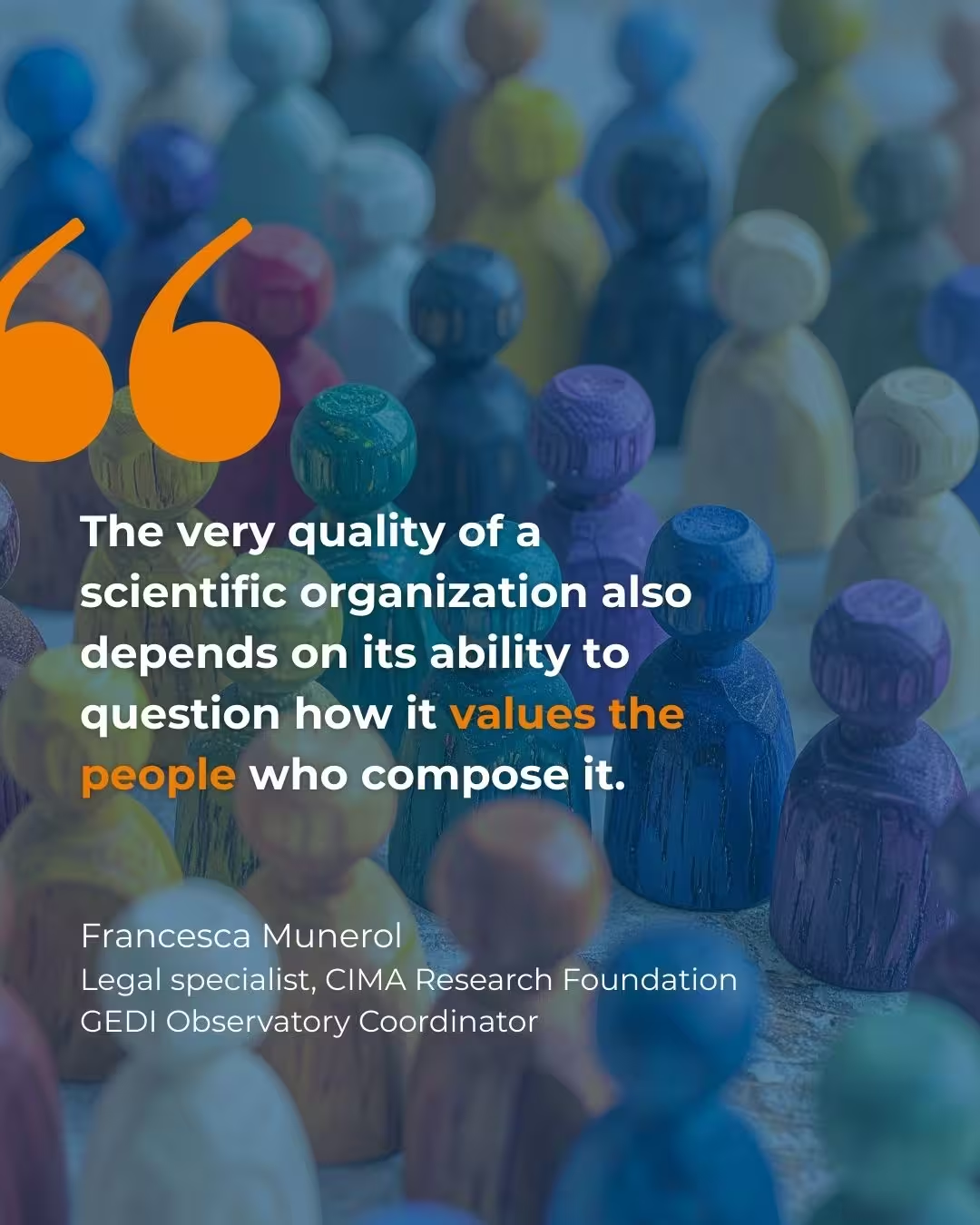
In this sense, GEDI also represents an exercise in reality. Francesca Munerol, coordinator of the Observatory, brings the discussion back to the very quality of a scientific organization, which “also depends on its ability to question how it values the people who compose it. Participating in the Observatory means contributing to a collective path, bringing a critical yet constructive perspective and taking responsibility for making the working environment more equitable.”
There is nothing heroic in all this. There is no milestone to celebrate. Rather, there is the choice to remain within complexity, to work over the long term, to embrace the idea of continuous improvement. GEDI is born in this way: as an open journey, grounded in listening, dialogue and shared responsibility. A path that does not promise simple solutions, but chooses to keep asking the necessary questions.