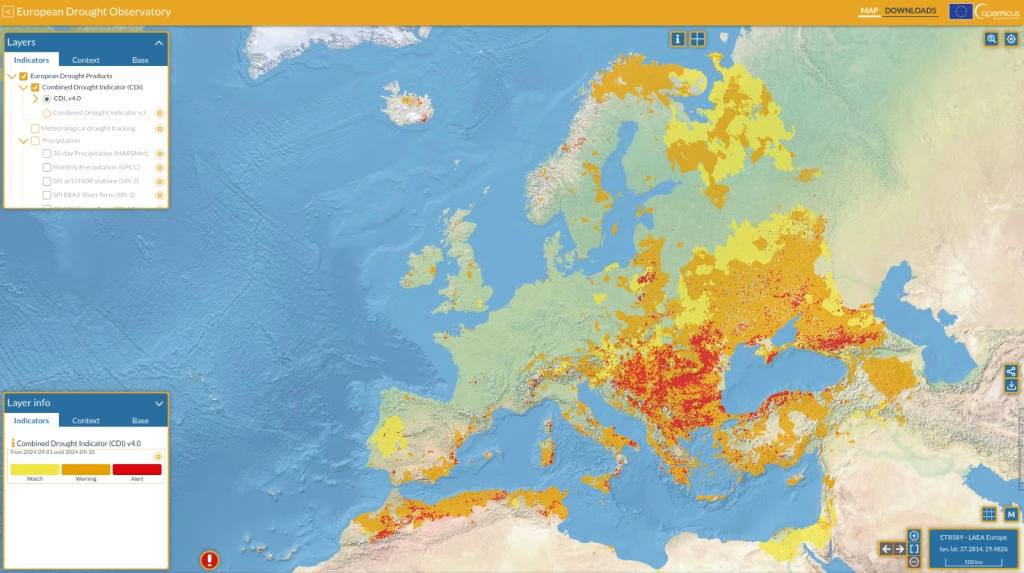
We are participating in the international conference in Geneva, which brings together experts and political representatives from around the world to take stock of the progress made in combating drought and building resilience on a global scale. On this occasion, CIMA Research Foundation is introducing the preliminary version of the Global Drought Risk Atlas, a project we are working on in collaboration with the Secretariat of the United Nations Convention to Combat Desertification (UNCCD) and the Joint Research Center of the European Commission.
Today marks the start of the Drought Resilience +10 conference in Geneva: three days during which experts, policymakers, researchers, and community representatives from around the world gather to assess the progress made over the last ten years in the fight against drought. The event celebrates the tenth anniversary of the first global conference on drought resilience, which, in 2014, led to several concrete outcomes, such as international collaboration for sharing best practices and scientific knowledge on drought management, promoting an integrated and coordinated approach to tackling a challenge that the climate crisis is making increasingly pressing.
A decade later, the international community comes together again to present the results of numerous studies and projects that have improved the adaptive capacity of communities affected by drought, focusing on technological innovations, sustainable water resource management practices, and long-term support policies. Central themes of the meeting include climate adaptation, sustainable water management, and the integration of traditional knowledge with innovative solutions.
Special attention is being paid to Africa and Asia, where drought poses an increasing challenge to food security and economic stability. Participants will discuss best practices and strategies for international cooperation needed to address future climate scenarios.
The conference, which also features the participation of international organizations such as the UN and FAO, who will present updated guidelines to support countries in building lasting drought resilience, includes the participation of CIMA Research Foundation: “The conference is a crucial opportunity to actively contribute to building global resilience,” says Lauro Rossi, Director of the Impact-based Early Warning Systems of Climate Threats program. “On this occasion, we will introduce the preliminary version of the World Drought Atlas, a tool we are working on in collaboration with several entities and which will be presented as a flagship report during COP16 on desertification, scheduled for December 2024.”
At a time when climate change is accelerating the frequency and intensity of droughts in various parts of the world, actively participating in this international dialogue is essential for the collaborative development of effective, sustainable, and scientifically-backed solutions for water resource management and reducing the vulnerability of populations.