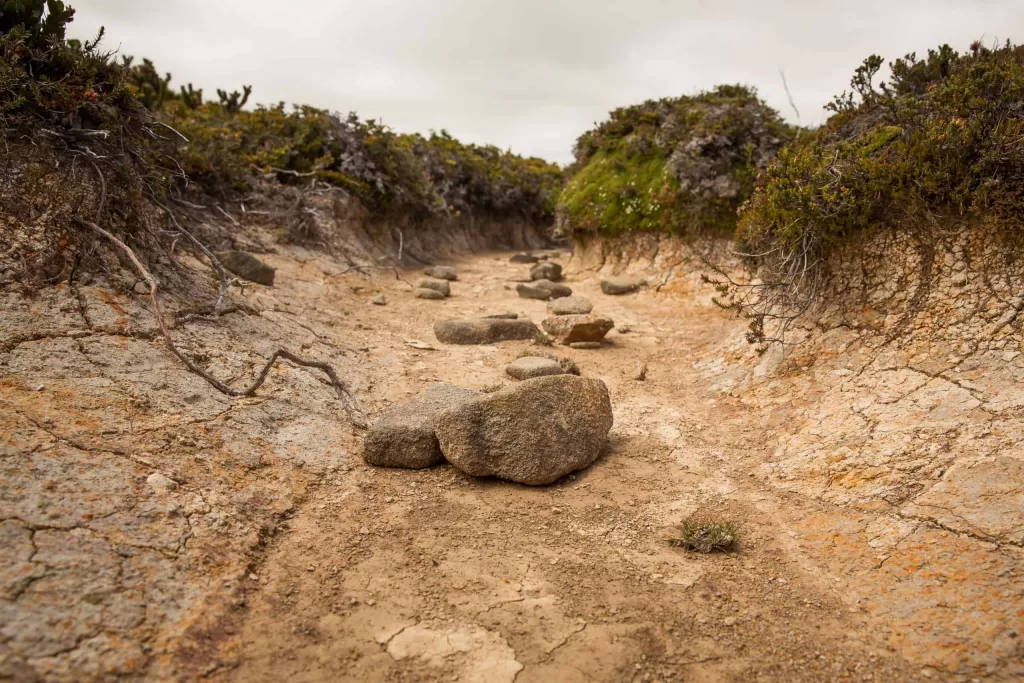
Water is a fundamental resource both for human activities and for the well-being of ecosystems; however, experts predict that climate change may have important effects on the hydrological cycle and on the availability of this resource. Chapter 4 of the Working Group II contribution to the IPCC VI Assessment Report collects the most recent scientific evidence in this field; among the contributions, that of Dr. Gustavo Naumann, CIMA Foundation researcher and drought expert, who here highlights some of the most important aspects emerged from the work
It was published today, Monday, February 28, the contribution of Working Group II to the VI Assessment Report of the Intergovernmental Panel on Climate Change (IPCC), the international scientific body for the study of climate change. This work, dedicated to the assessment of the impact of climate change on ecosystems and human communities, vulnerability and adaptation strategies, sees among the contributions that of Gustavo Naumann, a researcher of Hydrology and Hydraulics Department at CIMA Research Foundation specialized in the study of droughts.
In fact, Dr. Naumann contributed to the writing of Chapter 4, Water. The authors evaluate the most recent scientific evidence regarding the possible impacts of climate change on the different components of the hydrological cycle and on all relevant sectors of water use and society. One of the foci of the chapter is precisely the drought. As Dr. Naumann explains, “Although the phenomenon has always been a threat to our society, projections provided by climate models suggest that, due to climate change, many areas of the globe will experience more frequent and more severe droughts. This makes it more urgent to understand how adaptation strategies can be structured and the availability of governance, tools and approaches to reduce the cost of drought.”
The term drought is used to define a period when availability is lower than the average for that particular season and for a specific geographic area; however, it should be noted that droughts cannot be represented by a single indicator and several variables are used according to the sector affected. Deficits of precipitation, in the form of rain and snow (which represents a water reserve of fundamental importance especially in the melting period, during the spring months), are generally the main indicators of the phenomenon. However, precipitation projections show substantial spatial variation and, in many regions, uncertainty in projections remains high, especially when major temperature increases are considered.
For both of these reasons, the confidence ascribed to global drought projections was classified by the chapter authors as between low and medium; however, a general statement can be made that “Overall, climate models predict an increase in precipitation globally. However, regional variations will be substantial: some areas are actually expected to see a decrease in precipitation, including the Mediterranean,” as Dr. Naumann explains. “Here, in fact, long-term scenarios show a particularly significnat increase in drought risk.”
The chapter also analyzes the possible effects of changes in frequency and intensity of drought on different ecosystems and human activities, involving many environments and sectors: in fact, they range from the effects on soil erosion to the risks for agriculture and energy supply and health, because water availability and quality play a role in increasing the risk of the onset and transmission of human diseases. With regard to the energy sector in particular, it should be noted that certain climatic factors directly affect the efficiency of hydropower generation: The main ones are streamflow and water temperature, as lower flow and higher temperature reduce efficiency. “It should be noted that most hydropower plants are currently located where average annual stream flows are decreasing and where water temperatures are expected to rise. The increased severity of droughts and heat waves will therefore likely have a direct impact on global and regional energy security.”
In this sense, “One of the most important aspects to take into account when studying drought is that, unlike other hydroclimatic phenomena (think for example of floods), its effect is not immediately visible but can take months to become evident. While agriculture and food production are probably the first sectors in which the effects of drought are felt, we cannot overlook that the long-term risks also include migration, which in turn can cause additional social problems such as tensions between ethnic groups, political and legal restrictions, competition for land and additional health risks.”
In particular, Dr. Naumann points out, “Projections suggest that, in scenarios with the higher temperature increase, drought could become a persistent phenomenon in the area involved – in other words, that region could become arid. Indeed, we can define aridity as the characteristic of an environment in which lack of water is the norm.
Aridity will involve an increasing percentage of the population: it is estimated that in Europe alone, if the temperature rises 3 degrees above pre-industrial levels, about 170 million people could find themselves living with aridity. Limiting warming to 1.5 degrees would instead reduce the population exposed to 120 million people”.
Overall, the main conclusion that emerges from the chapter is that water scarcity-related insecurity will be the first component of ongoing climate change to directly impact people’s lives and livelihoods globally and will thus be the first visible and palpable manifestation of climate change experienced daily by billions of people. Building on policy, analytical, and action frameworks for adaptation in the water sector, this chapter outlines some principles that enable successful adaptation. “Foremost among these is strong policy support to implement robust adaptation strategies, such as those related to urban planning, warning measures, and changes in the field of agriculture that include, for example, growing species that require less water for growth,” Dr. Naumann concludes. “However, the inclusion of indigenous peoples’ knowledge; polycentric and participatory governance mechanisms; fair, equitable and inclusive institutions and processes; and adequate funding will also be critical.”
For information: communication@cimafoundation.org
About IPCC (from the insitutional website: https://www.ipcc.ch/about/)
The Intergovernmental Panel on Climate Change (IPCC) is the UN body for assessing the science related to climate change. It was established by the United Nations Environment Programme (UNEP) and the World Meteorological Organization (WMO) in 1988 to provide political leaders with periodic scientific assessments concerning climate change, its implications and risks, as well as to put forward adaptation and mitigation strategies. In the same year the UN General Assembly endorsed the action by the WMO and UNEP in jointly establishing the IPCC. It has 195 member states.
The IPCC has three working groups: Working Group I, dealing with the physical science basis of climate change; Working Group II, dealing with impacts, adaptation and vulnerability; and Working Group III, dealing with the mitigation of climate change. It also has a Task Force on National Greenhouse Gas Inventories that develops methodologies for estimating emissions and removals of greenhouse gases.